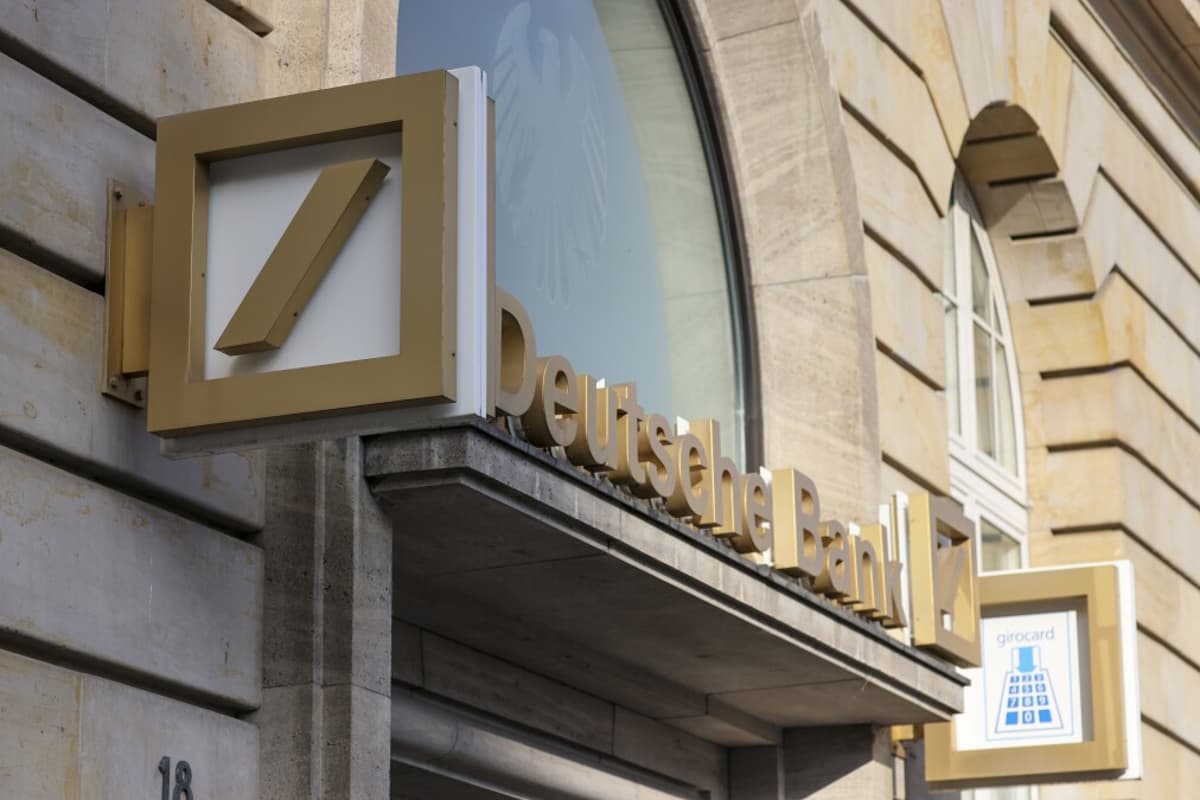
Deutsche Bank, Santander Test World Bank's Risk Transfer Engine
Why It Matters
The structure multiplies the World Bank’s trade‑finance coverage while reducing reliance on sovereign budget deficits, offering emerging markets a vital source of liquidity amid rising commodity prices. It also opens a new channel for private‑sector capital to support development goals.
Key Takeaways
- •Deutsche Bank and Santander join IFC's $500 M synthetic securitization
- •Deal provides $1 guarantee to back $19 of trade financing
- •Senior, mezzanine, junior tranches total $500 M, boosting World Bank leverage
- •IFC expands investor outreach in US, Canada, Japan for future deals
- •Synthetic securitization reduces reliance on sovereign budget deficits
Pulse Analysis
The International Finance Corporation’s latest transaction marks the first synthetic securitization it has ever executed, pairing a $500 million portfolio of trade‑finance loans with private‑sector guarantees. Deutsche Bank and Santander acted as both investors and arrangers, while insurers such as AXA XL and Liberty Specialty Markets supplied the credit protection. By slicing the exposure into a $340 million senior tranche, a $110 million mezzanine layer and a $50 million junior piece, the structure mirrors classic collateralized debt obligations but without requiring upfront cash from investors. This “unfunded” approach lets the IFC leverage guarantees rather than capital. The arrangement also demonstrates how structured‑credit expertise can be repurposed for development objectives.
For the World Bank, the deal translates a modest $1 of guarantee into $19 of trade‑finance backing, a leverage ratio far above its historic 1‑to‑3 norm. That amplification is critical as war‑driven spikes in energy and food prices strain low‑income and conflict‑affected economies that rely on timely import financing. By tapping pension funds and other institutional investors, the IFC can channel risk‑averse capital into markets that sovereign lenders are increasingly reluctant to fund, thereby sustaining liquidity for essential commodities. Such leverage helps bridge financing gaps that traditional aid programs cannot fill.
The transaction also signals a broader shift toward market‑based solutions for development finance. IFC’s roadmap, endorsed by the G‑20, envisions a pipeline of synthetic securitizations covering infrastructure, mining and agriculture projects. To support that ambition, the agency is building dedicated teams in the United States, Canada and Japan to nurture relationships with large asset managers. If the model proves scalable, multilateral lenders could repeatedly multiply their lending capacity, reshaping how emerging markets access affordable credit. Success could encourage other multilateral institutions to adopt similar risk‑transfer frameworks.
Deutsche Bank, Santander test world bank's risk transfer engine
Comments
Want to join the conversation?
Loading comments...