Companies Mentioned


Why It Matters
Frictionless checkout expands Amazon’s reach beyond its own stores, giving retailers a proven tool to boost sales, cut labor costs, and improve security. The move intensifies the race for seamless retail experiences against rivals like Walmart.
Key Takeaways
- •New RFID lanes enable checkout in pop‑up venues
- •Motorized gates and screens accelerate transaction speed
- •Lumen Field saw 47% sales boost using Just Walk Out
- •UC San Diego cut theft 83% while serving more students
- •Amazon expanding tech to 40+ fulfillment‑center stores this year
Pulse Analysis
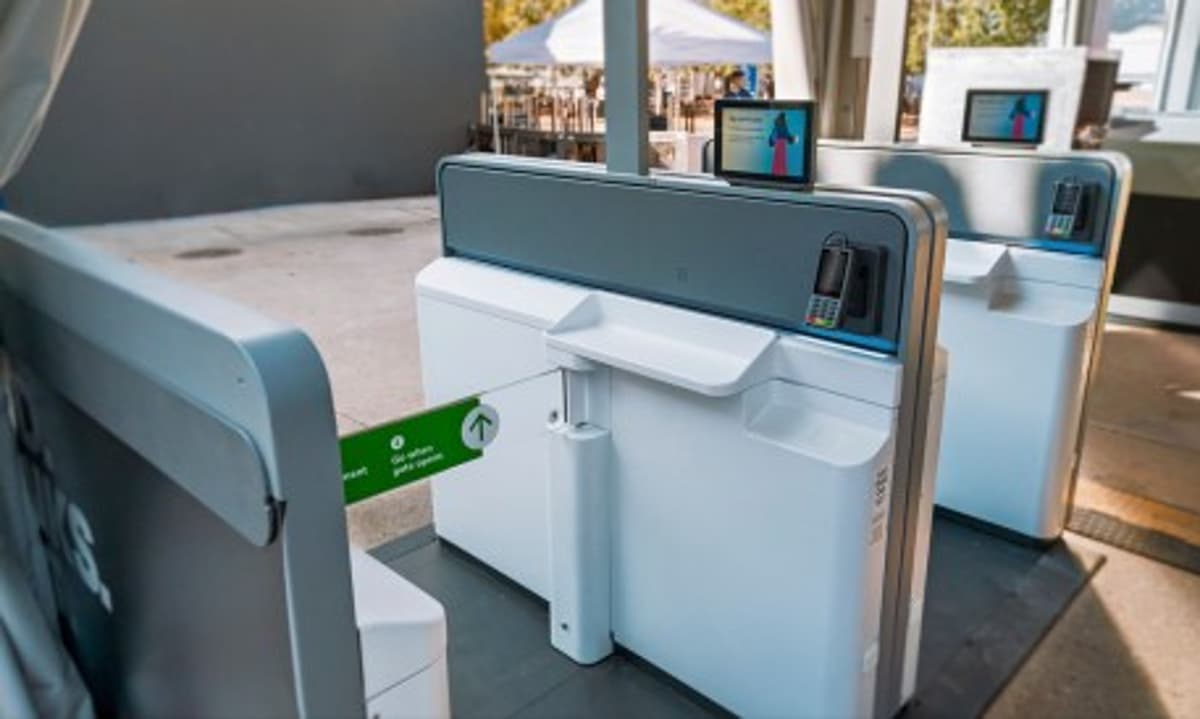
The latest iteration of Amazon’s Just Walk Out technology marks a shift from static store environments to flexible, event‑driven retail. By embedding RFID readers, intuitive touchscreens, and motorized gates into portable lanes, Amazon eliminates the traditional point‑of‑sale bottleneck. This frictionless model aligns with a broader consumer expectation for instant, contactless experiences, especially in high‑traffic, temporary settings where staffing and infrastructure are limited. Retail operators can now deploy a fully automated checkout in days rather than months, lowering upfront capital expenditures while capturing impulse purchases.
Performance data from early adopters illustrates the tangible upside. At Lumen Field, the system drove a 47% increase in per‑game sales, a boost attributed to reduced queue times and the novelty of a seamless exit. UC San Diego reported an 11% rise in student footfall alongside an 83% drop in shrinkage, highlighting how loss‑prevention and throughput gains can coexist. Hospitals and stadiums benefit from faster transactions, freeing staff to focus on service rather than cash handling, while retailers enjoy real‑time cart visibility that informs dynamic pricing and inventory decisions.
Strategically, Amazon’s expansion of Just Walk Out into its own fulfillment‑center stores signals confidence in scaling the technology at volume. By integrating the system with its logistics network, Amazon can gather granular shopper data, refine recommendation engines, and tighten the loop between discovery and purchase. Competitors such as Walmart are accelerating their own checkout innovations, but Amazon’s end‑to‑end ecosystem—spanning search, Prime, and fulfillment—offers a competitive moat. As the retail landscape balances "essential gravity" of necessities with "discretionary gravity" of impulse buying, frictionless checkout will likely become a decisive factor in capturing the latter, reshaping how brands approach pop‑up and experiential commerce.
Amazon Brings Just Walk Out Tech to Pop-Up Stores
0
Comments
Want to join the conversation?
Loading comments...