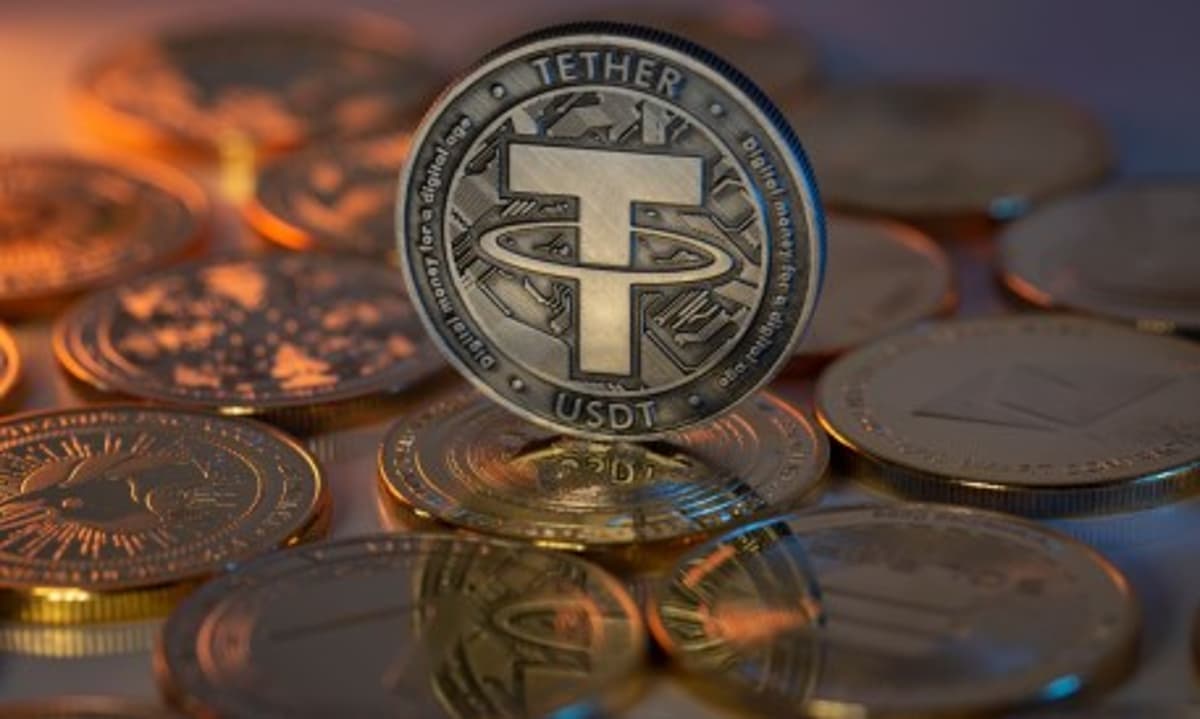
Tether Has Blocked $3.5 Billion in Crime-Linked Stablecoins Since 2023
•February 28, 2026
0
Why It Matters
The ability to freeze stablecoins demonstrates that crypto can be regulated and used safely for global commerce, while reducing the appeal of digital assets for criminals. It also pressures other issuers to adopt comparable compliance tools.
Key Takeaways
- •Tether froze $3.5 B linked to crime since 2023
- •Total frozen stablecoins reach $4.2 B since launch
- •USDT circulation exceeds $180 B worldwide
- •Collaboration spans 310 agencies across 64 countries
- •DOJ seized $61 M USDT with Tether’s assistance
Pulse Analysis
Tether’s recent disclosure that it has immobilized $3.5 billion of crime‑linked USDT since 2023 underscores a growing maturity in the stablecoin ecosystem. By embedding remote‑freeze capabilities directly into its protocol, Tether offers a practical compliance lever that many rivals lack. This functionality not only protects investors but also provides regulators with a tangible tool to intervene when illicit activity is detected, reinforcing the narrative that digital dollars can coexist with traditional financial safeguards.
Law‑enforcement collaboration is at the heart of Tether’s strategy. The firm reports partnerships with over 310 agencies in 64 jurisdictions, a network that enabled the Department of Justice and Homeland Security Investigations to seize $61 million of USDT tied to a pig‑butchering fraud. High‑profile freezes involving terrorism financing, money‑laundering schemes, and sanctioned exchanges illustrate how blockchain’s transparency can be leveraged for rapid asset interdiction, shifting the perception of stablecoins from a black‑box risk to a traceable, controllable asset class.
The broader market is taking note. Stripe’s recent stablecoin push has hit regulatory friction, while Circle is exploring reversible transaction mechanisms to address fraud disputes. Tether’s proactive stance may set a benchmark, prompting other issuers to adopt similar freeze or refund features to satisfy regulators and win mainstream adoption. As stablecoins anchor an expanding share of global payments, the ability to swiftly neutralize illicit funds could become a decisive factor in their long‑term viability.
Tether Has Blocked $3.5 Billion in Crime-Linked Stablecoins Since 2023
0
Comments
Want to join the conversation?
Loading comments...