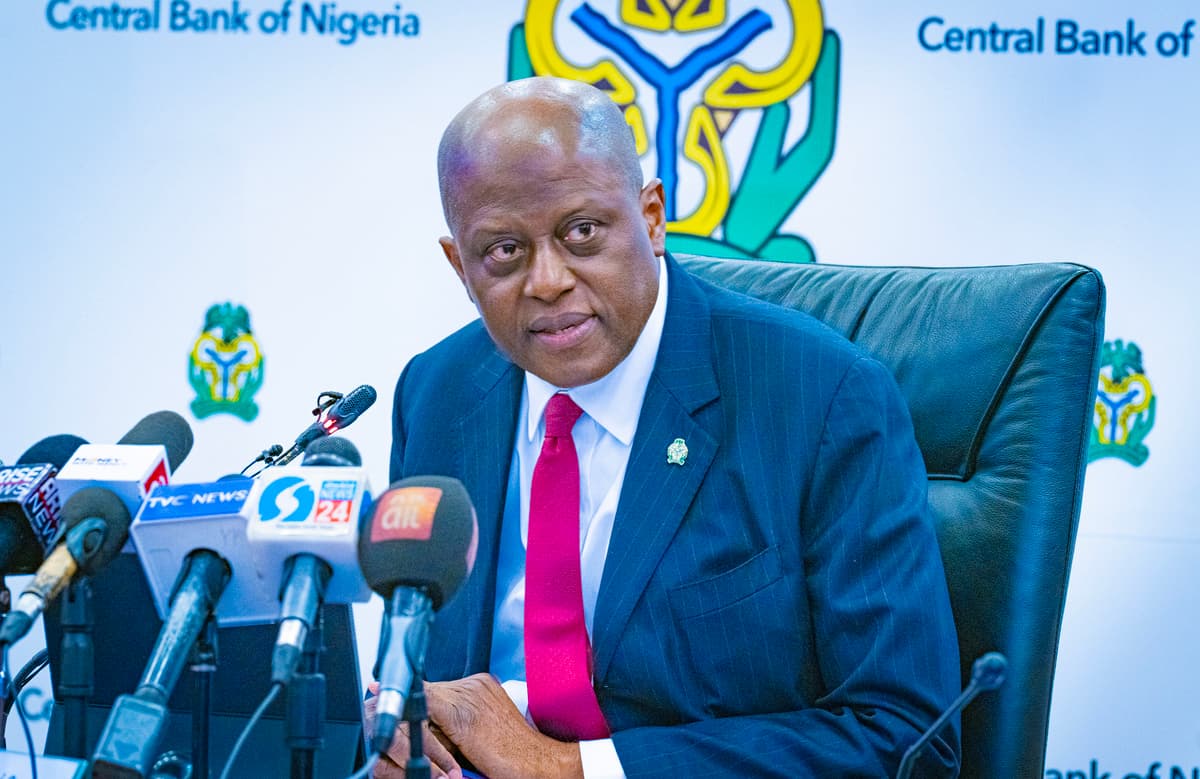
The CBN Has a Plan to Make Regulation Work for Fintechs. Here Is What It Looks Like.
•February 26, 2026
0
Why It Matters
By institutionalising collaboration and simplifying compliance, the CBN’s plan could accelerate product innovation, lower entry barriers, and reinforce Nigeria’s position as Africa’s fintech hub.
Key Takeaways
- •Quarterly Fintech Engagement Forum for policy co‑creation
- •Single Regulatory Window consolidates multi‑agency licensing
- •Compliance‑as‑a‑Service platform centralizes reporting obligations
- •Sandbox expands to AI, cross‑border, embedded finance
- •Fintech Reform Delivery Secretariat prevents implementation stalls
Pulse Analysis
Nigeria has long been a laboratory for digital‑payment innovation, pioneering real‑time inter‑bank settlement a decade before many advanced economies. The surge to 11 billion instant‑payment transactions in 2024 and a half‑billion‑dollar funding wave underscores a market that is both large and hungry for scalable infrastructure. Historically, the Central Bank of Nigeria has used bold policy levers—cashless initiatives, biometric BVN, and a cautious crypto licensing regime—to shape the ecosystem. The latest Fintech Policy Insight Report builds on that legacy, signalling a shift from top‑down mandates to collaborative governance.
The report’s core proposals translate that collaborative ethos into concrete mechanisms. A Standing Fintech Engagement Forum, modeled on the Bankers’ Committee, will meet quarterly to co‑create rules, while a Single Regulatory Window promises a one‑stop licensing experience across multiple agencies. The Compliance‑as‑a‑Service utility aims to eliminate duplicated reporting systems, giving startups a shared tech layer for regulatory data. Moreover, the sandbox’s expansion into artificial intelligence, cross‑border payments and embedded finance adopts a ‘test‑then‑codify’ methodology, turning experimental insights into formal standards.
If executed, these reforms could lower compliance costs, speed time‑to‑market and attract foreign capital seeking a predictable regulatory environment. The establishment of a Fintech Reform Delivery Secretariat provides an accountability hub, reducing the risk of policy drift that has hampered reforms elsewhere. Investors are likely to view the CBN’s partnership‑first stance as a green light for deeper exposure to Nigerian fintechs, while established players may leverage the shared infrastructure to launch new services at scale. In the broader African context, Nigeria’s regulatory evolution may set a template for other emerging markets.
The CBN has a plan to make regulation work for fintechs. Here is what it looks like.
0
Comments
Want to join the conversation?
Loading comments...