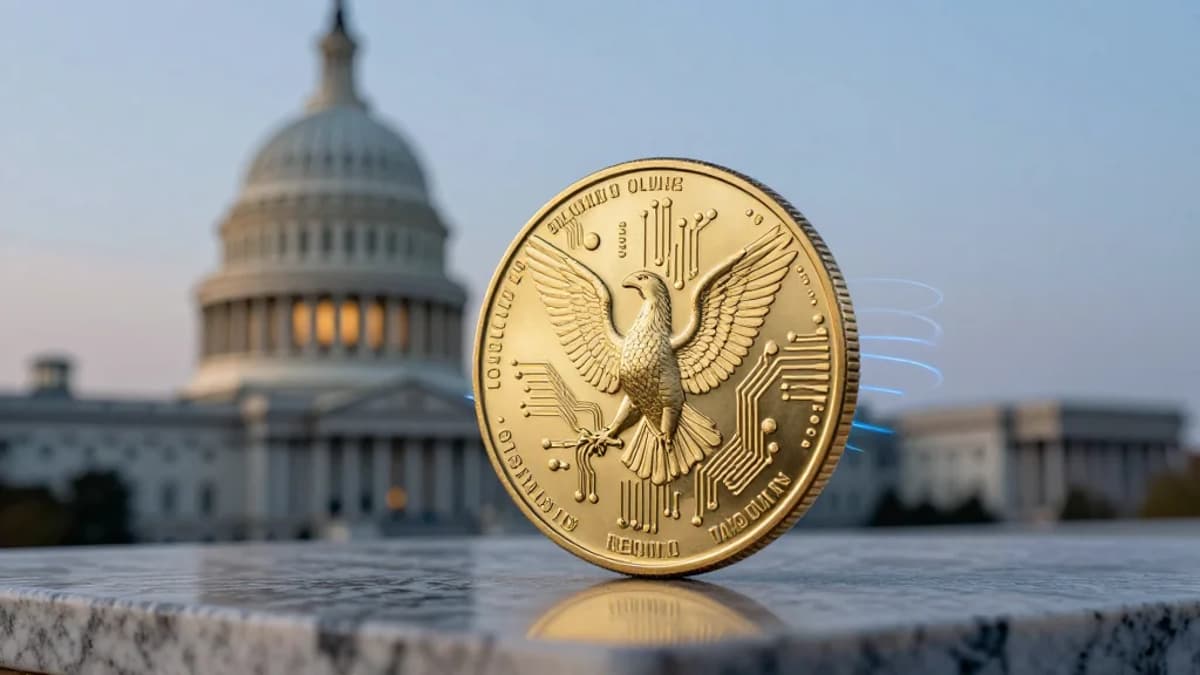
The GENIUS Act: America’s Long-Awaited Stablecoin Rulebook
•January 9, 2026
0
Why It Matters
By ending regulatory uncertainty, the GENIUS Act unlocks mainstream stablecoin adoption, reduces systemic risk, and positions the U.S. as a global hub for regulated digital payments.
Key Takeaways
- •Applies only to payment stablecoins, not all crypto assets
- •Requires 100% reserve backing with liquid U.S. assets
- •Limits issuers to banks, qualified non‑banks, small state entities
- •Mandates monthly disclosures and audited statements for transparency
- •Enforces AML, sanctions compliance and marketing restrictions
Pulse Analysis
For years, stablecoins operated in a legal gray zone, attracting users but evading consistent oversight. The GENIUS Act finally codifies a clear regulatory perimeter, mirroring the approach taken for traditional money market instruments while acknowledging the digital nature of the assets. By defining payment stablecoins as a distinct class—neither securities nor commodities—the legislation eliminates overlapping jurisdictional battles that have hampered product development and investor confidence.
The Act’s core provisions focus on safety and accountability. Full‑reserve backing with U.S. dollars or short‑term Treasuries ensures that each token is fully collateralized, addressing the liquidity crises that plagued earlier stablecoin failures. Restricting issuance to insured bank subsidiaries, federally qualified non‑banks, and state‑qualified entities under a $10 billion cap balances the need for robust supervision with space for regional innovation. Mandatory monthly reserve disclosures, coupled with audited financial statements for larger issuers, create a transparency regime comparable to that of public banks, while marketing bans prevent consumer confusion about government endorsement.
Strategically, the GENIUS Act signals to the world that the United States intends to dominate the regulated stablecoin market. By offering a permissive yet tightly controlled environment, the U.S. can attract fintech firms seeking certainty, potentially extending the dollar’s reach in cross‑border payments. However, the full‑reserve requirement may deter more aggressive yield‑seeking models, and the state‑level cap could invite regulatory arbitrage. The coming months will reveal how regulators interpret reserve composition and interoperability standards, shaping the next phase of digital finance both domestically and globally.
The GENIUS Act: America’s Long-Awaited Stablecoin Rulebook
0
Comments
Want to join the conversation?
Loading comments...