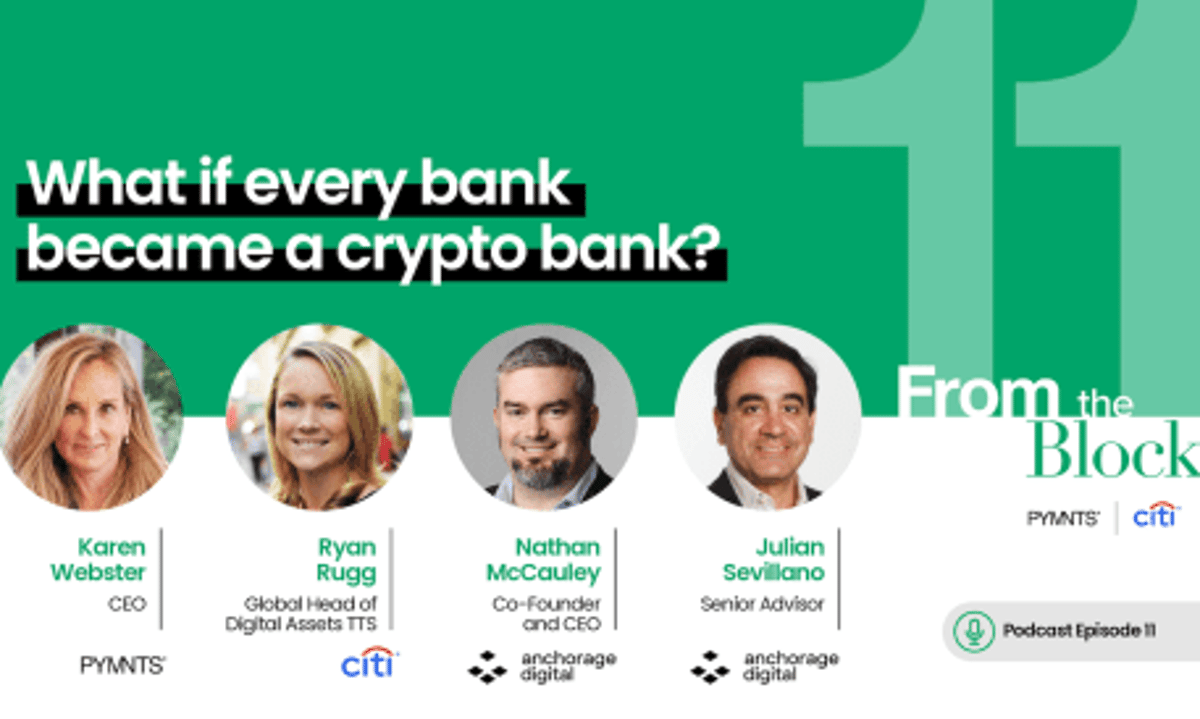
Why The Anchorage CEO Wants 3,999 Crypto Bank Competitors
Why It Matters
If Anchorage becomes the default backend for almost every U.S. bank, it could lock in a dominant revenue stream and accelerate mainstream adoption of digital assets across traditional finance.
Key Takeaways
- •Anchorage aims to power 3,999 of 4,000 U.S. banks
- •Strategy mirrors AWS: sell infrastructure, not brand
- •Stablecoin issuance pipeline expected to surge after GENIUS Act
- •Lack of Fed master account limits full-dollar reserve integration
- •Banks must choose build, buy, or partner for crypto services
Pulse Analysis
Anchorage Digital’s pivot from a single‑bank champion to an infrastructure provider marks a strategic inflection point for the crypto‑banking sector. By positioning itself as the regulated back‑office for virtually every U.S. commercial bank, Anchorage adopts an Amazon‑Web‑Services playbook: the real moat lies in the technology stack, not the consumer‑facing brand. This approach promises recurring, high‑margin revenue while reducing the competitive pressure that traditionally follows a monopoly‑style model. For banks, the proposition is simple—plug into a proven, compliant platform rather than build costly, risky crypto capabilities from scratch.
The catalyst for this shift is the burgeoning stablecoin market, now buoyed by clearer regulatory guidance under the GENIUS Act. Anchorage reports a pipeline of roughly 20 issuers ready to launch stablecoins on its rails, and industry observers anticipate a "Cambrian explosion" of new tokens as institutions seek to capture float, control ecosystems, and lower third‑party dependence. By handling issuance, custody, and settlement, Anchorage earns fees regardless of which brand sits on the front end, making the model agnostic to the ultimate winner in the stablecoin race. This revenue‑agnostic stance reduces exposure to token‑specific volatility while cementing Anchorage’s role as a critical conduit for dollar‑backed digital assets.
The final piece of the puzzle is direct access to the Federal Reserve through a master account—a capability Anchorage currently lacks but has a Tier 3 application pending. Securing that account would close the loop between digital and fiat reserves, enabling safer, end‑to‑end services for banks and their clients. As Citi’s Ryan Rugg notes, banks will face a classic build‑buy‑partner decision; with Anchorage’s infrastructure ready, the partnership path becomes the most pragmatic. The result could be a de‑facto standard where 99.99% of U.S. banks rely on a single, regulated crypto backbone, reshaping the competitive landscape of digital finance.
Why The Anchorage CEO Wants 3,999 Crypto Bank Competitors
Comments
Want to join the conversation?
Loading comments...