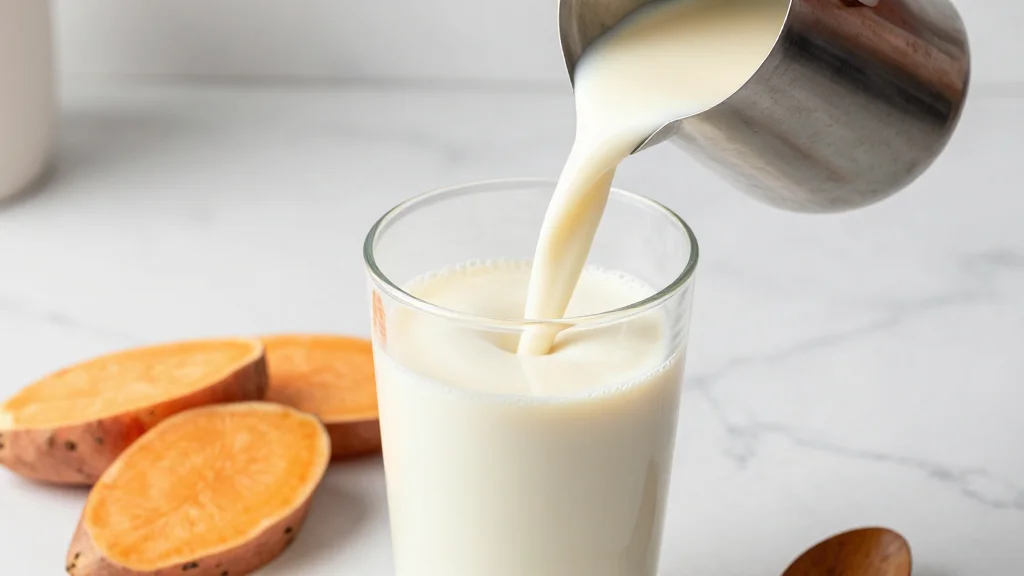
These Researchers Are Turning Surplus Sweet Potatoes Into Plant-Based Dairy
Why It Matters
The initiative transforms a costly agricultural waste stream into a sustainable, high‑value food product, bolstering farmer profitability and feeding the fast‑growing plant‑based milk market.
Key Takeaways
- •$1.82M grant funds sweet‑potato milk development in North Carolina.
- •63 M lbs of sweet potatoes waste annually, costing $13.2M.
- •Enzyme process creates sugar‑free, nutrient‑rich milk using only potatoes, chia, yeast protein.
- •Commercial launch targeted within two years, creating hundreds of jobs.
- •Project leverages local waste streams, lowering water use versus almond milk.
Pulse Analysis
The plant‑based milk sector, now a multibillion‑dollar industry, is hungry for novel ingredients that can meet consumer demand for sustainability and nutrition. Sweet potatoes, a staple crop in North Carolina, generate a staggering 63 million pounds of waste each harvest, translating to roughly $13.2 million in lost revenue. By converting this surplus into a clean‑label milk, the Rootsii project not only taps into a lucrative market but also addresses a pressing waste‑reduction challenge, positioning sweet‑potato dairy as a compelling alternative to almond or oat milks.
At the heart of the venture is a patent‑pending enzymatic technique that breaks down long‑chain starches into a naturally sweet, creamy base. The formulation relies on just four ingredients—sweet potatoes, chia seed emulsifier, yeast‑derived protein, and coconut oil—delivering a product rich in vitamins A and C, potassium, and magnesium without added sugars. Partnerships with the North Carolina Sweetpotato Commission, local colleges, and workforce development boards provide a robust supply chain and research support, while plans to replace coconut oil with muscadine grape seed oil further embed the product within regional circular‑economy loops. This technical simplicity promises lower production costs and a smaller water footprint than traditional almond milk.
Economically, the initiative could generate hundreds of jobs across processing, formulation, and distribution as the company scales toward a two‑year commercial rollout. With the plant‑based milk market projected to nearly double in the next decade, Rootsii’s entry could capture a niche segment focused on allergen‑free, nutrient‑dense options. Success will hinge on consumer acceptance, shelf‑life validation, and securing retail partnerships, but the combination of waste mitigation, local sourcing, and health benefits positions sweet‑potato milk as a strategic growth driver for both the agricultural and alternative‑dairy landscapes.
These Researchers Are Turning Surplus Sweet Potatoes Into Plant-Based Dairy
Comments
Want to join the conversation?
Loading comments...