Companies Mentioned
Why It Matters
The list demonstrates how handheld innovation sparked genre‑blending experiments that still echo in modern RPG design, underscoring the commercial value of creative risk‑taking.
Key Takeaways
- •DS dual-screen and touch enabled novel combat systems across JRPGs.
- •Titles blended genres, e.g., bullet‑hell tactics in Knights in the Nightmare.
- •Sonic Chronicles introduced round‑based actions with minigame timing.
- •Radiant Historia popularized timeline‑hopping mechanics now common in RPGs.
- •The World Ends With You showcased synchronized dual‑screen battles, influencing later titles.
Pulse Analysis
The Nintendo DS’s dual‑screen layout and stylus input gave developers a sandbox for reimagining traditional JRPG formulas. By separating visual information across two displays, designers could layer strategic menus, real‑time action cues, and narrative text without cluttering a single screen. The touchscreen further enabled direct manipulation of characters and environments, turning menu navigation into a tactile experience. This hardware flexibility encouraged studios to experiment with hybrid genres, turning the handheld into a laboratory for gameplay innovation.
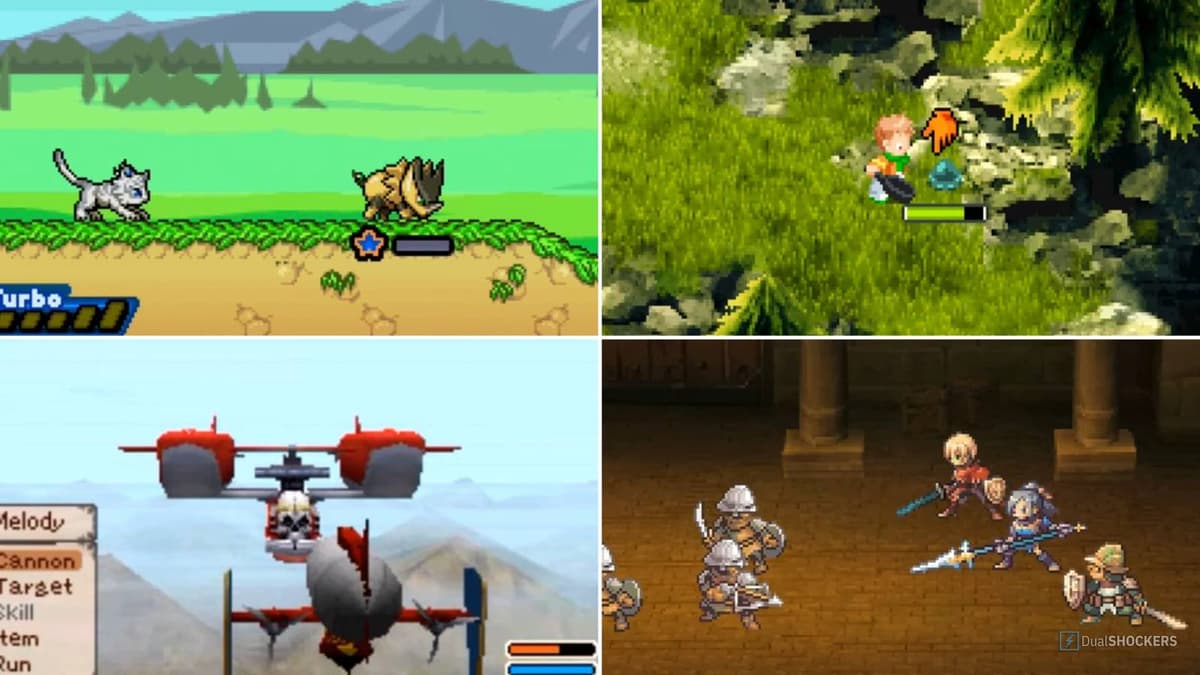
Games like *Knights in the Nightmare* fused tactical positioning, bullet‑hell evasion, and classic turn‑based combat, while *Sonic Chronicles* introduced round‑based decision making paired with rhythm‑style minigames. *Radiant Historia* leveraged the DS’s storage to host multiple timelines, a mechanic that has become a staple in contemporary narrative‑driven RPGs. Even niche titles such as *Contact* and *Infinite Space* used the stylus for fleet management and auto‑battler elements, proving that the DS could support complex systems traditionally reserved for consoles.
From a business perspective, these ambitious experiments expanded the DS’s audience beyond core JRPG fans, attracting players seeking fresh experiences on a portable platform. The lasting influence is evident in modern titles that echo DS innovations, from mobile RPGs with touch‑heavy interfaces to console games that adopt dual‑screen‑style UI concepts. Understanding this legacy helps publishers gauge the risk‑reward balance of pushing mechanical boundaries, reminding them that bold design can translate into enduring brand equity and niche market loyalty.
10 Most Ambitious Nintendo DS JRPGs
Comments
Want to join the conversation?
Loading comments...