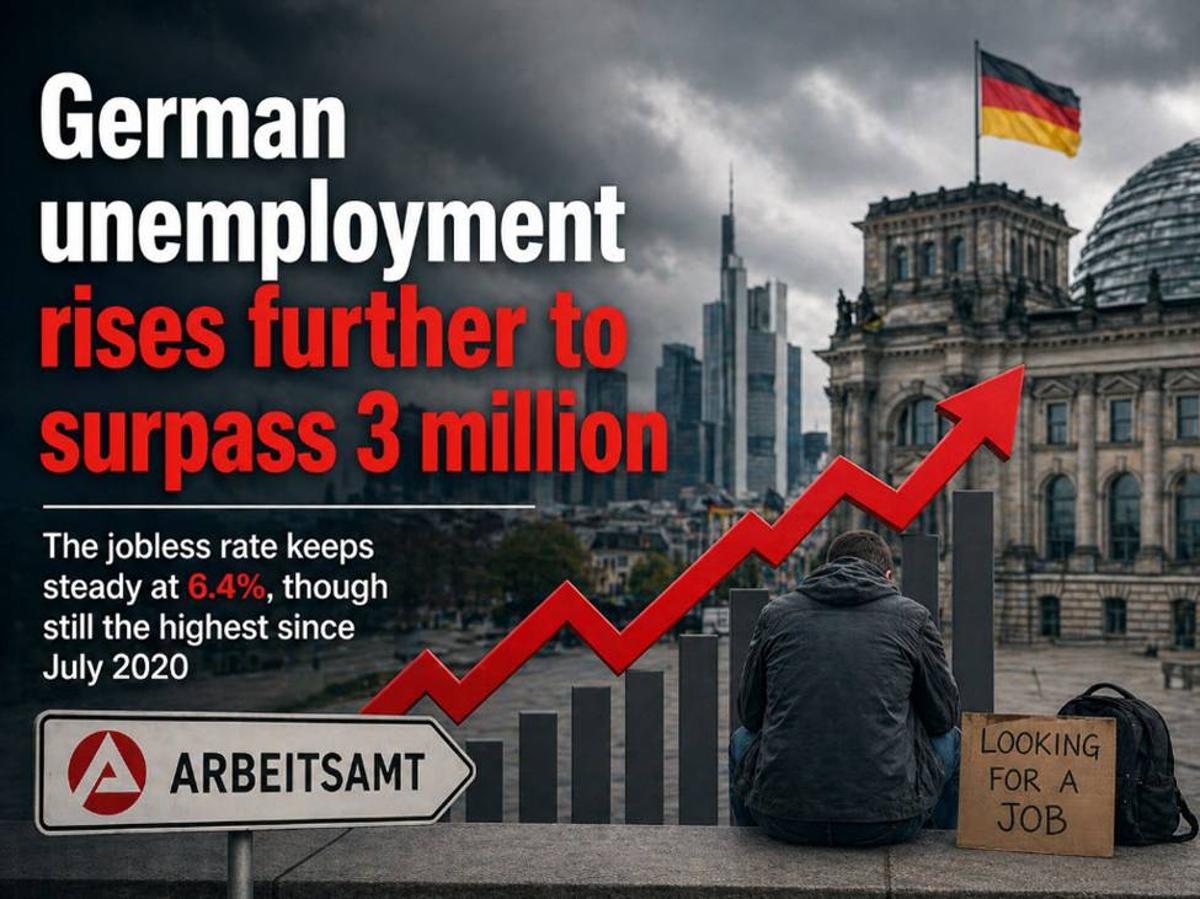
Germany April Unemployment Change 20k vs 4k Expected
Key Takeaways
- •April unemployment up 20,000, total 3.006 million
- •Rate steady at 6.4%, highest since July 2020
- •Forecast missed: analysts expected 4,000 increase
- •Labour office sees no turnaround, spring upturn weak
- •Persistent joblessness may pressure ECB to keep rates high
Pulse Analysis
Germany’s labour market has been under pressure for several quarters, and the latest April figures underscore that trend. The Federal Employment Agency reported an increase of 20,000 unemployed persons, bringing the total to 3.006 million and nudging the unemployment rate to 6.4 percent after a modest upward revision to March. This rate is the highest level recorded since July 2020, eclipsing the post‑pandemic low of 5.9 percent seen in early 2022. The data suggest that the spring hiring surge anticipated by many economists failed to materialise, leaving the job market in a state of stagnation.
The persistence of elevated unemployment carries weighty implications for monetary policy and corporate confidence. A weak labour market reduces consumer spending power, which in turn hampers demand for goods and services across sectors ranging from automotive to retail. For the European Central Bank, the stubborn 6.4 percent jobless rate adds to the inflation‑growth trade‑off, making a premature rate cut riskier. Companies may delay expansion plans or hiring programmes, especially in export‑oriented industries that rely on a robust domestic consumer base to sustain production cycles.
Looking ahead, analysts expect the German government to intensify short‑term stimulus, potentially expanding training programmes and wage subsidies to spur hiring. However, any fiscal boost must be balanced against the broader Eurozone’s fiscal constraints and the ECB’s commitment to price stability. Investors will watch upcoming labour market surveys for signs of a turning point, while the ECB’s policy‑rate decisions in June will likely reflect whether the unemployment trend is viewed as transitory or structural. A sustained rise could keep rates elevated longer, affecting borrowing costs for businesses and households alike.
Germany April unemployment change 20k vs 4k expected
Comments
Want to join the conversation?