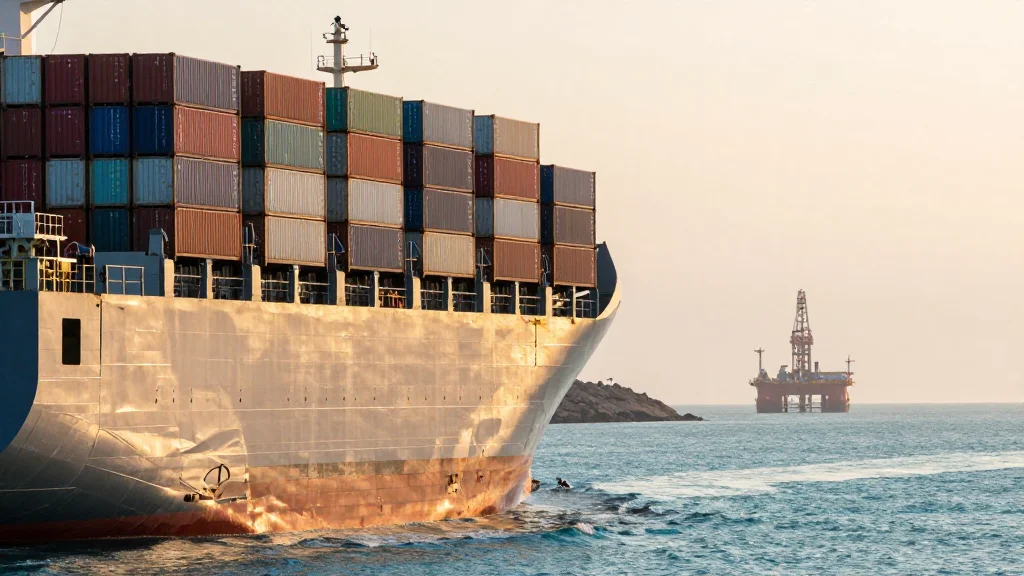
Iran’s Foreign Minister Declares Strait of Hormuz Fully Open to All Commercial Vessels Until April 21
Key Takeaways
- •Iran opens Hormuz Strait for commercial ships until April 21
- •Oil prices fell sharply after the announcement
- •Europe faces jet‑fuel shortage risk amid Middle East supply disruptions
- •U.S. Central Command has not yet lifted its own blockade
- •Shipping firms remain cautious due to mine threats and route uncertainty
Pulse Analysis
The Strait of Hormuz, a chokepoint through which roughly 20% of global oil passes, has been a flashpoint in U.S.-Iran tensions for decades. By declaring the waterway fully open for commercial traffic until the cease‑fire expires on April 21, Tehran aims to signal de‑escalation and restore confidence in energy flows. Traders responded instantly, with Brent crude sliding as the perceived risk premium evaporated. Yet the declaration is only half the story; the U.S. Central Command still enforces its own naval restrictions, and Iranian officials acknowledge that certain lanes remain hazardous because of unexploded mines. This dual‑track approach leaves shippers weighing the benefits of a cleared route against lingering security concerns.
Compounding the maritime dynamics, the International Energy Agency warned that Europe could run out of jet fuel within six weeks, a scenario that would cripple airline schedules and trigger widespread flight cancellations. Europe’s jet‑fuel imports are heavily dependent on Gulf refineries, and the February 28 closure of the Hormuz Strait after U.S. and Israeli strikes sharply curtailed those supplies. Airlines such as British Airways and KLM have already trimmed short‑haul services, while low‑cost carrier Norse Atlantic suspended its transatlantic route citing soaring fuel costs. The IEA’s alarm highlights how disruptions in a single maritime corridor can ripple through the broader energy ecosystem, affecting not just oil markets but also aviation logistics.
Looking ahead, the uncertainty surrounding the U.S. naval posture and the residual mine threat will dictate how quickly commercial vessels resume normal operations. If Washington lifts its blockade and Iran clears remaining hazards, the Hormuz corridor could quickly become a conduit for stranded tankers, stabilizing oil markets and easing Europe’s jet‑fuel supply strain. Conversely, prolonged restrictions would keep price volatility high and could force governments and airlines to accelerate diversification of fuel sources, including alternative routes and non‑Middle‑East suppliers. Stakeholders across energy, shipping, and aviation are therefore watching the cease‑fire timeline closely, as its outcome will shape global trade flows for months to come.
Iran’s Foreign Minister Declares Strait of Hormuz Fully Open to All Commercial Vessels Until April 21
Comments
Want to join the conversation?