Key Takeaways
- •China’s A‑50 ETF delivered ~2.4% annual return over ten years.
- •Robotics AI ETF returned ~2.3% per year since launch.
- •ESG‑focused FAIR ETF lost money in nominal terms.
- •ETFs often launch at hype peaks, baking future gains into price.
- •High sector revenue growth doesn’t guarantee positive investor returns.
Pulse Analysis
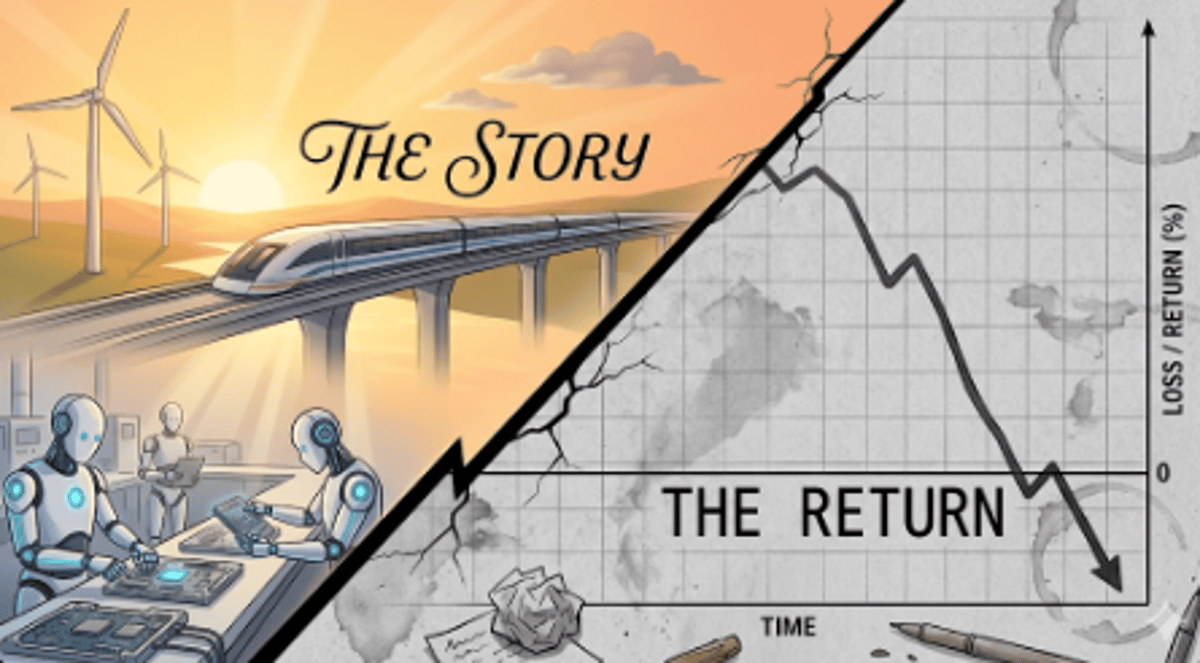
The paradox of being right about a macro theme but wrong about returns is starkly illustrated by three recent ETFs. The VanEck FTSE China A50, launched to capture China’s near‑12% GDP growth, produced a modest 2.4% annual return over a decade, barely beating inflation. Similar stories unfold with the Global Robotics & AI ETF and the Australian Sustainability Leaders ETF, both of which lagged far behind the spectacular gains of their underlying constituents such as Nvidia or renewable‑energy leaders. These outcomes reveal that a compelling narrative alone does not translate into investor profit.
Timing and market dynamics amplify the problem. Many thematic ETFs debut when enthusiasm peaks, embedding future upside into their price and leaving little room for subsequent appreciation. Moreover, the “fat‑tail” effect means that while a handful of companies thrive, a long tail of underperformers drags the average down—a phenomenon dubbed “diworseification.” Management quality also matters; poorly run active ETFs can erode returns through high fees and suboptimal rebalancing. Consequently, investors often pay a premium for exposure that has already been priced in, resulting in disappointing performance.
The core lesson is to focus on return on invested capital rather than headline growth. The UK offshore wind sector, despite a 90% turnover increase to roughly $98 billion in 2024, offers near‑zero investor returns, underscoring the gap between revenue expansion and capital efficiency. Savvy investors should prioritize low‑cost, broad‑market index funds that capture overall market upside without the hype premium, echoing John Bogle’s advice to “buy the haystack.” By aligning exposure with genuine economic profitability, investors can avoid the trap of confusing a compelling story with a profitable one.
Right Theme, Wrong Return
Comments
Want to join the conversation?