Key Takeaways
- •Chokepoints now include intangible assets like the US dollar, semiconductors, and SWIFT
- •Startups face negative chokepoints when dependent on single suppliers or regulated finance
- •Positive chokepoint capitalism locks buyers and suppliers, creating high switching costs
- •The MAD framework (Moats, Affordance, Diffusion) guides AI startup value capture
Pulse Analysis
The notion of a chokepoint has migrated from narrow straits and canals to the invisible arteries of the global economy. Control over the US dollar, advanced semiconductor supply chains, and the SWIFT clearing network now confers strategic power without a single shot fired. For venture capitalists, this shift means that a startup’s competitive advantage is less about headline‑grabbing technology and more about its position within these non‑substitutable domains. Recognizing where value flows—and who controls those flows—has become a core due‑diligence criterion.
Negative chokepoints represent existential risk for early‑stage firms. Dependence on a single chipmaker such as Nvidia can expose a company to supply shortages or export restrictions, while reliance on centralized banking or payment rails makes it vulnerable to regulatory crackdowns reminiscent of the original Operation Choke Point. Savvy investors therefore map out these dependencies, seeking either diversification strategies or contractual safeguards that reduce exposure. At the same time, startups that deliberately embed themselves at a structural bottleneck can flip the script, turning a potential weakness into a moat.
Sequoia’s MAD framework crystallizes how AI‑centric founders can capture positive chokepoints. By building moats around customer data and workflows, they create high switching costs that lock in users. Designing affordance—intuitive, low‑friction experiences—bridges the gap between powerful foundation models and everyday business adoption. Finally, focusing on diffusion accelerates the transition from raw capability to embedded, revenue‑generating service. Investors who back teams that master Moats, Affordance, and Diffusion are effectively betting on firms that will own the narrowest, most valuable points in the emerging AI value chain.
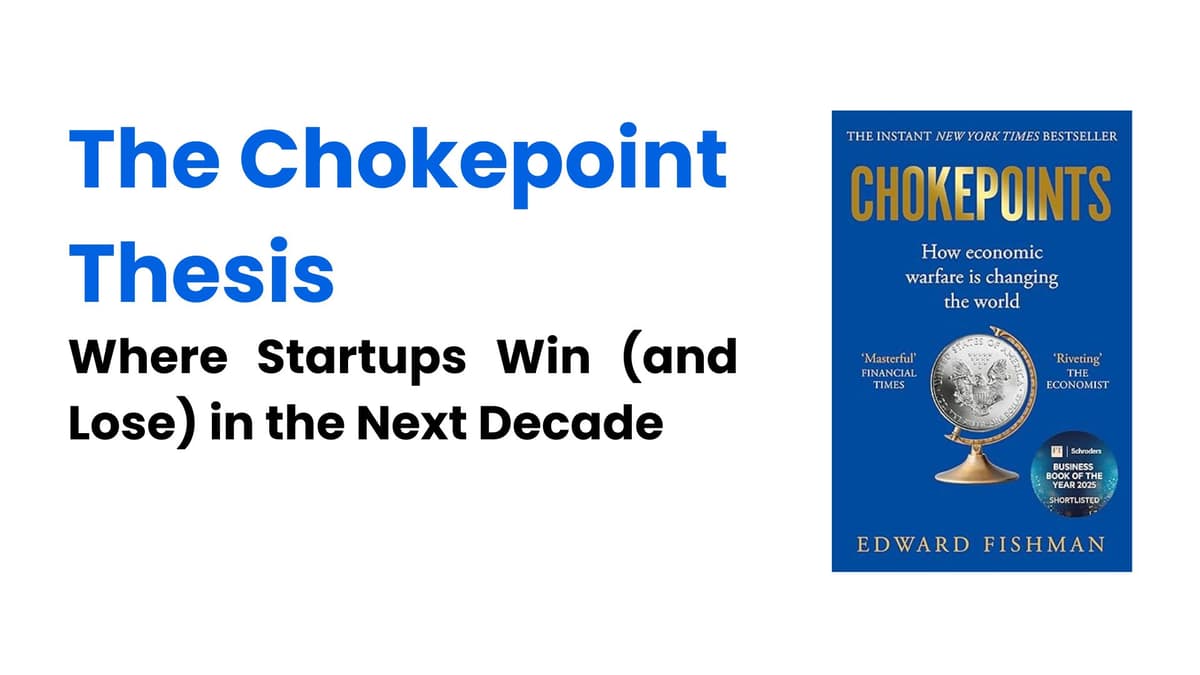
The Chokepoint Thesis: Moats, Affordance and Diffusion
Comments
Want to join the conversation?