Africa Boasts the World’s Four Fastest‑growing Container Lanes
•March 9, 2026
0
Why It Matters
Africa’s rapid lane expansion reshapes global shipping routes, offering new growth opportunities for carriers and shippers. The shifting imbalance in Asia‑Europe trade raises operational costs, prompting strategic fleet realignments.
Key Takeaways
- •Africa leads four fastest-growing container lanes globally
- •MSC redeployed mega-ships to Asia‑West Africa, vessel size up 28%
- •Asia‑Africa capacity grew 54% year‑on‑year, now 2.2m TEU
- •Sub‑Saharan services hold 8.1% of world container fleet
- •Asia‑Europe trade imbalance exceeds 4:1, raising carrier costs
Pulse Analysis
Africa’s ascent on the global liner map reflects a broader realignment of trade flows. Recent CTS data reveal that all four of the world’s fastest‑growing container lanes are tied to the continent, underscoring a surge in both import and export volumes. This growth is not isolated; it coincides with a 54% jump in Asia‑Africa capacity, pushing the route’s fleet to 2.2 million TEU and positioning Sub‑Saharan services at 8.1% of total world capacity. For shippers, the expanding network translates into more direct services, reduced transit times, and greater resilience against disruptions in traditional corridors.
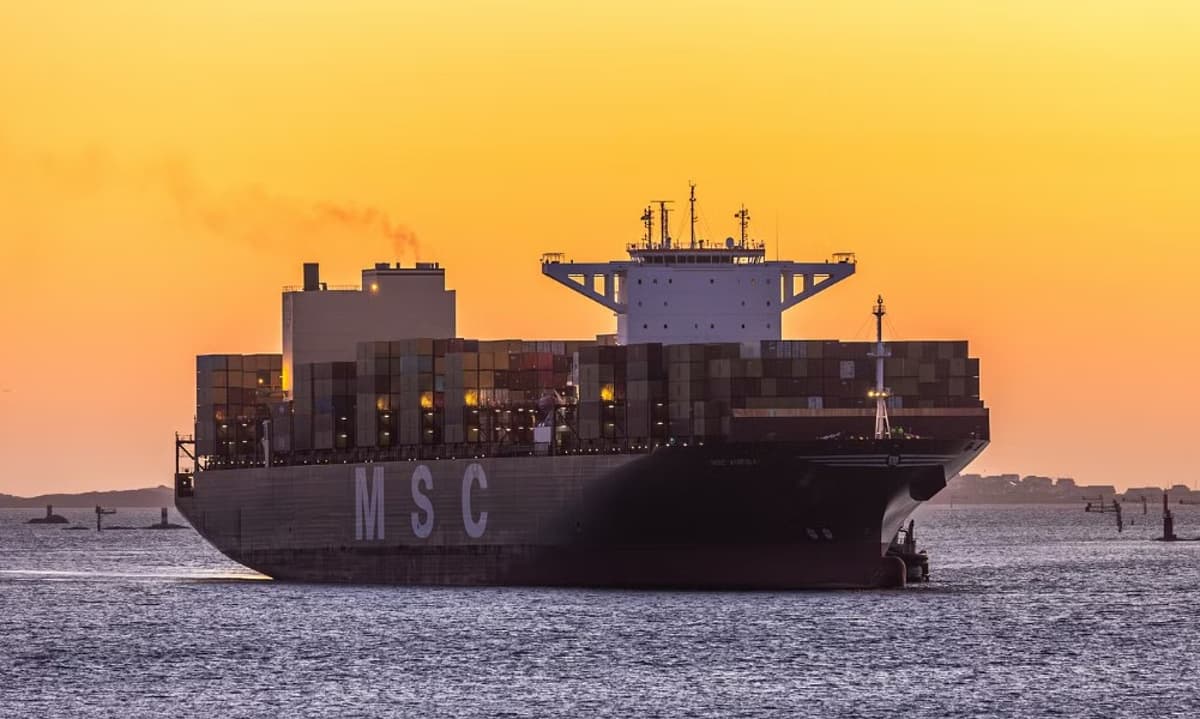
Mediterranean Shipping Co (MSC) has been the catalyst behind much of this momentum. By reallocating its largest vessels from the saturated Asia‑Europe corridor to the fast‑expanding Asia‑West Africa market, MSC increased average ship size on the route from roughly 6,300 TEU to over 9,000 TEU—a 28% uplift. This strategic shift not only satisfies rising demand but also optimizes vessel utilization, allowing MSC to capture higher freight rates while mitigating the cost of empty backhauls. The move signals to other carriers that scaling up capacity on emerging African lanes can deliver profitable growth, especially as global trade patterns evolve.
The ripple effects extend beyond Africa. An unprecedented 4:1 imbalance between Asia and Europe has emerged, driven by weak European exports and robust Asian demand. This skew intensifies empty‑container repatriation costs, eroding carrier margins on the head‑haul. Consequently, shipping lines are compelled to rethink fleet deployment, invest in larger vessels for high‑growth routes, and explore new pricing models. As the imbalance persists, the industry may see accelerated adoption of digital platforms for container pooling and increased collaboration among carriers to balance supply and demand more efficiently.
Africa boasts the world’s four fastest‑growing container lanes
0
Comments
Want to join the conversation?
Loading comments...