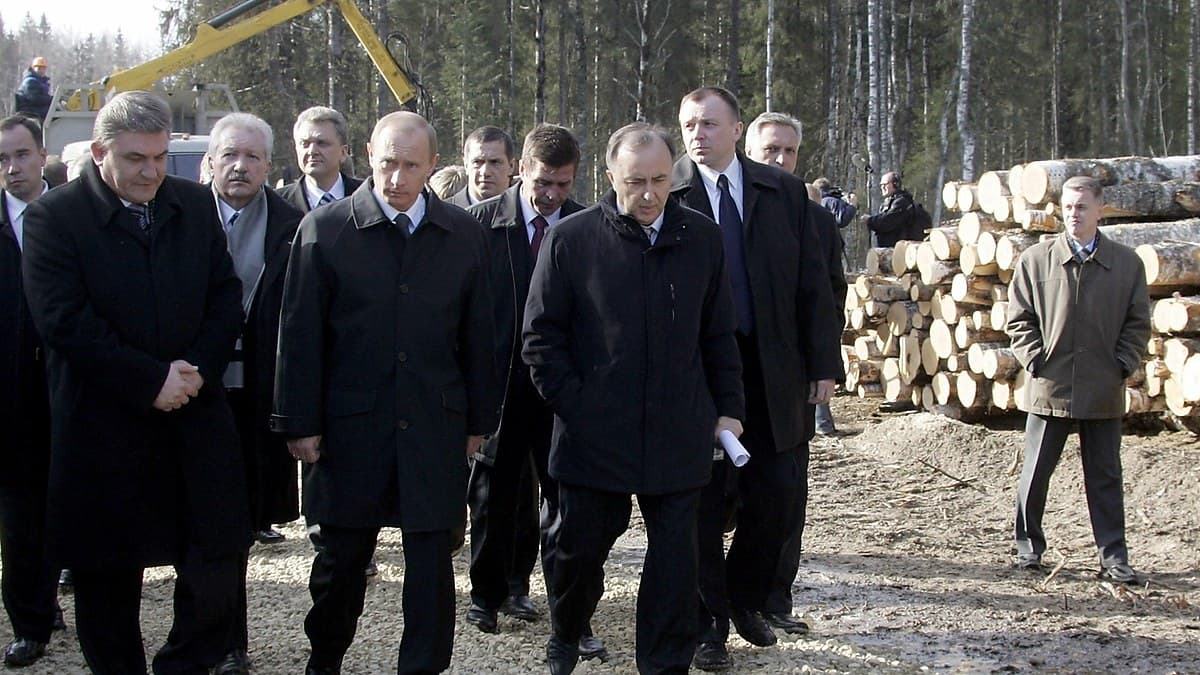
Albanese Faces New Push to Sanction Russia’s Shadow Timber Trade
Why It Matters
Closing the shadow timber trade would safeguard Australian supply chains, cut illicit revenue for Russia, and bring Australia into line with allied sanctions regimes.
Key Takeaways
- •Timber NSW pushes Australia to close Russian timber loophole.
- •EU's new Item 17 clause serves model for Australian sanctions.
- •40‑50% of Australian LVL market sourced from Russian timber.
- •China imported 11.2 million m³ Russian timber in 2024.
- •Illegal Logging Act amendment proposed to enforce sanctions.
Pulse Analysis
The shadow timber trade has emerged as a loophole that allows Russian wood products to bypass existing sanctions by routing through China and Southeast Asian mills. While Australia imposed a 35 percent additional duty on Russian and Belarusian goods in 2022, the measure relies on country‑of‑origin declarations that can be obscured through complex supply chains. The European Union’s recent Item 17 amendment, which explicitly bans any timber linked to Russia regardless of transit, provides a clear template for tightening Australia’s regime and eliminating the "third‑country" escape hatch.
For Australian manufacturers, the stakes are tangible. Engineered wood such as laminated veneer lumber (LVL) and glue‑laminated beams, which constitute up to half of the domestic market, have historically been sourced from Russian forests. Recent data shows China moved over 11.2 million cubic metres of Russian timber in 2024, feeding mills that dominate global plywood production. Without robust traceability, Australian importers risk inadvertently purchasing sanctioned material, exposing them to legal penalties and reputational damage. Enhancing the Illegal Logging Prohibition Act to incorporate sanctions enforcement, coupled with DNA and stable‑isotope testing, could provide the forensic tools needed to verify provenance.
Beyond supply‑chain integrity, aligning Australia’s sanctions with the EU and United States carries broader geopolitical weight. Cutting off a high‑value export that contributes roughly 1‑1.3 percent of Russia’s GDP undermines revenue streams that fund the Kremlin’s military activities. A coordinated approach also signals solidarity with allies and strengthens Australia’s standing in multilateral forums. As the Senate inquiry progresses, the pressure on the Albanese government to act decisively is likely to intensify, shaping the future of both Australian timber policy and the global effort to isolate Russia’s war economy.
Albanese Faces New Push to Sanction Russia’s Shadow Timber Trade
Comments
Want to join the conversation?
Loading comments...