America Faces a ‘Debt Crisis’ a Lot Like the 1980s when a ‘Private Pact’ Brokered by Ronald Reagan Did the Trick
•February 19, 2026
0
Why It Matters
Unchecked debt growth jeopardizes fiscal stability, raises borrowing costs, and endangers entitlement programs, making decisive reform essential for long‑term economic health.
Key Takeaways
- •Debt at 101% of GDP, projected 120% by 2036
- •Interest costs risk crowding out Social Security spending
- •1983 bipartisan commission rescued Social Security via private pact
- •Today's polarization makes similar bipartisan deals harder
- •Simpson‑Bowles commission lacked power, yielding weak results
Pulse Analysis
The mounting U.S. debt burden is no longer a distant concern; at over $38 trillion it already eclipses the nation’s annual output. As interest payments climb, they erode discretionary spending and threaten to siphon resources from entitlement programs such as Social Security, whose trust fund could run dry as early as 2031. Economists warn that sustained high borrowing costs will push long‑term rates upward, dampening private investment and slowing growth, while also raising questions about the dollar’s reserve‑currency status.
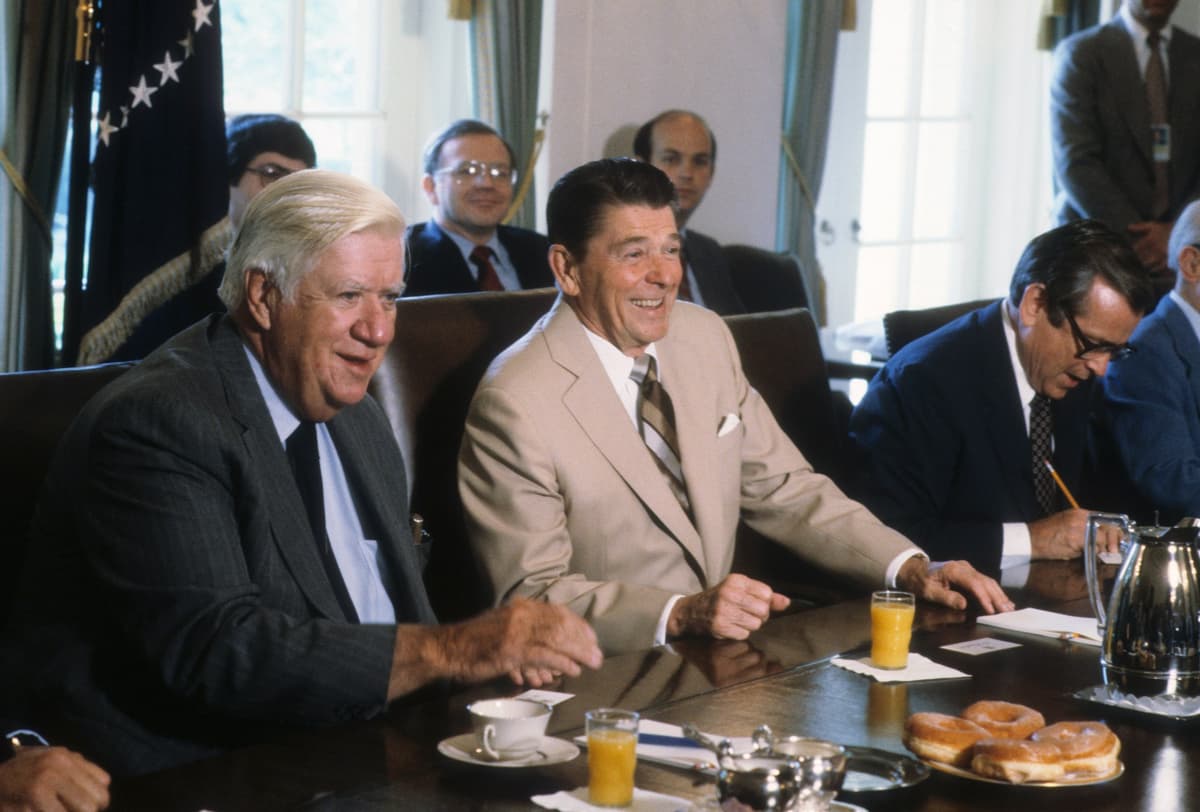
History offers a rare template for navigating such fiscal turbulence. In the early 1980s, a looming Social Security shortfall prompted President Ronald Reagan to convene a bipartisan commission chaired by Alan Greenspan. After a protracted stalemate, a discreet private pact between Reagan and Democratic Speaker Tip O’Neill provided the political cover needed to pass sweeping revenue and benefit reforms. Those 1983 amendments extended the program’s solvency for decades and stand as the last major overhaul of the system, illustrating how elite cooperation can overcome entrenched partisan gridlock.
Replicating that model today faces formidable obstacles. The current congressional environment is marked by heightened polarization, eroded trust in bipartisan initiatives, and a budget process many deem “broken.” The Simpson‑Bowles commission’s limited impact underscores the necessity of granting any new body both bipartisan legitimacy and enforceable authority. Policymakers considering a modern fiscal commission must therefore secure strong leadership, embed clear voting thresholds, and perhaps tie its recommendations to legislative action, ensuring that political will, not just structure, drives the reforms needed to stabilize the nation’s fiscal trajectory.
America faces a ‘debt crisis’ a lot like the 1980s when a ‘private pact’ brokered by Ronald Reagan did the trick
0
Comments
Want to join the conversation?
Loading comments...