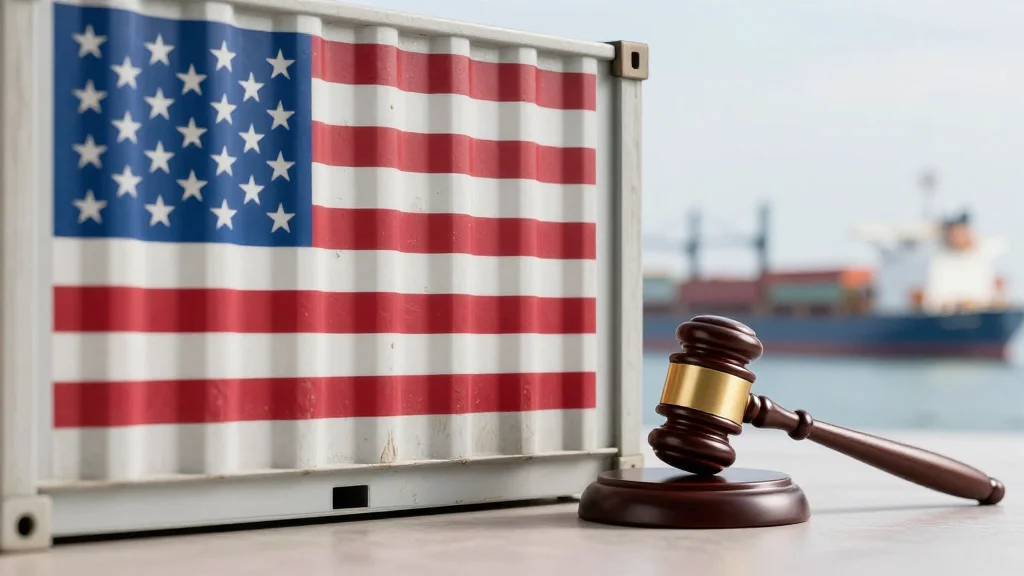
Appeals Court Lets Trump 10% Tariffs Stay in Place for Now
Why It Matters
The decision keeps the 10% duties active, preserving the administration’s leverage in trade talks and affecting import prices across multiple sectors. It also signals a potential shift in how Section 122 authority may be interpreted, with broader implications for future trade policy.
Key Takeaways
- •Appeals court permits enforcement of 10% tariffs pending appeal
- •Government likely to win Section 122 authority dispute
- •Case may reach Supreme Court over balance‑of‑payments definition
- •Tariffs affect imports, could influence trade negotiations
- •States and small businesses continue legal challenge
Pulse Analysis
Section 122 of the Trade Act of 1974, rarely used before the current administration, grants the president limited authority to impose duties to correct a balance‑of‑payments deficit. After the Supreme Court struck down earlier tariffs under the International Emergency Economic Powers Act, the White House turned to Section 122 as a legal foothold. The recent appellate ruling underscores the judiciary’s willingness to entertain a broader reading of the statute, challenging the trade court’s narrower liquidity‑focused definition and reviving debate over the statute’s original intent.
The immediate effect of keeping the 10% tariffs in place is felt across supply chains that rely on imported components, from automotive manufacturers to consumer electronics firms. Higher landed costs can compress margins, prompting companies to reassess pricing strategies or accelerate reshoring initiatives. Moreover, the administration argues that the duties bolster its negotiating position in bilateral talks, signaling a readiness to deploy trade tools if concessions are not met. Critics, however, warn that prolonged tariff exposure may strain relationships with key partners and invite retaliatory measures, potentially eroding the very trade balance the policy seeks to protect.
Legal experts anticipate the dispute will ascend to the Supreme Court, where the definition of a balance‑of‑payments deficit will be a focal point. A ruling that expands Section 122’s scope could set a precedent for future presidents to wield similar tariffs during economic downturns, reshaping the landscape of U.S. trade enforcement. Conversely, a narrow interpretation would reaffirm the trade court’s view, limiting executive flexibility and reinforcing the need for congressional action on trade imbalances. Stakeholders across industry and government are watching closely, as the outcome will influence both policy formulation and the strategic calculus of multinational corporations.
Appeals Court Lets Trump 10% Tariffs Stay in Place for Now
Comments
Want to join the conversation?
Loading comments...