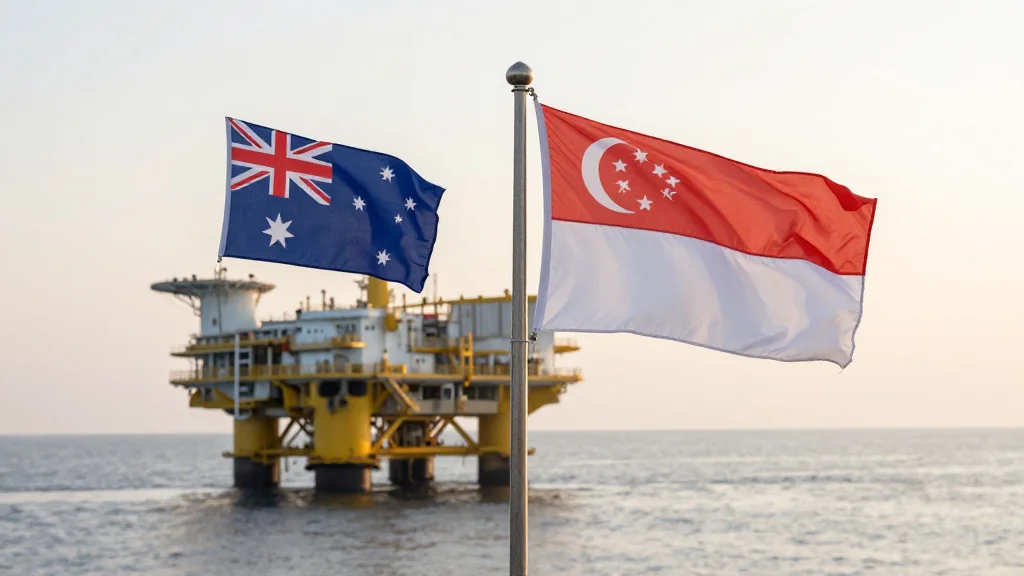
Australia Bends Asia over LNG Barrel
Key Takeaways
- •Albanese signals LNG production expansion while hinting at higher export taxes.
- •Singapore warns it may source LNG elsewhere if prices rise.
- •Australia seeks to secure oil imports by deepening ties with regional partners.
- •Asian demand for LNG remains strong amid global energy transition.
- •Potential tax shift could reshape Australia‑Asia energy trade dynamics.
Pulse Analysis
Australia remains the world’s third‑largest LNG exporter, supplying roughly 15 percent of Asia’s gas imports. Recent discoveries in the Carnarvon and Browse basins have boosted projected output, positioning the country as a cornerstone of the region’s energy transition away from coal. Yet the sector’s profitability hinges on stable pricing, and the Albanese government’s budget deliberations could alter that balance. By signaling a production boost while leaving export tax policy open, Canberra is attempting to capture higher fiscal returns without alienating its biggest customers.
Singapore’s warning reflects a broader Asian concern: rising costs could erode the cost‑competitiveness of Australian LNG against rivals such as Qatar, the United States, and emerging African projects. Lawrence Wong’s remarks signal that the city‑state, a major re‑export hub, is prepared to diversify its supply chain if Australian pricing becomes prohibitive. This diplomatic cue adds pressure on Australian policymakers to calibrate any tax increase carefully, lest they trigger a shift in trade flows that would diminish long‑standing revenue streams.
The potential tax shift carries strategic implications beyond immediate revenue. A higher levy could weaken Australia’s bargaining power in negotiations over oil imports and broader energy cooperation, while also influencing regional energy security calculations. Analysts predict that if Australia moves forward with steeper taxes, Asian buyers may accelerate contracts with alternative suppliers, reshaping the LNG market’s geography. Conversely, a measured approach could reinforce Australia’s role as a reliable, low‑cost supplier, sustaining its influence in the Asia‑Pacific energy landscape.
Australia bends Asia over LNG barrel
Comments
Want to join the conversation?