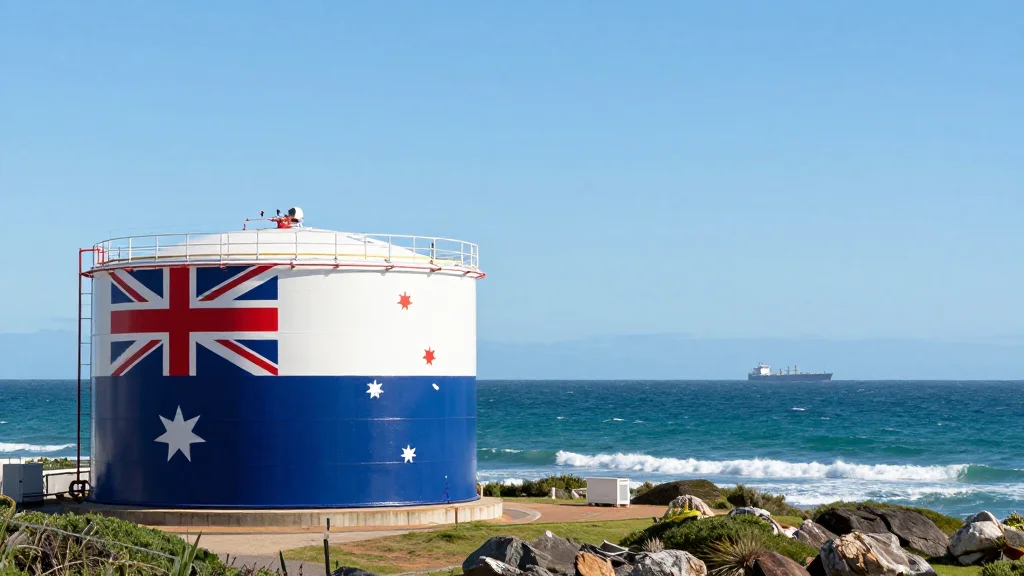
Australia Boosts Fuel Reserves to 46 Days as Strait of Hormuz Remains Closed

Companies Mentioned
Why It Matters
Australia’s decision to raise its strategic fuel reserves underscores a broader shift toward national energy security in the face of geopolitical disruptions. By securing an extra 10 days of supply, the government aims to blunt the economic fallout projected by EY‑Parthenon, which could otherwise erode GDP by billions and strain key sectors from mining to agriculture. The move also signals to global markets that Australia is prepared to manage supply shocks, potentially stabilising regional oil demand and tempering price volatility. The policy has ripple effects beyond Australia’s borders. As the Strait of Hormuz remains closed, countries reliant on its flow are forced to diversify supply chains, prompting a scramble for alternative sources and strategic stockpiling. Australia’s proactive stance may encourage other Asia‑Pacific economies to adopt similar safeguards, reshaping trade flows and influencing global oil pricing dynamics for the foreseeable future.
Key Takeaways
- •Australia increased strategic fuel reserves to 46 days, a 10‑day rise since the conflict began.
- •Strait of Hormuz closure has halted a fifth of global oil shipments, driving price spikes.
- •EY‑Parthenon forecasts a $42 billion GDP loss for Australia if the closure persists through 2026.
- •Fuel excise was cut by 32 cents per litre, a temporary measure that may be extended.
- •Prime Minister Albanese will meet state leaders in coming weeks to coordinate further energy security actions.
Pulse Analysis
Australia’s reserve build‑up is a textbook case of pre‑emptive macro‑policy in response to a supply‑side shock. Historically, nations have relied on market mechanisms to correct oil price spikes, but the unprecedented duration of the Hormuz closure forces a more active stance. By adding 10 days of fuel, Australia not only cushions domestic consumption but also signals to international traders that it can act as a stabilising anchor in the region. This could attract additional refined product imports, offsetting some of the supply gap caused by the strait’s shutdown.
From a fiscal perspective, the temporary fuel excise cut serves a dual purpose: it eases consumer pressure while preserving demand for transport‑intensive sectors. However, extending the cut beyond June could strain the federal budget, especially if the oil shock persists and the projected $54 billion investment shortfall materialises. Policymakers will need to balance short‑term relief with long‑term fiscal sustainability, perhaps by pairing tax relief with targeted subsidies for high‑energy‑use industries.
Looking forward, the key variable remains the geopolitical timeline of the Hormuz closure. If diplomatic efforts reopen the strait within months, Australia’s reserves may prove more than sufficient, and the fiscal cost of the excise cut will be modest. Conversely, a protracted closure could compel further strategic measures, such as domestic refinery capacity expansion or deeper regional cooperation on fuel logistics. In either scenario, Australia’s actions will be closely watched as a bellwether for how advanced economies adapt to sustained energy‑security threats.
Australia Boosts Fuel Reserves to 46 Days as Strait of Hormuz Remains Closed
Comments
Want to join the conversation?
Loading comments...