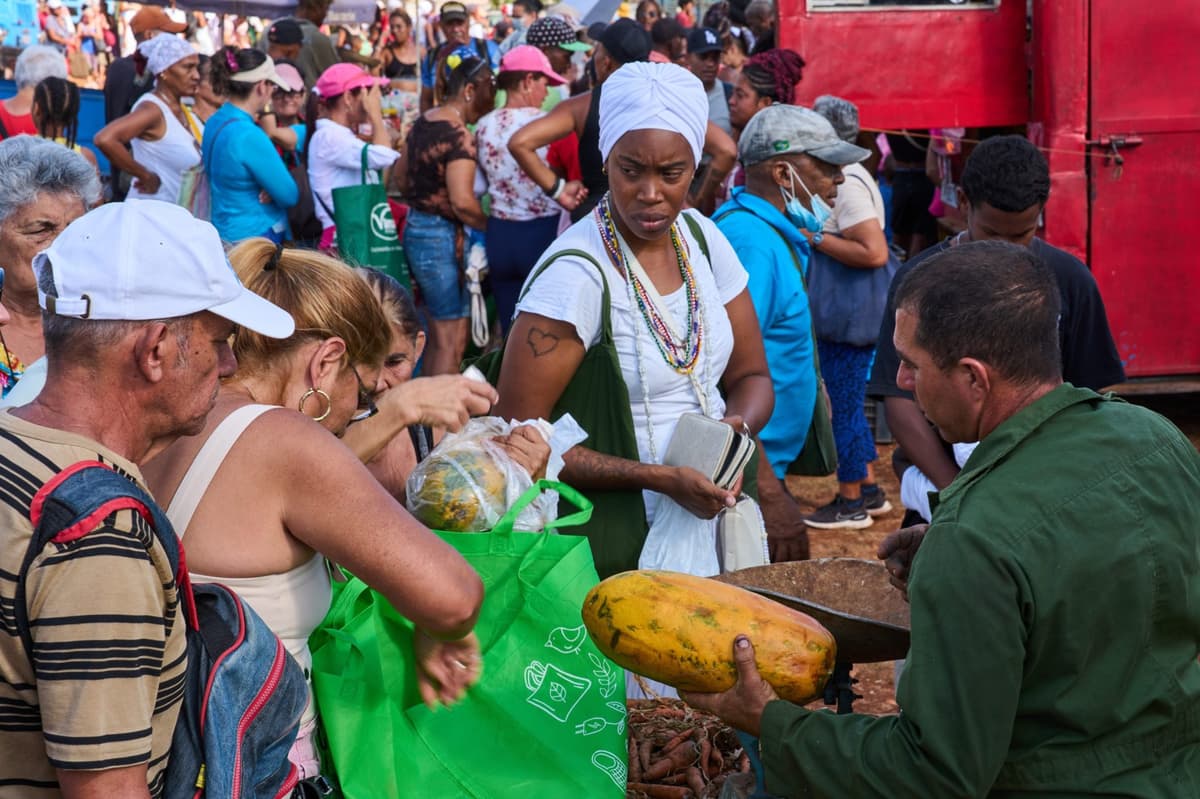
Basic Goods in Cuba Are Increasingly Sold in U.S. Dollars as Economy Collapses. ‘Everything Is Scarce Here — Everything — Even that Wretched Bread’
Why It Matters
The dollarization of everyday goods signals a systemic breakdown of Cuba’s socialist distribution model, threatening social stability and increasing pressure for policy reform or external assistance.
Key Takeaways
- •State‑run stores now sell basic goods in U.S. dollars
- •Ration books have shrunk, leaving many families undernourished
- •Average monthly salary is about $12, far below food costs
- •60% of Cubans rely on remittances to afford essentials
- •Government budget deficits force cuts to food imports and subsidies
Pulse Analysis
Cuba’s economy is spiraling as the state’s rationing system collapses under hyperinflation and dwindling foreign exchange. Once‑full bodegas now display empty shelves, and the few remaining items—rice, sugar, split chickpeas—are priced in U.S. dollars, a stark departure from the subsidized peso system that sustained generations. For a typical worker earning roughly 6,000 Cuban pesos a month (about $12), a single carton of 30 eggs costs $6, forcing families to ration meals to a single serving per day. The scarcity has turned everyday transactions into a survival game, with many citizens queuing for meager bread allocations while others scramble for remittances that now sustain 60% of the population.
Policy missteps have amplified the crisis. The 2021 merger of the convertible peso and the Cuban peso triggered runaway inflation, eroding purchasing power and leaving the government unable to fund essential food imports, which account for up to 80% of consumption. Budgetary pressures have forced officials to consider cash subsidies over direct food distribution, a strategy that risks further destabilizing the social safety net. Meanwhile, tourism—a key revenue stream—has plummeted due to the U.S. energy blockade and regional travel restrictions, stripping the state of a vital foreign‑currency source. The combination of fiscal imbalance, currency volatility, and external sanctions creates a perfect storm that deepens scarcity and fuels public discontent.
Looking ahead, Cuba faces a crossroads between tightening austerity and pursuing structural reforms. International actors, particularly the United States, could influence outcomes through calibrated sanctions relief or targeted humanitarian aid, but any assistance must navigate the island’s political sensitivities. Domestically, a credible plan to stabilize the currency, curb money printing, and re‑establish reliable food imports could restore confidence in the ration system. Without decisive action, the dollarization of basic goods may become entrenched, reshaping Cuba’s economic model and its relationship with the global market.
Basic goods in Cuba are increasingly sold in U.S. dollars as economy collapses. ‘Everything is scarce here — everything — even that wretched bread’
Comments
Want to join the conversation?
Loading comments...