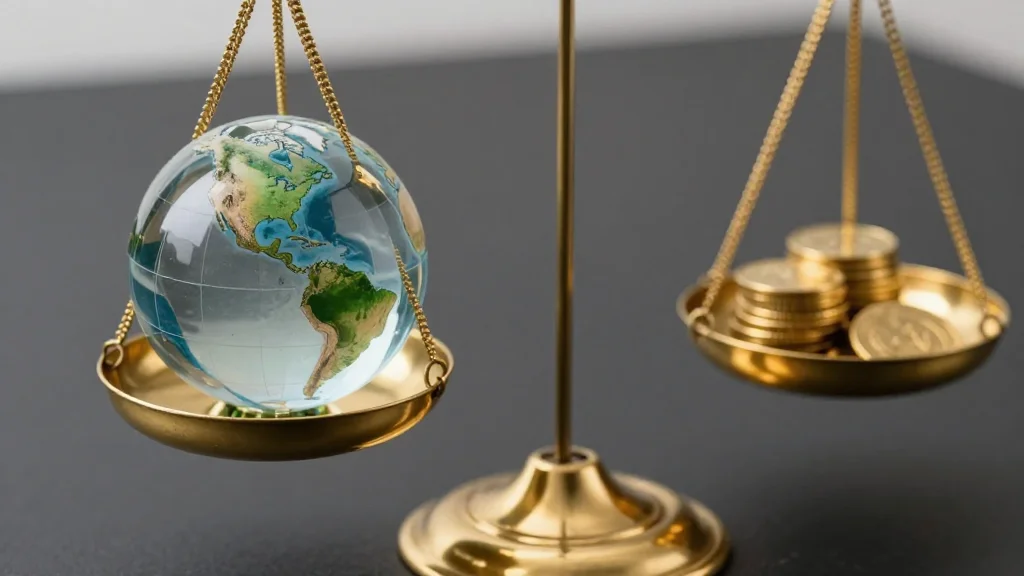
Beyond GDP: Could the UN Make a Greener Economic Metric a Reality?
Why It Matters
By moving beyond GDP, policymakers and investors can align economic goals with climate targets, driving more sustainable growth and risk‑adjusted capital allocation.
Key Takeaways
- •UN panel proposes 'Wellbeing Economy' metric integrating environmental and social factors
- •Framework emphasizes circular economy, natural capital accounting, and inclusive growth
- •Adoption depends on political will, data infrastructure, and alignment with existing statistics
- •Critics warn metric could dilute accountability if not standardized globally
- •Transition could reshape policy, investment, and corporate reporting beyond GDP
Pulse Analysis
GDP has long been the global yardstick for prosperity, yet its narrow focus on market transactions ignores environmental degradation and social inequality. As climate risks intensify, governments and investors demand metrics that capture the true cost of growth, prompting a surge in alternative indices such as the Genuine Progress Indicator and the Human Development Index. The UN‑appointed panel’s report builds on this momentum, offering a unified “wellbeing economy” framework that seeks to embed ecological limits and social outcomes into national accounts.
The proposed framework blends traditional economic data with new pillars: natural‑capital accounting to value ecosystems, circular‑economy metrics that track resource efficiency, and social inclusion indicators measuring health, education, and equity. Pilot studies in several European and Asian economies demonstrate how satellite data, household surveys, and corporate disclosures can be harmonized to produce a composite score. However, the methodology faces hurdles, including data gaps in low‑income countries, divergent statistical standards, and the need for transparent weighting schemes to avoid politicized outcomes.
If embraced, the wellbeing metric could reshape fiscal policy, redirecting subsidies toward green infrastructure and incentivizing firms to disclose sustainability performance in line with the new score. Investors would gain a more reliable gauge of long‑term risk, potentially lowering the cost of capital for companies that score well on environmental and social dimensions. Yet widespread adoption will require coordinated action by the UN, national statistical offices, and the private sector, as well as a clear timeline for integration into international reporting standards. The next decade will determine whether this greener metric moves from concept to cornerstone of global economic governance.
Beyond GDP: Could the UN make a greener economic metric a reality?
Comments
Want to join the conversation?
Loading comments...