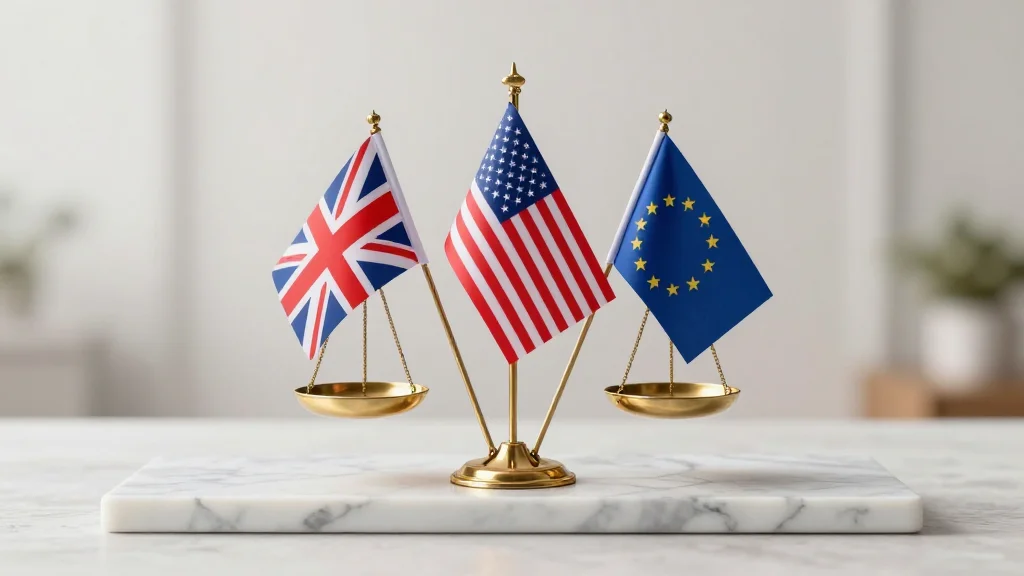
Britain’s Post-Brexit Policy Options
Why It Matters
Britain’s post‑Brexit direction will dictate its economic resilience, security alliances, and influence in the emerging US‑China rivalry, making the decision pivotal for both domestic prosperity and international stability.
Key Takeaways
- •UK faces choice: US alignment vs deeper EU integration.
- •Trade negotiations post-Brexit remain unsettled with major partners.
- •Security cooperation hinges on NATO and potential European Security Council.
- •Domestic politics pressure Treasury to consider EU re‑entry.
- •China’s rise forces Britain to balance economic and strategic interests.
Pulse Analysis
Britain’s post‑Brexit foreign policy is at a decisive inflection point, forced to reconcile its historic "special relationship" with Washington and the pragmatic need to stay connected to Europe. Analysts argue that as the United States pivots toward counter‑balancing China, London must decide whether to deepen transatlantic ties or diversify its diplomatic portfolio. This strategic calculus is complicated by the UK’s desire to retain sovereignty while still accessing the single market’s regulatory framework, a tension that fuels ongoing parliamentary debate.
Economically, the UK remains in a protracted negotiation phase with the EU, the United States, and emerging markets. Treasury officials have hinted that a formal re‑entry into the EU could become a realistic option if trade talks stall, especially given the potential for a European Security Council that could reshape continental defense spending. Meanwhile, British firms are navigating new customs regimes and seeking bilateral agreements that protect supply chains, particularly in high‑tech and green‑energy sectors. The uncertainty surrounding tariffs and regulatory alignment underscores the urgency for a coherent trade strategy.
On the security front, NATO continues to anchor Britain’s defense posture, yet the prospect of a European Security Council introduces a possible parallel framework for crisis management. Such a body could enhance coordination against Russian aggression and Iranian destabilization, while also providing a platform for the UK to influence continental security without full EU membership. Balancing these layers of alliance—NATO, potential EU mechanisms, and bilateral US ties—will determine how effectively Britain can safeguard its interests amid great‑power competition.
Britain’s post-Brexit policy options
Comments
Want to join the conversation?
Loading comments...