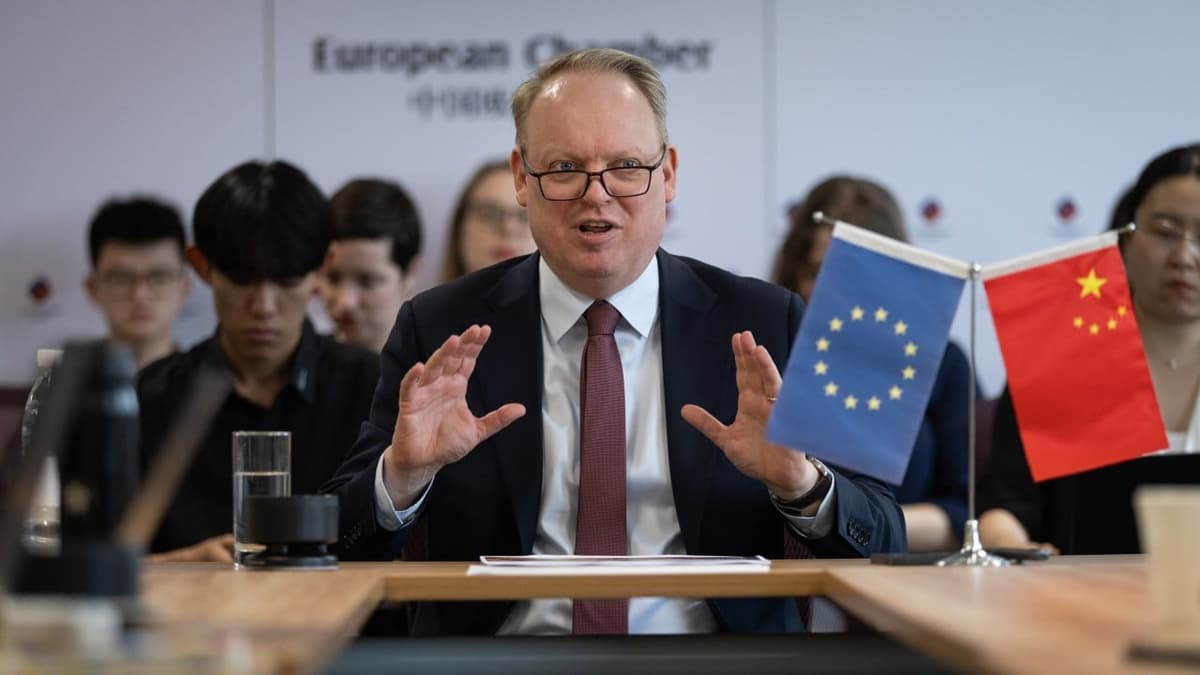
Brussels Must Resist ‘Passive’ Role in US-China Trade War, EU Chamber Urges
Why It Matters
Without proactive EU engagement, European companies risk supply‑chain disruptions and increased compliance costs, weakening the bloc’s competitiveness in high‑tech sectors.
Key Takeaways
- •EU Chamber urges Brussels to lead, not stay passive in US‑China talks
- •Chinese rare‑earth export controls hurt European firms, causing operational and financial losses
- •Extrateritorial rules may force EU firms to seek Chinese approval after November
- •Licensing is slow, opaque, and reveals detailed supply‑chain data to Beijing
- •Europe pushes coordinated response to safeguard critical material supply chains
Pulse Analysis
The United States and China have been locked in a tit‑for‑tat trade dispute that increasingly spills over into third‑party markets. While the rivalry centers on tariffs and technology bans, a less visible but equally consequential front is the control of critical minerals such as rare‑earth elements. These 17 metals underpin everything from smartphones to electric‑vehicle batteries and advanced weaponry, making them strategic assets for any industrialized economy. As Beijing leverages export restrictions to pressure Washington, European firms find themselves caught in the crossfire, prompting the EU Chamber of Commerce in China to demand a more assertive diplomatic stance.
Beijing’s export regime, first tightened in April and temporarily suspended after a high‑level Trump‑Xi meeting, includes extraterritorial provisions that could obligate European manufacturers to obtain Chinese clearance before shipping products containing Chinese inputs to any third country. The chamber’s report notes that many EU companies have already suffered “significant operational and financial damage” navigating opaque licensing procedures that demand granular supply‑chain data. The one‑year pause ends in November, leaving firms without clear guidance and exposing them to potential delays, increased compliance costs, and the risk of being black‑listed if they cannot meet Beijing’s stringent requirements.
For the EU, the stakes extend beyond immediate profit margins to long‑term economic security. A coordinated response—ranging from diversified sourcing of critical minerals to collective bargaining with Beijing—could mitigate the threat of supply‑chain choke points. Moreover, establishing a unified EU export‑control policy would signal to both Washington and Beijing that Europe will not be a passive bystander. Such a stance may also encourage the development of domestic rare‑earth processing capacity and stronger partnerships with allied producers, thereby reducing reliance on China and preserving the bloc’s competitiveness in high‑tech industries.
Brussels must resist ‘passive’ role in US-China trade war, EU chamber urges
Comments
Want to join the conversation?
Loading comments...