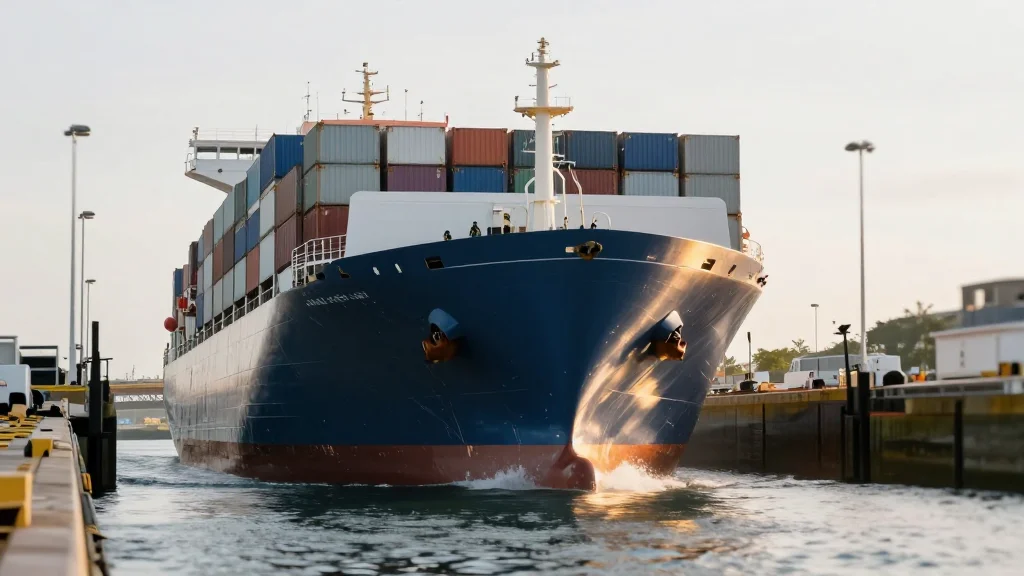
Businesses Pay Up to $4 Million to Cross Panama Canal
Companies Mentioned
Why It Matters
The shift diverts costly shipping traffic from the Middle East to the Panama Canal, inflating logistics expenses and tightening supply chains worldwide.
Key Takeaways
- •Additional auction fees rose to $425,000 per vessel
- •Some firms paid $4 million for urgent Panama Canal crossing
- •Strait of Hormuz closure drives traffic to Panama Canal
- •Panama Canal Authority records record revenue from premium slots
- •Higher crossing costs add pressure to global oil and freight prices
Pulse Analysis
The closure of the Strait of Hormuz has forced shippers to seek alternative routes, and the Panama Canal has emerged as the most viable option. Unlike the Canal’s traditional reservation system, slots are now allocated through a competitive auction where the highest bidder wins. This mechanism, designed to maximize revenue, has rapidly escalated fees as carriers scramble to avoid the security threats and delays associated with the Persian Gulf. The result is a pronounced price premium that reflects both scarcity and urgency.
For operators, the financial hit is significant. The baseline transit cost of $300,000‑$400,000 has been eclipsed by an extra $425,000 on average, and in extreme cases—such as a fuel vessel redirected to Singapore—companies have paid a staggering $4 million to secure a slot. Oil majors and container lines alike are absorbing these costs, which are quickly feeding into higher freight rates and, indirectly, into global oil prices that have already surged above $107 per barrel. Panama’s government, meanwhile, is capitalizing on the surge, reporting record earnings from the premium auction system while maintaining optimal water levels to accommodate the increased traffic.
Looking ahead, the premium pricing could become a new normal if Hormuz tensions persist. Shipping firms may factor these elevated costs into route planning, potentially reshaping trade corridors for years to come. The situation also underscores the strategic importance of the Panama Canal as a geopolitical lever, offering a reliable alternative when traditional chokepoints are compromised. Stakeholders will watch closely for any de‑escalation in the Middle East, as a reopening of Hormuz could reverse the current price dynamics, but until then, the Canal’s auction model is set to redefine cost structures across global supply chains.
Businesses Pay Up to $4 Million to Cross Panama Canal
Comments
Want to join the conversation?
Loading comments...