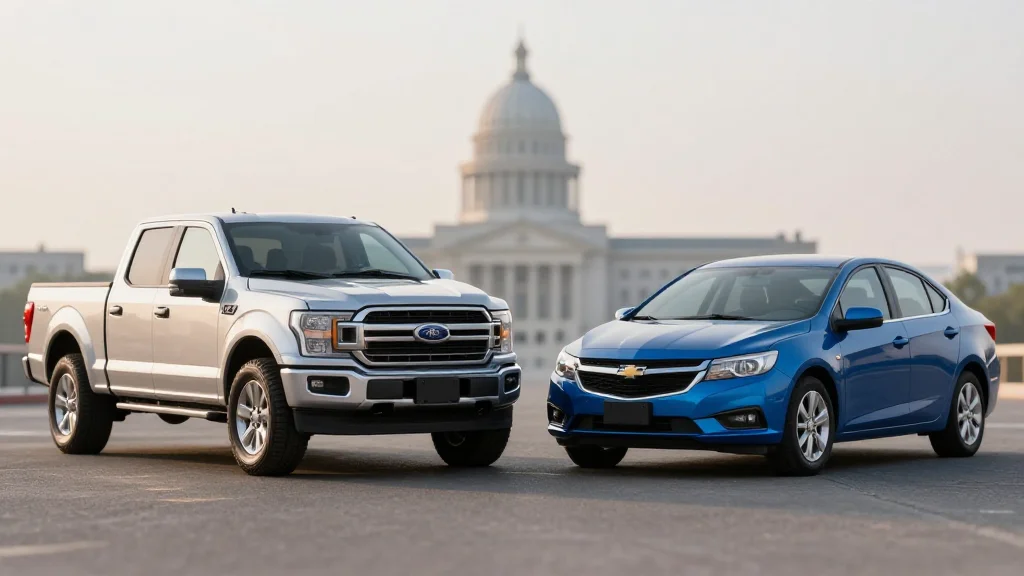
CFOs Flag Tariff Refunds, Led by Ford’s $1.3B Claim
Companies Mentioned

Why It Matters
The refunds represent a significant, non‑operational cash infusion for major manufacturers, potentially improving earnings and funding domestic investment. Their emergence highlights how policy shifts can quickly reshape corporate financial strategies.
Key Takeaways
- •Ford reports $1.3 billion potential tariff refund in Q1
- •GM expects $500 million in tariff refunds
- •Customs will start issuing refunds as early as May 11
- •Apple aims to reinvest any refund into U.S. innovation
- •CFOs highlight refunds as earnings‑call agenda item
Pulse Analysis
The U.S. Supreme Court’s February ruling that invalidated several China‑origin tariffs opened a new avenue for companies to recoup billions in duties. U.S. Customs and Border Protection has already begun accepting claims, with the agency planning to start disbursements by May 11. This process, while administrative, offers a rare, large‑scale cash‑flow boost that can be redirected toward growth initiatives, especially for firms that have built supply chains around the now‑voided tariffs.
For the automotive sector, the timing is crucial. Ford’s CFO Sherry House highlighted a $1.3 billion potential refund, while General Motors projected $500 million. Both automakers are navigating a volatile market marked by supply‑chain disruptions and electrification investments; the refunds could help offset capital expenditures or improve liquidity without altering earnings guidance. However, the lack of certainty around payment dates forces CFOs to treat the amounts as contingent, underscoring the delicate balance between optimism and fiscal prudence.
Beyond autos, the trend is spreading to consumer goods and technology firms. Procter & Gamble estimates a $150 million after‑tax recovery, and Apple plans to channel any refund into U.S. innovation and advanced manufacturing. These moves illustrate how companies are leveraging policy reversals to reinforce domestic production and R&D pipelines. As more firms file claims, the aggregate refund pool could reshape corporate budgeting, prompting a wave of reinvestment that may accelerate U.S. manufacturing competitiveness in the coming years.
CFOs flag tariff refunds, led by Ford’s $1.3B claim
Comments
Want to join the conversation?
Loading comments...