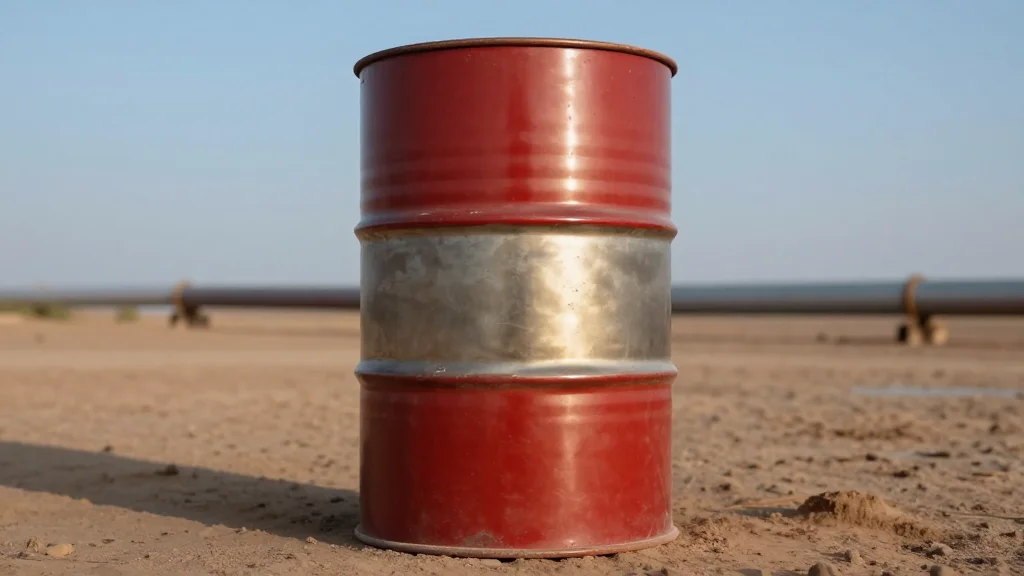
China Extends Zero‑Tariff Access to Niger, Deepening Oil‑Centric Ties

Companies Mentioned
Why It Matters
The zero‑tariff extension to Niger illustrates how China leverages trade policy to secure strategic resources in Africa, reinforcing its Belt and Road footprint in a region traditionally dominated by Western powers. By lowering import costs for a junta‑run economy heavily dependent on oil, Beijing not only stabilises a key revenue source but also entrenches political influence, potentially reshaping the balance of trade and diplomatic alignments across the Sahel. For global investors, the move signals heightened exposure to Chinese‑backed projects in fragile states, raising questions about sovereign risk, currency exposure, and the durability of Chinese financing amid political volatility. Policymakers in the U.S. and Europe will need to reassess their engagement strategies in Africa, where trade incentives are increasingly tied to geopolitical loyalty rather than purely economic considerations.
Key Takeaways
- •China adds Niger to a zero‑tariff list covering 53 African nations, removing import duties on Chinese goods.
- •CNPC’s $5 billion investment built a 2,000‑km oil pipeline that has exported over $2 billion of Meleck oil.
- •World Bank approved a $250 million grant and IMF disbursed $90 million to support Niger’s fiscal gap.
- •Chinese diplomatic backing for sovereign governments, exemplified by its stance on Cuba, underscores a broader multipolar strategy.
- •Chinese‑linked firms like Zijin Mining hold stakes in African mining, reflecting deepening capital ties beyond oil.
Pulse Analysis
China’s tariff concession to Niger is a textbook case of economic statecraft: it couples market access with infrastructure investment to lock in resource flows. Historically, Beijing has used preferential trade terms to cement relationships in Latin America and Southeast Asia; the African rollout marks a scaling of that playbook into a region where political instability can be both a risk and a lever. By eliminating tariffs, China reduces the cost of essential inputs for CNPC’s oil operations, effectively subsidising its own downstream profitability while offering the Nigerien government a fiscal lifeline.
The timing is crucial. After the 2023 pipeline blockade and the 2025 expulsion of Chinese executives, the Nigerien junta faced a credibility crisis. Zero‑tariff access provides an immediate economic boost, but it also deepens dependency on Chinese capital and diplomatic support. This creates a feedback loop: as Niger leans more on Beijing, China gains bargaining power to shape policy, from tax regimes to security cooperation. The risk is that any shift in the junta’s stance—whether toward greater nationalism or a pivot to Western partners—could jeopardise the pipeline’s viability and, by extension, China’s return on its $5 billion outlay.
For investors, the development signals both opportunity and caution. Companies tied to the pipeline, such as CNPC and ancillary service providers, stand to benefit from smoother logistics and lower input costs. Conversely, firms operating in parallel sectors—like mining ventures backed by Chinese investors—must navigate a landscape where political risk premiums are rising. The broader implication is a re‑balancing of Africa’s trade architecture, where Chinese preferential treatment may crowd out traditional Western aid and investment, reshaping the continent’s economic trajectory for the next decade.
China Extends Zero‑Tariff Access to Niger, Deepening Oil‑Centric Ties
Comments
Want to join the conversation?
Loading comments...