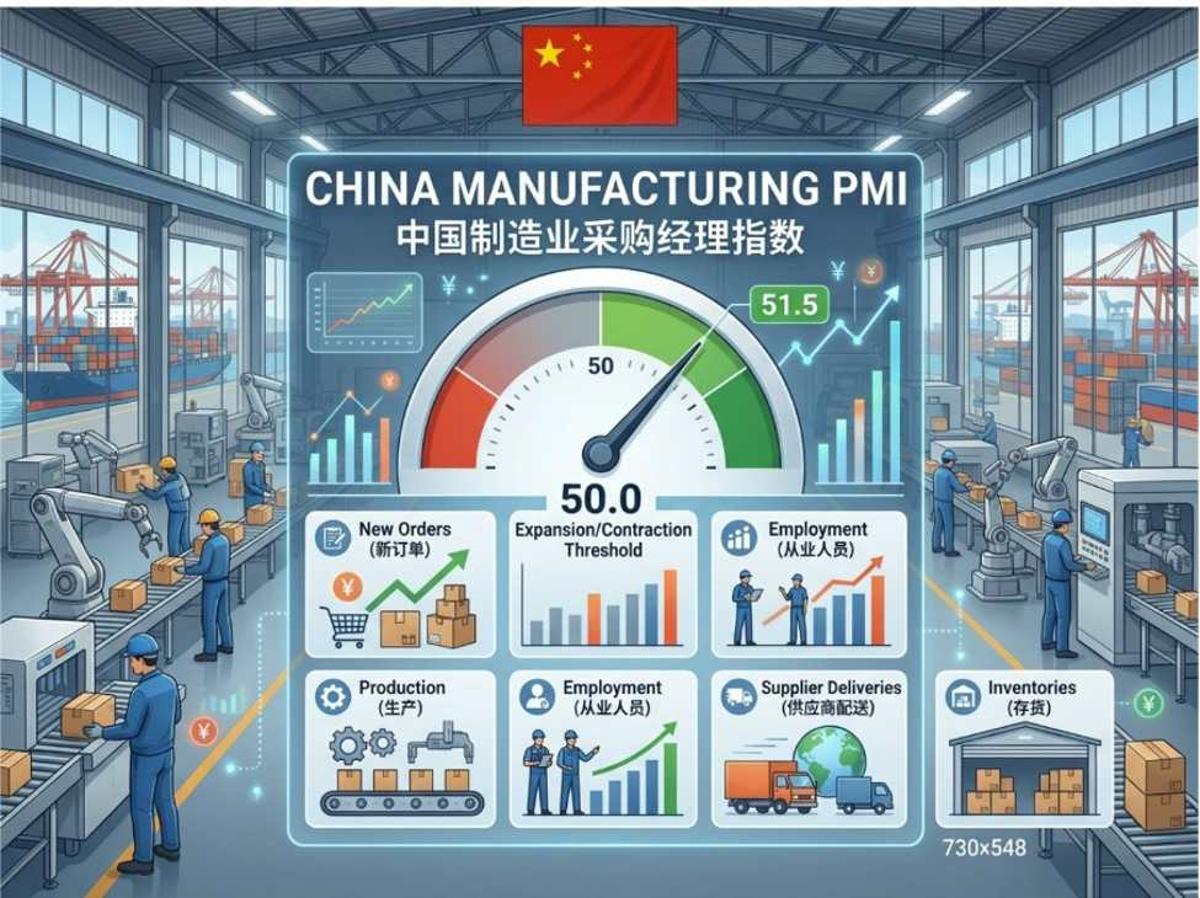
China Manufacturing PMI Forecast to Slip to 50.1 in April. Mid East War Lifts Input Costs
Companies Mentioned
Why It Matters
A weaker PMI amid cost‑push inflation could erode factory margins and dampen demand, testing the durability of China’s early‑year growth momentum. The data will shape monetary policy and influence global commodity markets that depend on Chinese industrial activity.
Key Takeaways
- •April PMI forecast 50.1, down from 50.4 in March
- •Q1 GDP grew 5%, meeting Beijing's growth target
- •Factory‑gate prices end 41‑month deflation, driven by energy costs
- •PBOC holds loan prime rates for 11th month, limiting easing
- •Moody's upgrades China sovereign outlook to stable
Pulse Analysis
The manufacturing PMI remains a bellwether for China’s economic health, and the forecasted 50.1 reading for April signals a modest slowdown after three months of expansion. While the index stays above the 50‑point threshold, the dip reflects mounting pressure from higher input costs, especially in energy‑intensive sectors such as non‑ferrous metal mining. Analysts see this as an early warning that the factory floor is feeling the ripple effects of the Middle East conflict, even as overall output continues to grow.
Cost‑push inflation has re‑emerged after a 41‑month deflationary stretch, as global crude and freight price spikes feed through to domestic producers. China’s strategic petroleum reserves and diversified energy mix have so far cushioned the shock, but their capacity is finite. Simultaneously, strong demand for Chinese electronics provides a buffer, yet that demand is vulnerable to a broader slowdown in global growth. The combination of higher input prices and stagnant end‑demand threatens to compress margins, a scenario ANZ warns could shift the PMI from softening to contraction if unchecked.
Policy makers appear cautious. The People’s Bank of China kept its benchmark loan prime rates unchanged for an eleventh consecutive month, signaling confidence in the current momentum while keeping monetary stimulus at arm’s length. Moody’s recent upgrade of China’s sovereign rating to stable underscores the perception of fiscal resilience. However, if the PMI slides toward the 50‑point line and input‑cost pressures persist, the central bank may be forced to reconsider its stance, and commodity markets—particularly copper, aluminium and oil—could feel the impact of waning Chinese industrial demand.
China manufacturing PMI forecast to slip to 50.1 in April. Mid East war lifts input costs
Comments
Want to join the conversation?
Loading comments...