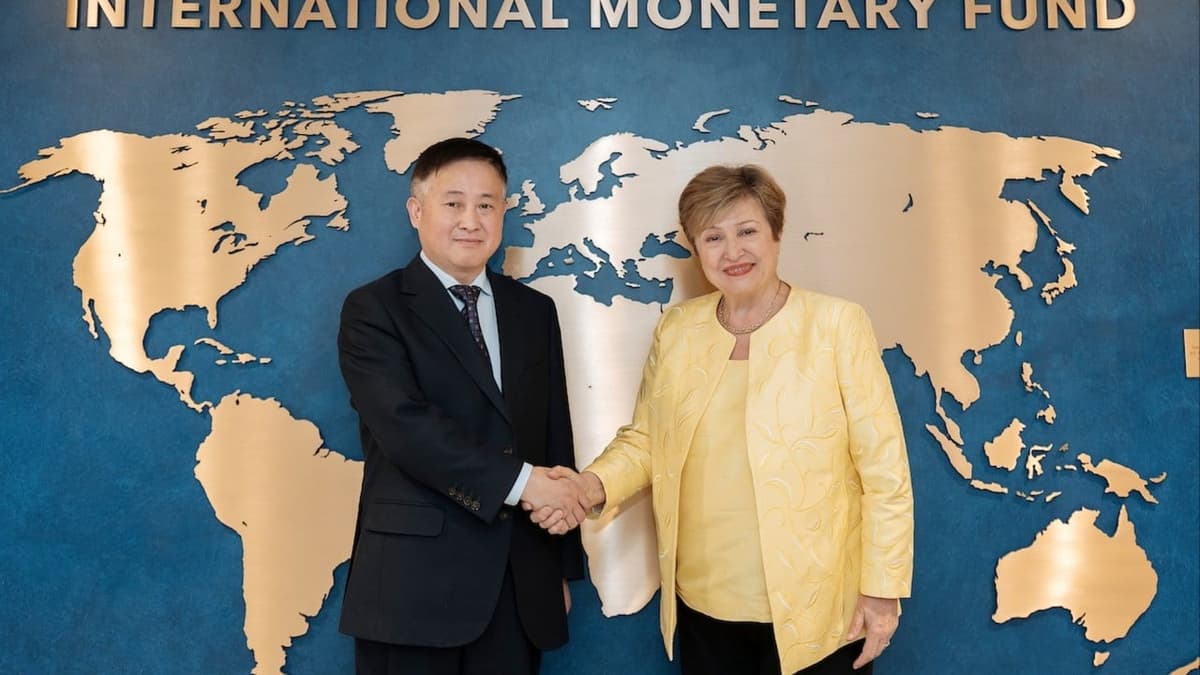
China Presses IMF for Quota Reform, Better Surveillance of Advanced Economies
Why It Matters
If the IMF adjusts its surveillance and quota structure, it could reshape global financial governance and give emerging economies a louder voice in crisis management. The initiative also tests the balance of power between the United States and China within the world’s premier multilateral lender.
Key Takeaways
- •China urges IMF to tighten surveillance of advanced economies' fiscal risks.
- •Beijing calls for quota reform to boost emerging market representation.
- •Pan warns protectionism threatens global growth amid geopolitical tensions.
- •US holds 17% IMF voting power, limiting quota change prospects.
- •China seeks Global South backing to influence IMF governance.
Pulse Analysis
The International Monetary Fund stands at a crossroads as Beijing amplifies its call for reform. Pan Gongsheng’s remarks to the IMF’s International Monetary and Financial Committee come amid heightened geopolitical friction—from the war in the Middle East to the bottleneck in the Strait of Hormuz that has spiked oil and LNG prices. By urging the IMF to sharpen its surveillance of budgetary vulnerabilities in the United States, Europe and Japan, China is positioning the fund as a proactive stabiliser rather than a passive observer, a stance that resonates with many developing nations wary of external shocks.
At the heart of the debate lies the IMF’s quota system, which determines each member’s financial contribution, voting rights and access to emergency financing. With the United States controlling roughly 17 percent of the vote, any realignment that would elevate the share of emerging markets faces a steep 85‑percent super‑majority hurdle. China’s push for a quota‑share realignment seeks to reflect the shifting weight of the global economy, where China now rivals the U.S. in GDP terms. Yet the entrenched voting power of the U.S. and the political calculus of other major shareholders make swift change unlikely, underscoring the diplomatic challenge Beijing faces within the institution.
The broader implication is a potential reshaping of multilateral financial governance. If the IMF adopts tighter fiscal surveillance and more inclusive quota allocations, it could enhance its credibility and responsiveness during crises, offering emerging economies a stronger safety net. Conversely, resistance from the U.S. could cement the status quo, prompting China to rally the Global South for a coordinated push. Stakeholders—from sovereign investors to policy makers—should monitor how these dynamics evolve, as they will influence not only IMF reform but also the architecture of global economic cooperation in an increasingly multipolar world.
China presses IMF for quota reform, better surveillance of advanced economies
Comments
Want to join the conversation?
Loading comments...