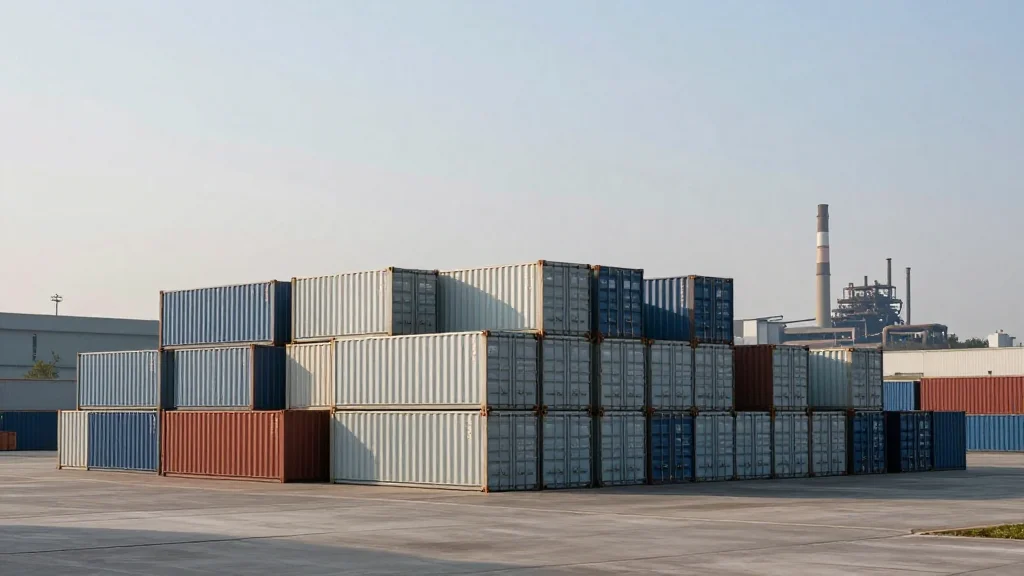
China’s Industrial Asset Base Hits $28 Trillion, Reinforcing Its Global Manufacturing Clout

Companies Mentioned

Bloomberg
MSCI
MSCI
Why It Matters
China’s $28 trillion industrial asset base is a barometer of the country’s manufacturing resilience and its capacity to influence global commodity demand. A larger asset pool means more capital for upgrading factories, adopting green technologies, and maintaining supply chain continuity, which in turn affects prices of raw materials worldwide. For investors and policy makers, the figure signals where future growth, trade negotiations, and strategic investments are likely to concentrate. The valuation also highlights the competitive pressure on other manufacturing hubs. Nations seeking to attract FDI must now contend with a China that can deploy vast resources quickly, making diversification strategies more complex. Understanding the scale and composition of China’s assets helps governments calibrate industrial policy, while firms can better gauge risk and opportunity in their supply chain decisions.
Key Takeaways
- •China’s industrial assets total $28 trillion as of end‑April 2026, per Trend.az.
- •Year‑over‑year growth of the asset base is about 7 %, double the global industrial growth rate.
- •The valuation includes factories, logistics, energy, and real‑estate assets supporting manufacturing.
- •Higher asset levels sustain strong demand for raw materials like iron ore and copper.
- •Analysts expect a detailed asset composition report later in 2026, focusing on green and digital investments.
Pulse Analysis
The $28 trillion figure is more than a headline; it reflects a structural advantage that China has built over three decades of state‑guided industrial policy. By aggregating a wide spectrum of assets—from heavy industry to high‑tech parks—China has created a network effect that lowers marginal costs for scaling production. This network effect becomes a strategic lever in trade negotiations, allowing Beijing to offer bundled incentives that smaller economies cannot match.
Historically, industrial asset accumulation has been a predictor of export capacity. In the 1990s, Japan’s rapid asset buildup underpinned its rise as a tech exporter, while Germany’s Mittelstand assets sustained its engineering dominance. China’s current asset level suggests a similar trajectory, but with a modern twist: a pronounced shift toward automation and sustainability. If the upcoming asset breakdown confirms a sizable allocation to green technologies, China could lock in a competitive edge in emerging sectors such as electric‑vehicle batteries and renewable‑energy equipment.
Looking forward, the key question is whether China can sustain asset growth without triggering overcapacity, a chronic issue in steel and cement. The government’s dual‑circulation strategy aims to rebalance domestic demand with export strength, potentially mitigating the risk of a supply glut. For global investors, the asset valuation signals both opportunity—through exposure to commodity exporters and Chinese industrial equities—and risk, as policy shifts could rapidly alter the investment landscape. Monitoring the next tranche of data will be essential for gauging the durability of China’s industrial dominance.
China’s Industrial Asset Base Hits $28 Trillion, Reinforcing Its Global Manufacturing Clout
Comments
Want to join the conversation?
Loading comments...