China’s Subsidy Machine Is Reshaping Global Capitalism
Companies Mentioned
Why It Matters
China’s massive subsidies are reshaping competitive dynamics, forcing Western economies to choose between matching state support or relying on free‑market mechanisms. The resulting subsidy race threatens to distort prices, create overcapacity, and redefine the rules of global capitalism.
Key Takeaways
- •Global subsidies hit $108 billion, highest since 2008‑09 crisis.
- •Chinese firms receive 3‑8× more state support than OECD peers.
- •China’s semiconductor subsidies reach ~10 % of revenues, driving 83.7 % export growth.
- •Chinese solar capacity hits 1,200 GW, pushing panel prices down 90 %.
- •Western tariffs target Chinese renewables, sparking a subsidy‑driven trade battle.
Pulse Analysis
The post‑COVID era has exposed fragile supply chains, prompting governments to inject unprecedented capital into sectors deemed critical for national security and climate goals. While the OECD’s $108 billion figure reflects a broad, multi‑government effort, China’s approach diverges by concentrating deep, long‑term financing on a handful of industries. This strategy not only accelerates domestic capability but also creates a structural advantage that private‑capital‑driven economies struggle to match, fundamentally altering the competitive landscape of global manufacturing.
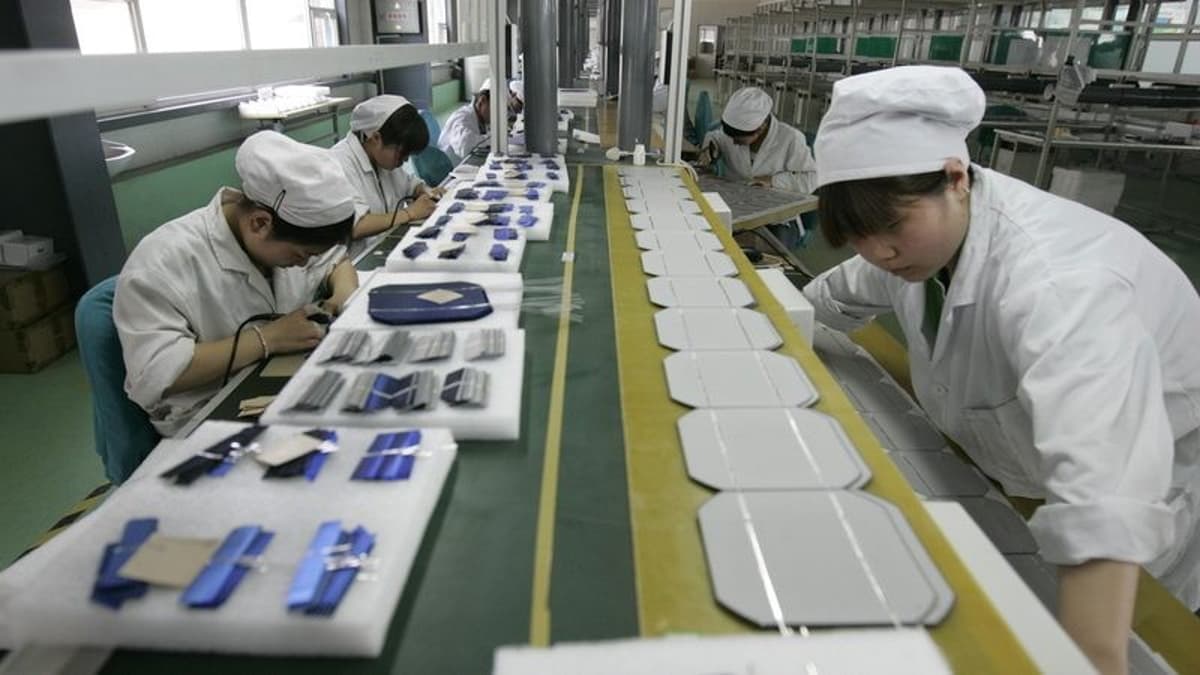
In semiconductors, Chinese subsidies now represent roughly 10 % of firm revenues, a stark contrast to the 2 % average elsewhere. The infusion has powered an 83.7 % jump in integrated‑circuit exports, positioning firms like YMTC and CXMT as emerging challengers to Samsung and SK Hynix. Parallelly, the solar sector enjoys a 3.2 % revenue subsidy, enabling a 1,200 GW production capacity that dwarfs global demand and has slashed panel prices by 90 % over 15 years. While these subsidies drive market share gains, they also generate overcapacity and squeeze profitability, prompting Beijing to taper certain incentives such as the 9 % VAT rebate.
Western policymakers are countering with punitive tariffs—up to 50 % on Chinese solar cells and 100 % on EVs—aimed at leveling the playing field. Yet tariffs alone cannot replicate the patient capital and policy certainty that underpin China’s industrial champions. The emerging subsidy race forces the West to confront a strategic dilemma: either adopt similar state‑backed investment models or risk ceding critical technology domains to Beijing. The outcome will shape the next decade of global trade, innovation, and the very definition of capitalism.
China’s Subsidy Machine Is Reshaping Global Capitalism
Comments
Want to join the conversation?
Loading comments...