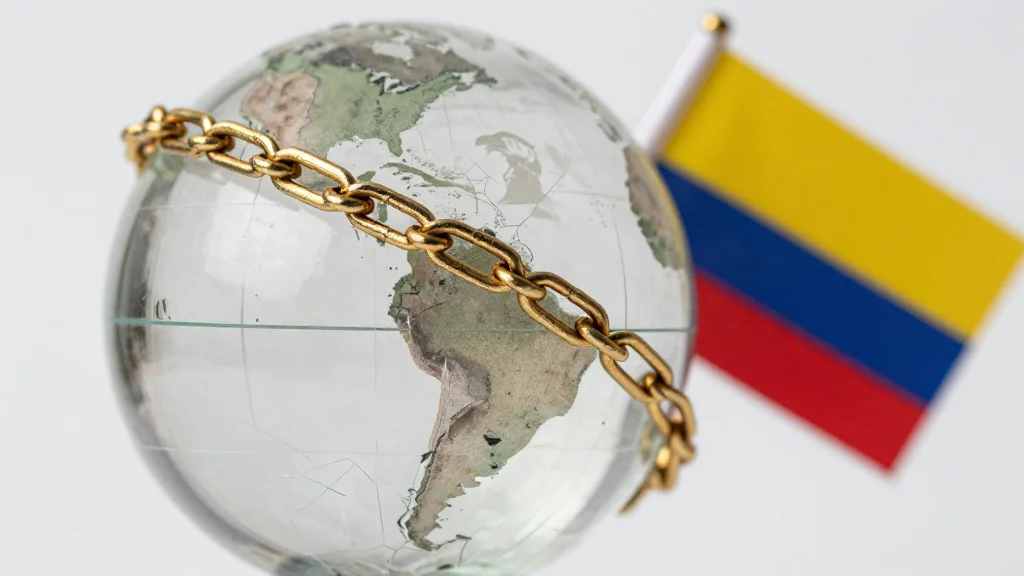
Colombia's Petro Warns of Latin American 'Rebellion' If US Doesn't Rethink Policy
Why It Matters
The statement signals rising friction between the United States and left‑leaning governments in the region, potentially complicating U.S. foreign‑policy and trade strategies.
Key Takeaways
- •Petro warns U.S. pressure may trigger regional rebellion
- •He claims OFAC sanctions are political extortion tools
- •Cites alleged U.S. bombing of Caracas as intimidation
- •Maintains personal rapport with Donald Trump despite tensions
- •Remarks delivered at Barcelona summit with Spain, Brazil, Mexico
Pulse Analysis
The United States has increasingly weaponized its sanctions regime to pressure governments it deems unfriendly, a tactic that has become a flashpoint across Latin America. Colombia’s President Gustavo Petro, a former M‑19 guerrilla commander turned democratically elected leader, found himself on the Treasury’s Office of Foreign Assets Control (OFAC) list in 2023 over alleged ties to the illicit drug trade. In a recent interview with Spain’s El Pais, Petro framed the sanctions not as a legal measure but as a political lever designed to coerce dissenting administrations, echoing long‑standing resentment toward external interference.
Petro’s warning of a “rebellion” taps into a broader regional narrative that U.S. coercion could backfire, galvanizing left‑leaning governments in Brazil, Mexico and beyond to push back against Washington’s influence. He cited a purported U.S. bombing of Caracas—a claim that, if believed, would underscore a willingness to use force beyond diplomatic channels. Such rhetoric raises the specter of coordinated diplomatic resistance, potentially complicating U.S. trade negotiations, security cooperation, and anti‑narcotics initiatives. Analysts note that even symbolic defiance can translate into legislative hurdles for future American aid packages in the hemisphere.
Despite the sharp public tone, Petro emphasized a personal rapport with former President Donald Trump, noting recent phone calls that “shattered false narratives.” This dual strategy—publicly challenging U.S. policy while maintaining back‑channel communication—reflects a pragmatic calculus aimed at preserving Colombia’s economic ties and security assistance. As Petro prepares to leave office in August, his successor will inherit a more strained bilateral relationship, forcing Bogotá to navigate between Washington’s expectations and a growing regional coalition skeptical of U.S. motives. The episode underscores how individual leaders can shape macro‑geopolitical currents.
Colombia's Petro warns of Latin American 'rebellion' if US doesn't rethink policy
Comments
Want to join the conversation?
Loading comments...