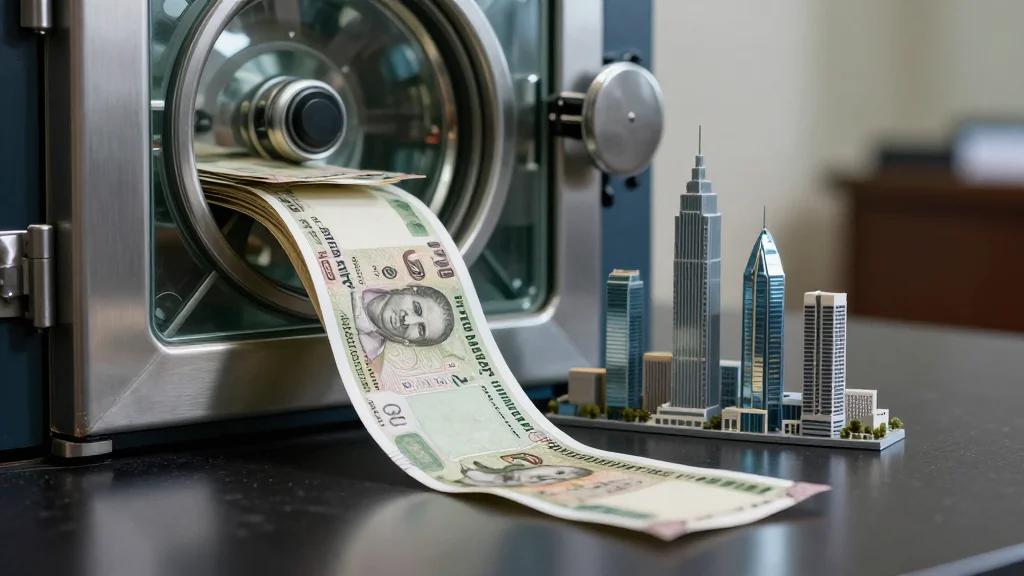
Credit Flows Jump 38% in FY26 as RBI Easing Boosts Demand
Companies Mentioned

Reserve Bank of India
Why It Matters
The rebound signals renewed corporate borrowing appetite, bolstering bank earnings and supporting India’s growth trajectory, while heightened foreign inflows underscore confidence in the economy’s reform agenda.
Key Takeaways
- •Credit growth surged 38% in FY26, reaching ₹44.6 lakh crore (~$537 bn).
- •Lending rates dropped to 9% after RBI cut 125 bps since Feb 2025.
- •Non‑bank financing rose 15.6% to ₹99 lakh crore (~$1.2 tn).
- •Foreign direct investment climbed 49% to ₹3.24 lakh crore (~$39 bn).
- •Outstanding commercial sector credit crossed ₹300 lakh crore (~$3.6 tn) for first time.
Pulse Analysis
India’s credit market is experiencing a pronounced turnaround, driven by the Reserve Bank of India's aggressive easing measures that began in early 2025. By trimming the policy repo rate by a cumulative 125 basis points and slashing the cash reserve ratio, the RBI lowered borrowing costs across the financial system. The transmission effect saw lending rates fall by 87 basis points to 9%, a level that rekindles demand among corporates seeking to fund expansion, refinance existing debt, or tap new growth opportunities. This policy shift also coincided with a substantial liquidity injection of ₹8.8 lakh crore through government‑bond purchases, further smoothing credit conditions.
The surge in credit flows has broader implications for both traditional banks and the expanding non‑bank finance sector. Banks benefit from higher loan volumes, which can translate into improved net interest margins as the spread between funding costs and lending rates widens. Meanwhile, non‑banking finance companies, equity issuers, and corporate bond markets have collectively contributed over ₹10 lakh crore in financing, reflecting diversification of funding sources beyond the banking system. Foreign investors are also showing heightened confidence, with foreign direct investment climbing nearly 50% to ₹3.24 lakh crore, bolstering the capital account and providing additional foreign currency liquidity.
Looking ahead, the sustainability of this credit expansion will hinge on the RBI’s ability to balance growth support with inflationary pressures. Continued rate moderation could further stimulate borrowing, but any resurgence in price pressures may prompt a tightening cycle, potentially dampening the credit boom. Moreover, the unprecedented scale of outstanding commercial‑sector credit—now exceeding ₹300 lakh crore—raises concerns about asset‑quality risks if economic growth slows. Stakeholders will be watching closely for signs of stress in loan portfolios, especially in sectors vulnerable to global demand fluctuations, as India navigates its post‑pandemic recovery path.
Credit flows jump 38% in FY26 as RBI easing boosts demand
Comments
Want to join the conversation?
Loading comments...