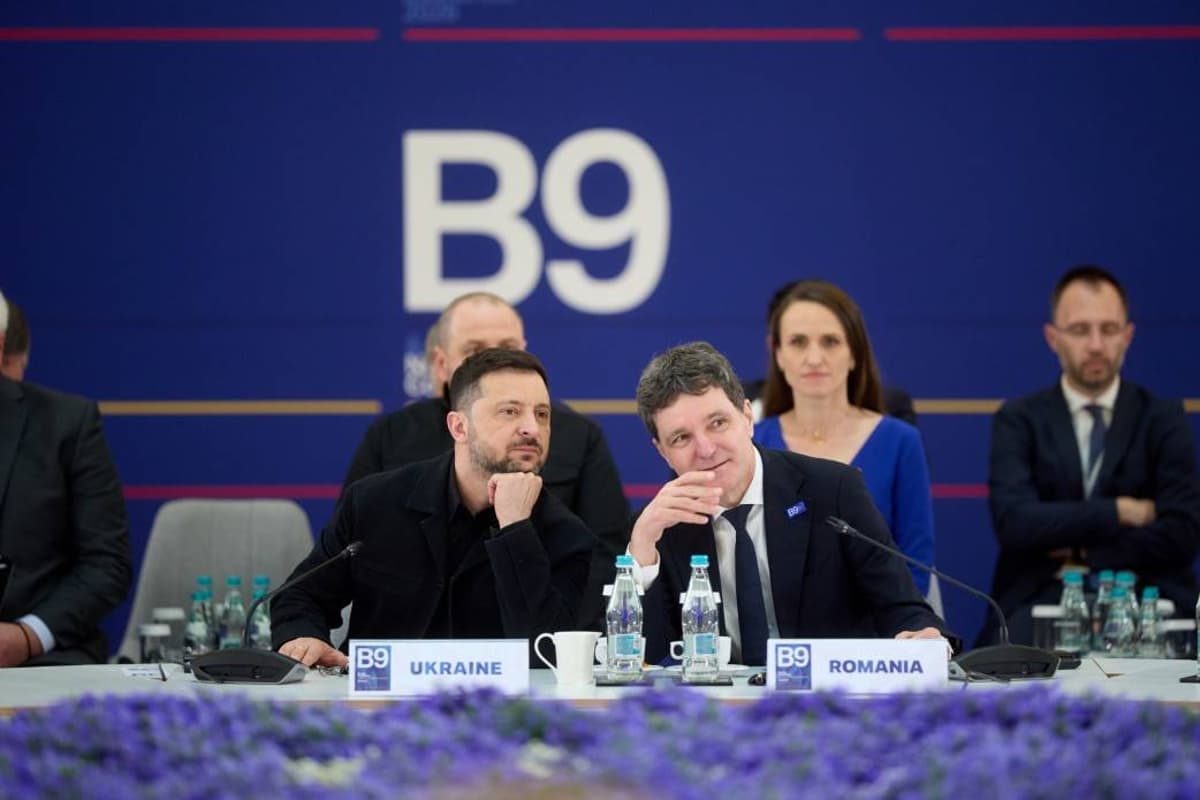
Dispatch From Bucharest: NATO’s Center of Gravity Is Shifting Eastward
Why It Matters
The summit signals a decisive shift in NATO’s focus toward its eastern and northern members, reshaping burden‑sharing and defence‑industry dynamics across the alliance. It also tests Romania’s ability to project stability and attract investment while leading a more integrated Euro‑Atlantic security architecture.
Key Takeaways
- •Bucharest Nine summit highlighted NATO’s eastern flank as strategic center
- •Nordic allies joined, creating integrated north‑eastern security architecture
- •Leaders called for expanded air, missile defense and defence‑industry coordination
- •“NATO 3.0” urges Europe to boost conventional defence, US remains anchor
- •Romania’s political instability tests its role as regional security hub
Pulse Analysis
The May 2026 Bucharest Nine and Nordic Allies summit marked a watershed moment for NATO, as the alliance’s strategic emphasis moved from a peripheral eastern zone to a central pillar of its collective defence. By convening leaders from Central and Eastern Europe, the Nordic states, and Ukraine, the meeting highlighted the growing interdependence of security challenges—from drone incursions over the Black Sea to cyber‑attacks on critical infrastructure. The joint statement framed the eastern flank not merely as a buffer but as a driver of NATO’s future deterrence posture, reinforcing the need for integrated air and missile defence systems and a coordinated defence‑industrial base.
A key narrative that emerged was the informal "NATO 3.0" concept, which envisions a Europe that shoulders a larger share of conventional defence while the United States remains the indispensable strategic anchor. This vision aligns with recent NATO commitments to increase defence spending to 2% of GDP and to deepen cross‑border procurement and supply‑chain resilience. By urging member states to expand defence budgets, modernise armed forces, and harmonise industrial capabilities, the summit sought to address long‑standing burden‑sharing gaps and to build a more self‑sufficient European pillar within the alliance.
Romania’s role as host added a domestic dimension to the strategic calculus. The summit unfolded amid a fragile coalition government that recently lost a confidence vote, raising questions about the country’s political stability. Yet Bucharest leveraged the event to showcase its growing defence‑industry ecosystem, highlighted by the concurrent Black Sea Defense Aerospace exhibition. For investors and allies, Romania’s ability to maintain a predictable policy environment will be crucial as it aspires to become a permanent hub for NATO’s eastern security architecture and to influence the agenda of the upcoming NATO summit in Ankara.
Dispatch from Bucharest: NATO’s center of gravity is shifting eastward
Comments
Want to join the conversation?
Loading comments...