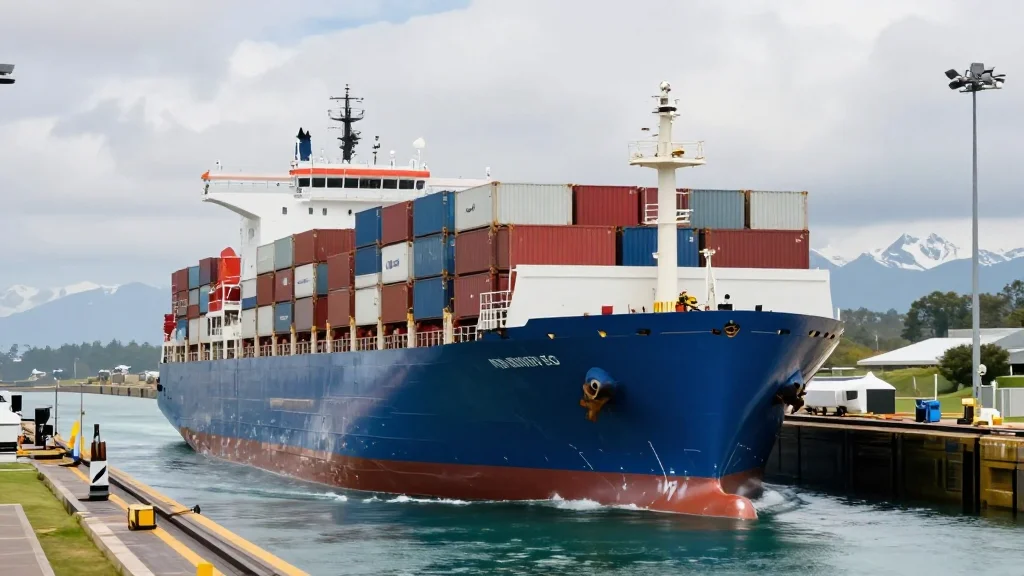
Donroe Doctrine Is Becoming Everything China Feared
Companies Mentioned
Why It Matters
The move pressures Chinese infrastructure in a key trade corridor while securing U.S. access to critical energy and mineral pathways, reshaping geopolitical competition in maritime logistics.
Key Takeaways
- •US and Latin American allies issue Panama solidarity statement targeting Chinese vessels
- •Law‑fare aims to evict Chinese logistics firms from Panama Canal terminals
- •Bolivia aligns with US, seeking Western capital for lithium export via Panama
- •Doctrine redirects Chinese‑linked trade to Western Hemisphere, boosting US energy interests
- •Growing maritime tension could destabilize global shipping order
Pulse Analysis
The newly coined Donroe Doctrine marks a decisive shift in U.S. maritime strategy, using diplomatic statements and coordinated law‑fare to challenge China’s growing foothold in the Panama Canal. By publicly supporting Panama after a spike in detentions of its flag‑registered vessels, Washington signals that any attempt to politicize trade routes will meet collective resistance from a coalition that now includes Costa Rica, Guyana, Paraguay, Trinidad and Tobago, and the surprising entrant Bolivia. This coalition leverages regional alliances to pressure Chinese logistics firms out of the Balboa and Cristóbal terminals, effectively re‑asserting American influence over one of the world’s busiest chokepoints.
Beyond the Canal, the doctrine intertwines with U.S. energy security goals. Bolivia, home to the planet’s largest lithium reserves, has signaled willingness to break from Chinese and Russian partnerships in exchange for Western financing and guaranteed market access. Aligning with the United States provides a diplomatic shortcut to move lithium through Chilean ports and the Canal, feeding the electric‑vehicle battery supply chain that underpins the green transition. Simultaneously, the U.S. is bolstering allies like Guyana and Trinidad, whose oil and petrochemical outputs offset supply constraints caused by the Gulf blockade, further cementing a Latin American energy corridor.
The broader implication is a re‑configuration of global maritime order. By forcing Chinese capital out of West Asia and redirecting it toward the Western Hemisphere, the United States aims to create a new trade architecture that favors its agricultural, mining, and energy interests. While this could yield short‑term advantages for U.S. firms, the aggressive posture risks heightened instability in international shipping, prompting other powers to reassess their own maritime strategies. Companies operating in logistics, energy, and battery materials should monitor these developments closely, as policy shifts may quickly translate into supply‑chain disruptions or new market opportunities.
Donroe Doctrine is becoming everything China feared
Comments
Want to join the conversation?
Loading comments...