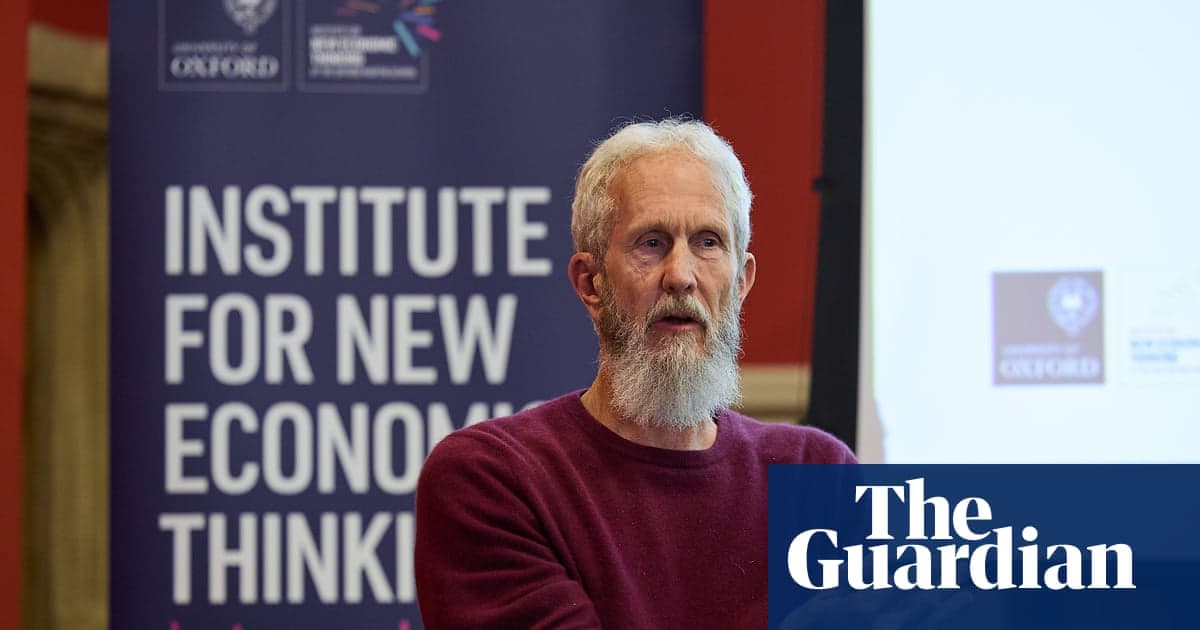
Economics Has Failed on the Climate Crisis. This Complexity Scientist Has a Mind-Blowing Plan to Fix That
Why It Matters
Accurate, granular economic forecasts would let policymakers and investors pre‑empt financial crashes and design cost‑effective climate transitions, potentially saving trillions. The tool could finally align economic planning with the urgency of the climate crisis.
Key Takeaways
- •$100 m model could cut 1% of $10 tn losses.
- •Simulates 30,000 energy firms, 160,000 assets.
- •Uses simple rule‑based agents, not perfect rationality.
- •Addresses equilibrium assumption, generating endogenous cycles.
- •Aims to guide climate policy, saving trillions.
Pulse Analysis
The shortcomings of conventional macro‑models have become starkly visible after the 2008 financial crash and the accelerating climate emergency. Traditional frameworks rely on a handful of representative agents and assume perfect information and market equilibrium, which forces analysts to simplify reality to the point of uselessness. Doyne Farmer, a veteran of chaos theory and algorithmic trading, argues that the explosion in computing power and the availability of massive firm‑level datasets now make it feasible to simulate economies at unprecedented resolution.
Farmer’s approach builds an agent‑based model where each company follows simple decision rules—imitation, trial‑and‑error, or adaptive learning—rather than the omniscient rationality imposed by classic theory. By calibrating these rules on 25 years of energy‑sector data, the model can reproduce observed boom‑bust cycles without injecting external shocks. Early back‑tests on US real‑estate transactions and the UK’s Covid‑era policy response demonstrated that the system could surface policy‑relevant signals that traditional models missed, offering a more realistic picture of how shocks propagate through interconnected markets.
If scaled to the entire global economy, the simulator could become a decision‑support platform for governments, central banks, and corporations facing climate‑related risks. A modest 1% reduction in the $10 trillion losses from the last crisis would already justify the $100 million investment many times over, while more accurate climate‑policy forecasts could steer trillions toward clean‑energy pathways. The main challenges lie in data integration, computational scaling, and securing public‑private funding, but Farmer’s ten‑year horizon reflects both the urgency and the growing appetite for tools that can translate complex economic dynamics into actionable insight.
Economics has failed on the climate crisis. This complexity scientist has a mind-blowing plan to fix that
Comments
Want to join the conversation?
Loading comments...