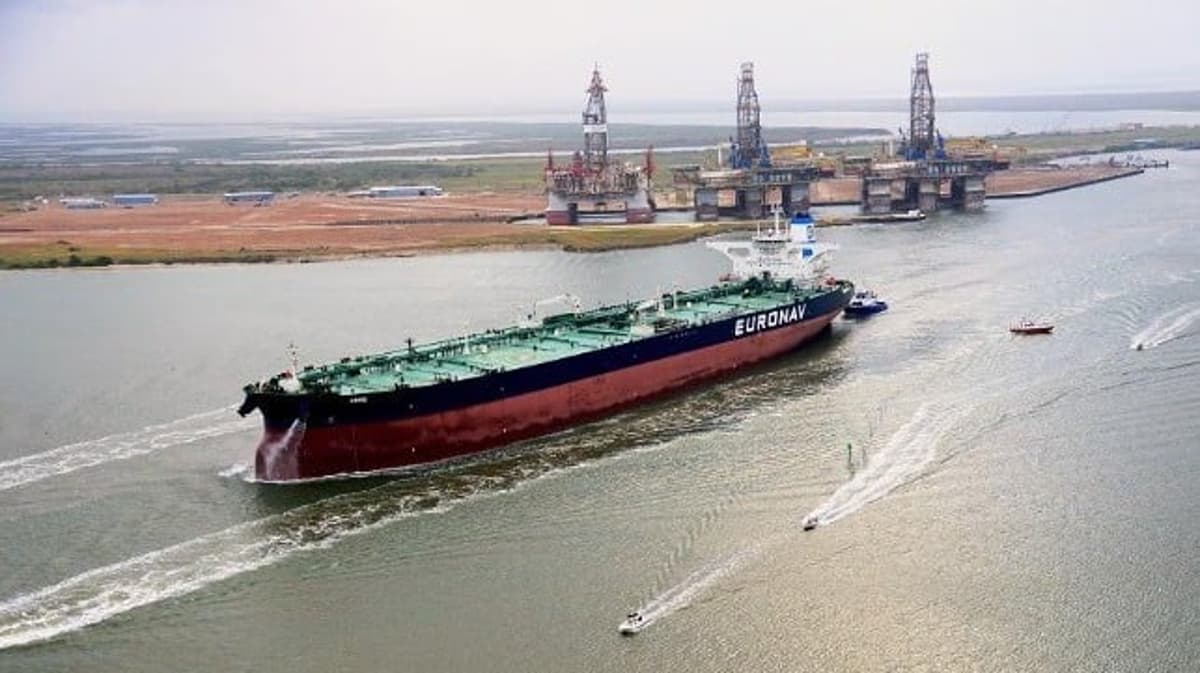
"Energy Dominance" In Action
Why It Matters
U.S. becoming a net oil exporter reshapes global supply dynamics and pressures existing export infrastructure, driving higher freight costs and altering trade routes. The shift underscores the strategic importance of American energy production in a volatile geopolitical environment.
Key Takeaways
- •US crude exports rose to 5.2 million bpd, seven‑month high.
- •Net imports fell to 66,000 bpd, lowest since 2001.
- •Export capacity capped at ~6 million bpd due to infrastructure limits.
- •Limited Mars medium‑sour crude restricts refiner substitution for Middle‑East barrels.
- •Asian tanker rates surge as Aframaxes route US Gulf oil via Panama.
Pulse Analysis
The recent escalation in the Middle East, highlighted by the effective closure of the Strait of Hormuz, has forced oil markets to seek new supply lines. With Persian Gulf barrels trapped, Asian and European refiners are looking westward, and the United States—now the world’s largest producer—has stepped into the breach. U.S. crude exports have surged to 5.2 million bpd, driven by unprecedented demand for light‑sweet WTI and the limited availability of medium‑sour Mars crude, which better matches the specifications of displaced Middle‑East grades.
While the export surge signals a dramatic shift, the United States faces hard caps on how much oil it can move abroad. Industry analysts peg the practical ceiling at roughly 6 million bpd, constrained by pipeline bottlenecks and a scarcity of deep‑water terminals capable of loading Very Large Crude Carriers. The Louisiana Offshore Oil Port remains the sole Gulf facility that can fully load a VLCC, and new deep‑water projects are still years away. Consequently, exporters are resorting to hybrid loading strategies, such as reverse lightering, to maximize throughput amid tight infrastructure.
The ripple effects are already evident in the tanker market. Aframaxes are being dispatched from the Gulf to Asia via the Panama Canal, a routing pattern that would be rare under normal conditions. This surge in demand is pushing freight rates higher across all segments and injecting volatility into short‑term pricing. If the geopolitical disruption persists, the United States could solidify its role as a net exporter, reshaping global oil logistics and cementing higher baseline freight rates for years to come.
"Energy Dominance" In Action
Comments
Want to join the conversation?
Loading comments...