Global Economy News and Headlines
  • All Technology
  • AI
  • Autonomy
  • B2B Growth
  • Big Data
  • BioTech
  • ClimateTech
  • Consumer Tech
  • Crypto
  • Cybersecurity
  • DevOps
  • Digital Marketing
  • Ecommerce
  • EdTech
  • Enterprise
  • FinTech
  • GovTech
  • Hardware
  • HealthTech
  • HRTech
  • LegalTech
  • Nanotech
  • PropTech
  • Quantum
  • Robotics
  • SaaS
  • SpaceTech
AllNewsDealsSocialBlogsVideosPodcastsDigests

Global Economy Pulse

EMAIL DIGESTS

Daily

Every morning

Weekly

Sunday recap

NewsDealsSocialBlogsVideosPodcasts
Global EconomyNewsEnergy Transition Underpins Dry Bulk Sector
Energy Transition Underpins Dry Bulk Sector
Global EconomyEnergyCommodities

Energy Transition Underpins Dry Bulk Sector

•February 18, 2026
0
Seatrade Maritime
Seatrade Maritime•Feb 18, 2026

Companies Mentioned

Rio Tinto

Rio Tinto

RIO

Why It Matters

The shift highlights how the energy transition is redefining cargo patterns and regulatory pressures, directly influencing profitability and fleet strategy in the dry‑bulk market.

Key Takeaways

  • •EV boom lifts spodumene shipments, doubling since 2023
  • •Panamax vessels move half of 7 Mt bulk trade annually
  • •Simandou iron‑ore ramp‑up benefits Capesize ships on 11,000 nm routes
  • •IMO carbon‑intensity rules tighten, adding 21.5% reduction by 2030
  • •EU ETS now covers all shipping GHG emissions at ports

Pulse Analysis

The accelerating adoption of electric vehicles is reshaping traditional dry‑bulk routes, with spodumene emerging as a high‑value cargo. Unlike legacy commodities such as iron ore, spodumene’s growth is tightly linked to battery production, prompting shipowners to allocate more Panamax and mid‑size vessels to the Australia‑China corridor. This niche trade, while still modest in absolute terms, signals a broader diversification of bulk shipping portfolios as the industry seeks to capture emerging mineral flows tied to renewable energy technologies.

Beyond lithium‑bearing ores, the sector benefits from rising volumes of bauxite, soybeans and coking‑coal, each supporting different vessel classes. Capesize ships stand to gain from the Simandou iron‑ore ramp‑up, with 11,000‑nautical‑mile voyages from West Africa to China becoming a new revenue stream. However, operational uncertainties persist: a potential cease‑fire in the Red Sea could shorten voyages, freeing capacity, while delays at Simandou could blunt demand for the largest bulkers. These dynamics compel operators to balance fleet deployment across Panamax, Supramax, Handymax and Capesize segments.

Regulatory developments add another layer of complexity. The IMO’s escalating carbon‑intensity reduction schedule—reaching a 21.5% cut by 2030—will force retrofits or early retirement of older vessels. Simultaneously, the EU’s revamped Emissions Trading System now requires full accounting of greenhouse‑gas emissions for ships calling at EU ports, and FuelEU Maritime mandates an 80% lifecycle fuel intensity reduction by 2030. Together, these measures raise compliance costs and incentivize investment in cleaner propulsion, low‑sulphur fuels, and alternative energy solutions, reshaping the competitive landscape for dry‑bulk carriers.

Energy transition underpins dry bulk sector

Paul Bartlett, Correspondent · February 18, 2026

Soaring global sales of electric vehicles have rocketed by almost 700 % so far this decade, a catalyst for the fast‑growing trade in spodumene, a lithium‑based ore used in the production of lithium‑ion batteries. Found in large quantities in Australia, it is now an essential component in electric‑vehicle production.

Panamax bulkers shipped almost half of the close to 7 million tonnes last year, mostly between Australia and China. But supramax and handymax bulkers are also working the trade.

However, although spodumene volumes have doubled since 2023, trade in the minor bulk is unlikely to change any market fundamentals. It was one of the positive developments noted by Drewry analysts in a webinar on dry‑bulk business this week.

The outlook for the year ahead is broadly positive. Rising volumes of bauxite are a boost for big bulkers. Sea trade in soybeans is climbing. And India’s growing appetite for steel is fuelling coking‑coal imports, up sharply since 2024.

But there are potential downsides too, the analysts warned. These include significant delivery volumes this year which could more than offset rising tonne‑miles. A formalised cease‑fire in the Red Sea could reduce voyage lengths, freeing up more capacity. And possible delays to the world’s largest iron‑ore project, Rio Tinto’s Simandou mine in Guinea, could dent demand for the world’s biggest bulkers.

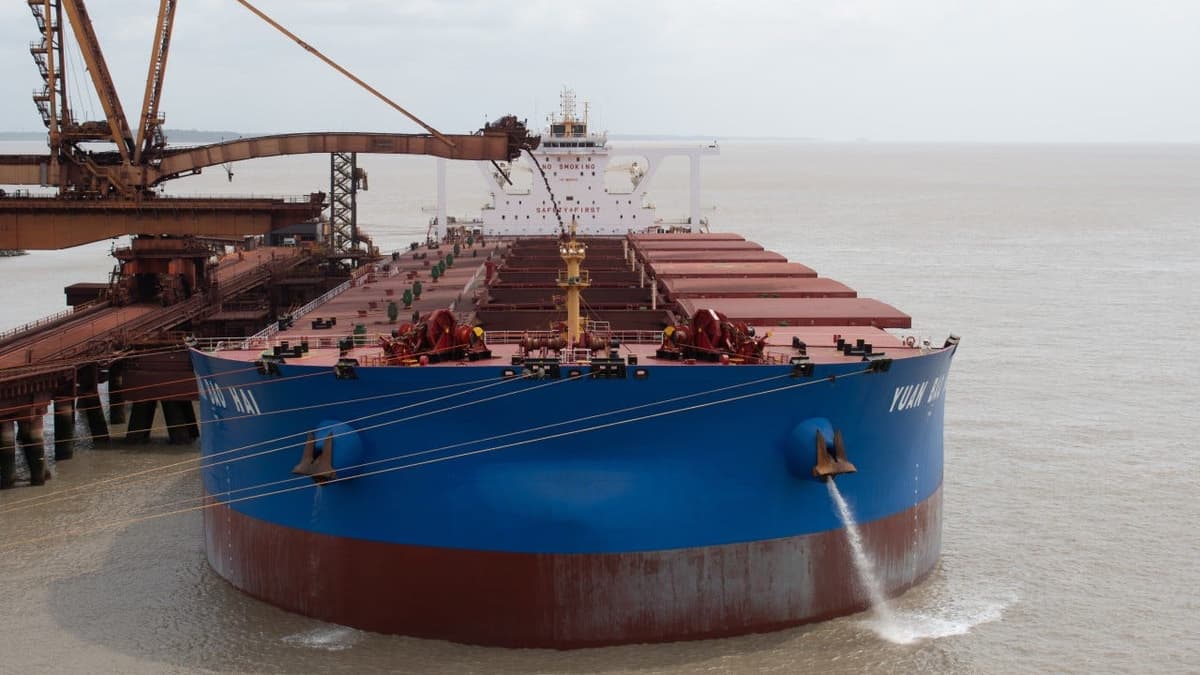
Capesizes deployed on 11,000 nm voyages from the West African nation to China will be the principal beneficiaries of this new trade. The first cargo left Guinea in November and arrived in China in January. Production at the vast Simandou mine is expected to ramp up steadily over the next 30 months.

Drewry also noted the potential impact of IMO regulations which are likely to affect many older vessels. From 2027, the annual reduction in a ship’s carbon‑intensity indicator will increase from 2 % to 2.625 %, driving the total up to 21.5 % by 2030.

Meanwhile, from the beginning of January, the European Union (EU) Emissions Trading System has changed. All greenhouse‑gas (GHG) emissions are now taken into account, with shipping companies required to submit allowances equivalent to 100 % of their GHG emissions when ships call at ports in the EU or the European Economic Area.

FuelEU Maritime, which applies to all ships of more than 5,000 gross tons, requires the lifecycle GHG intensity of fuel to increase from a 2 % reduction in 2025 to 80 % in 2030.

Read Original Article
0

Comments

Want to join the conversation?

Loading comments...