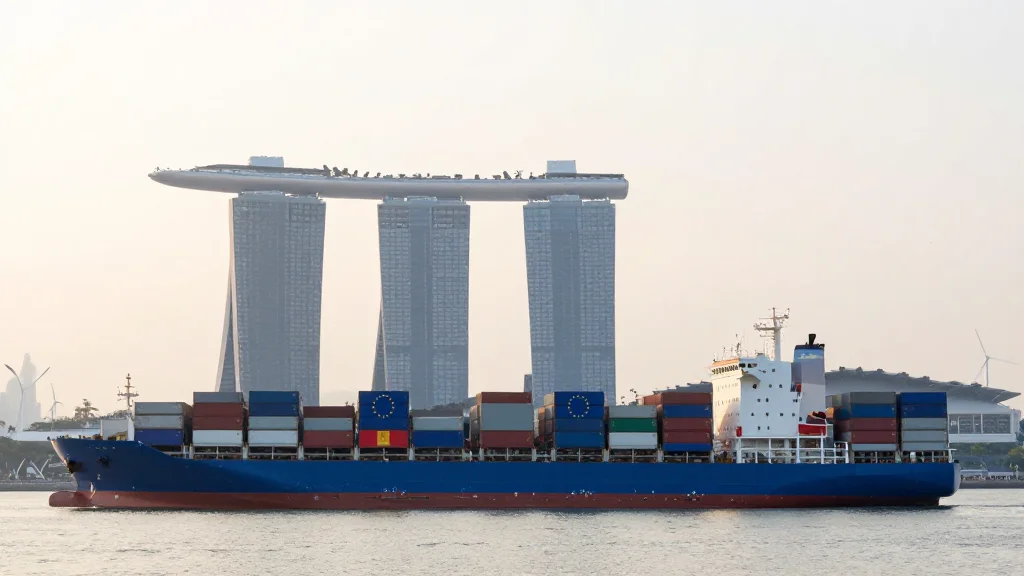
EU, ASEAN Need to Be 'Doubling Down' On Multilateralism as Free Trade Fractures: Vivian Balakrishnan
Why It Matters
An EU‑ASEAN trade pact would reshape supply chains and deepen market access for both regions, while a coordinated multilateral stance counters rising protectionist pressures. Singapore’s push reinforces its strategic hub status and signals opportunities for investors in emerging Asian economies.
Key Takeaways
- •EU‑ASEAN free‑trade agreement acceleration prioritized.
- •Singapore seeks deeper EU‑CPTPP dialogue.
- •ASEAN's young workforce and renewable energy potential highlighted.
- •Balakrishnan urges Europe to become more business‑friendly.
- •Multilateralism framed as antidote to rising protectionism.
Pulse Analysis
The backdrop to Balakrishnan’s remarks is a wave of protectionist policies that have eroded confidence in the post‑World‑War II trade order. While the EU has already secured bilateral free‑trade agreements with Singapore, Vietnam and recently concluded talks with Indonesia, a comprehensive EU‑ASEAN pact has stalled for years. Renewed diplomatic overtures aim to stitch together these bilateral threads into a single, rules‑based framework that could lower tariffs, harmonise standards and create a more predictable environment for European exporters eyeing the fast‑growing Southeast Asian market.
Singapore positions itself as the linchpin of this renewed push. By championing deeper EU‑CPTPP engagement, the city‑state seeks to link two of the world’s most dynamic trade blocs, leveraging its own CPTPP membership. At the same time, Balakrishnan underscored ASEAN’s demographic dividend and its capacity to develop indigenous energy sources—from renewables to emerging nuclear technologies—alongside AI and biotech innovation. This dual focus on supply‑side resilience and high‑value industries reinforces Singapore’s narrative as a reliable hub for regional headquarters and a gateway to the broader Pacific economy.
For businesses, the implications are twofold. First, an accelerated EU‑ASEAN agreement could unlock new market access, reduce compliance costs and stimulate cross‑border investment, especially in sectors like clean energy and digital services. Second, Europe’s call for a more business‑friendly, pro‑innovation regulatory stance aligns with corporate demands for speed and scalability. Companies that can navigate this evolving multilateral landscape stand to benefit from diversified trade routes and reduced exposure to unilateral trade restrictions, while those lagging may find themselves disadvantaged as protectionist sentiment gains traction elsewhere.
EU, ASEAN need to be 'doubling down' on multilateralism as free trade fractures: Vivian Balakrishnan
Comments
Want to join the conversation?
Loading comments...