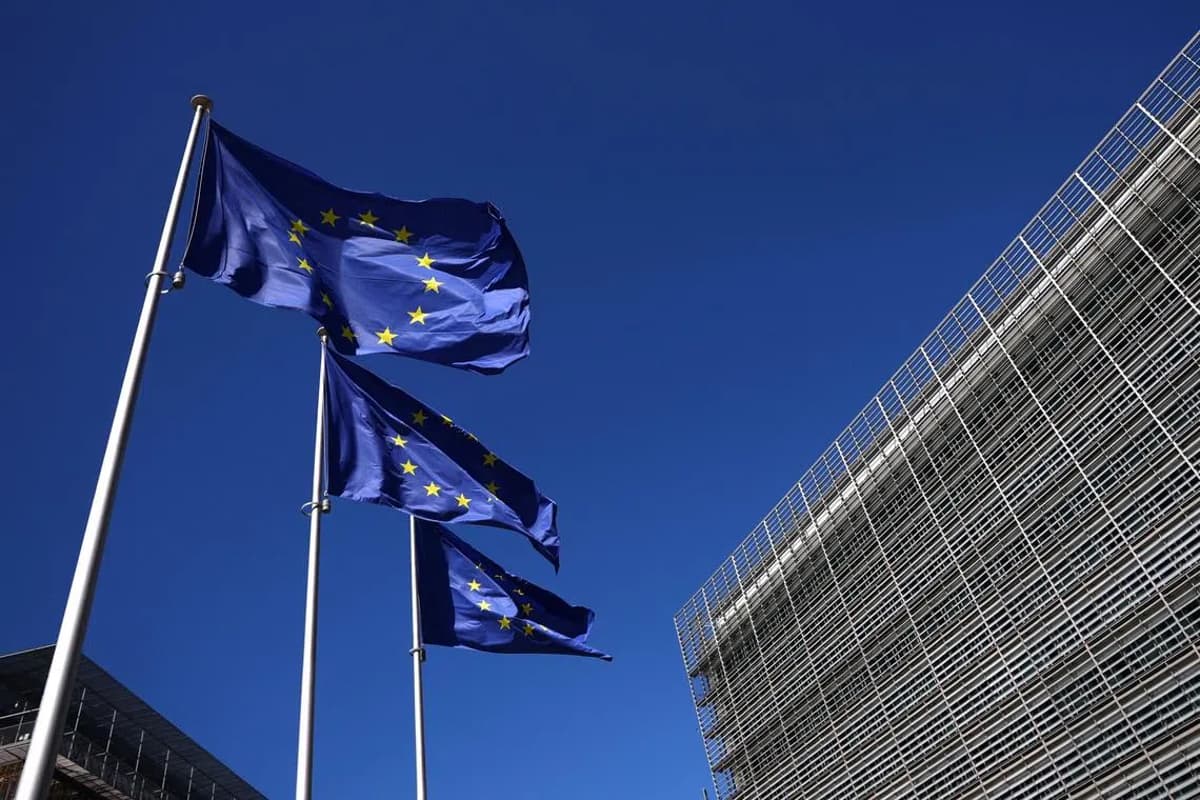
EU to Force Companies to Buy Components From Non-Chinese Suppliers, FT Reports
Why It Matters
By forcing diversification, the EU reduces supply‑chain vulnerability and weakens China’s bargaining power, bolstering strategic autonomy in critical industries.
Key Takeaways
- •EU mandates at least three non‑Chinese suppliers for critical components
- •Single supplier share capped at 30‑40% of total purchases
- •Targeted sectors include chemicals and industrial machinery
- •Proposed tariffs aim to close $1.1 bn daily trade deficit
- •Policy to be debated May 29, possibly adopted June
Pulse Analysis
Europe’s push to decouple from Chinese supply chains reflects a broader shift toward strategic resilience. Over the past decade, China has leveraged its dominance in mineral processing and component manufacturing to influence pricing and availability, creating hidden risks for downstream industries such as semiconductors, electric vehicles, and advanced weaponry. By mandating multiple non‑Chinese sources, the EU not only spreads risk but also stimulates competition among alternative producers, potentially accelerating the development of domestic and allied capacities in the United States, Japan, and South Korea.
The forthcoming legislation goes beyond procurement rules; it pairs sourcing limits with a slate of punitive tariffs on Chinese chemicals and machinery. These duties are designed to narrow a staggering €1 billion‑per‑day (roughly $1.1 billion) trade imbalance that the bloc attributes to China’s “weaponisation of trade.” By targeting high‑value sectors like chemicals and industrial equipment, the EU hopes to protect critical value chains while signaling to Beijing that market access will be contingent on fair‑play. The policy also dovetails with a recent EU‑U.S. memorandum on critical minerals, reinforcing transatlantic cooperation on supply‑chain security.
If adopted, the rules could reshape global sourcing strategies. Companies operating in Europe will need to re‑engineer procurement processes, potentially incurring higher costs but gaining greater supply certainty. Non‑Chinese suppliers stand to benefit from a new pool of guaranteed demand, while Chinese exporters may see market share erosion in the EU. Investors will watch for ripple effects across commodity markets and the valuation of firms positioned to fill the emerging gaps. Ultimately, the initiative underscores a growing consensus that economic security is inseparable from geopolitical stability, a narrative that is reshaping policy agendas worldwide.
EU to force companies to buy components from non-Chinese suppliers, FT reports
Comments
Want to join the conversation?
Loading comments...