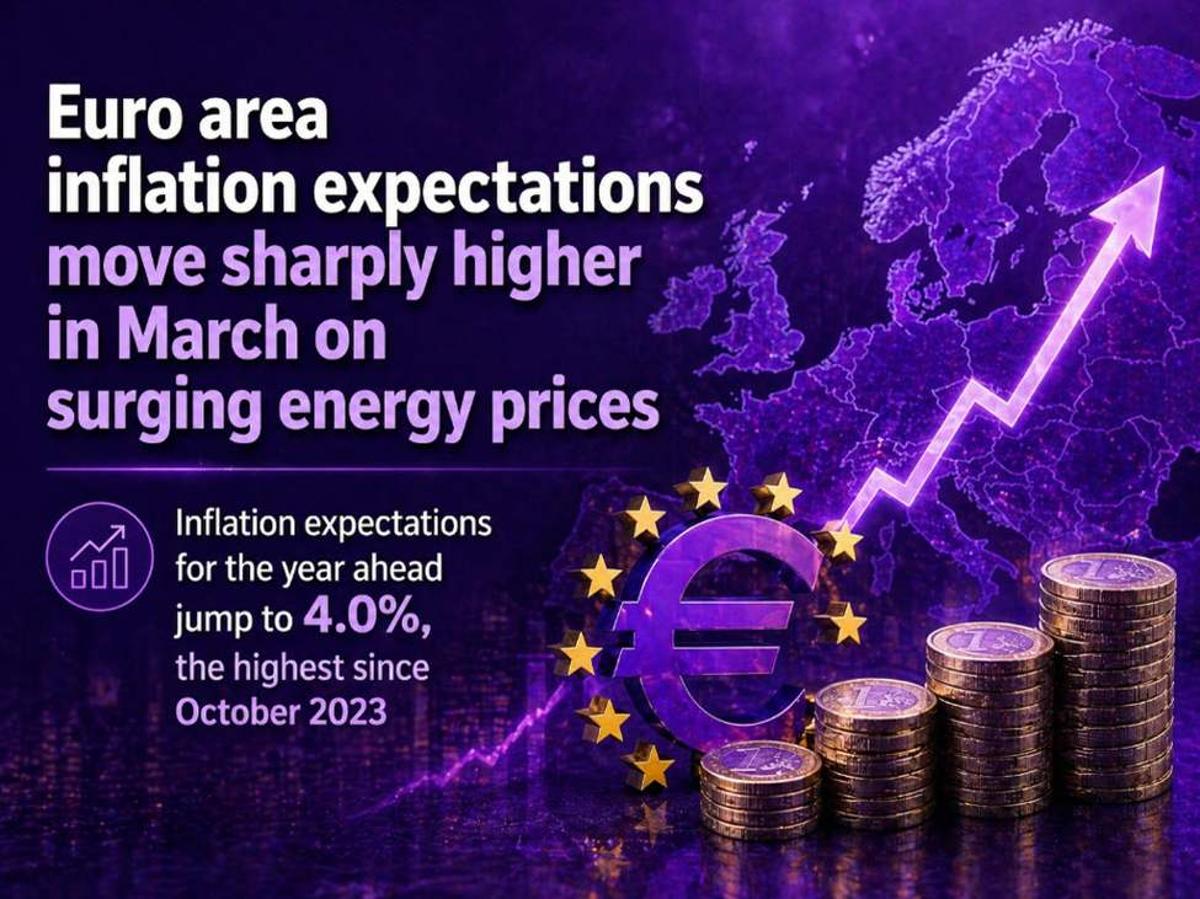
Euro Area Inflation Expectations for the Year Ahead Jump to Highest Since October 2023
Why It Matters
Rising inflation expectations tighten the ECB’s policy space, potentially prompting higher rates to anchor price stability. For businesses and investors, the shift signals sustained cost pressures and heightened economic uncertainty.
Key Takeaways
- •Eurozone year‑ahead inflation expectations rose to 4.0% in March
- •Expectation jump marks highest level since October 2023
- •February expectations were 2.5%, indicating rapid consumer sentiment shift
- •Long‑term inflation expectations remain above ECB’s 2% target
- •Middle East conflict amplifies price pressures across the euro area
Pulse Analysis
The ECB’s consumer expectations survey is a forward‑looking gauge that captures how households anticipate price changes over the next 12 months. By asking respondents to project inflation, the ECB can assess whether private‑sector expectations are aligning with its own inflation target of 2%. The March reading of 4.0% represents a notable acceleration from February’s 2.5%, echoing the sharp uptick seen in October 2023. Such a swing is rare in the survey’s history and signals that households are beginning to embed recent geopolitical shocks into their price outlooks.
The primary driver behind the surge is the protracted conflict in the Middle East, which has disrupted energy supplies and heightened commodity price volatility. Higher oil and gas costs ripple through the supply chain, raising transportation and production expenses that ultimately reach consumers. Coupled with lingering pandemic‑era supply constraints, these factors have entrenched inflation expectations even as some headline price measures show modest easing. When consumers expect prices to stay elevated, they are more likely to demand higher wages and adjust spending, creating a feedback loop that can cement inflationary pressures.
For the ECB, the uptick in expectations narrows the margin for error in monetary policy. Persistently high expectations increase the risk that actual inflation will overshoot the target, prompting the central bank to consider tighter policy—either through higher rates or a reduction in asset purchases. Markets will watch upcoming ECB meetings closely, as any indication of a more hawkish stance could affect euro‑denominated assets, borrowing costs, and corporate investment decisions across the region. Investors should therefore factor the heightened inflation outlook into risk assessments, especially in sectors sensitive to energy costs and consumer demand.
Euro area inflation expectations for the year ahead jump to highest since October 2023
Comments
Want to join the conversation?
Loading comments...