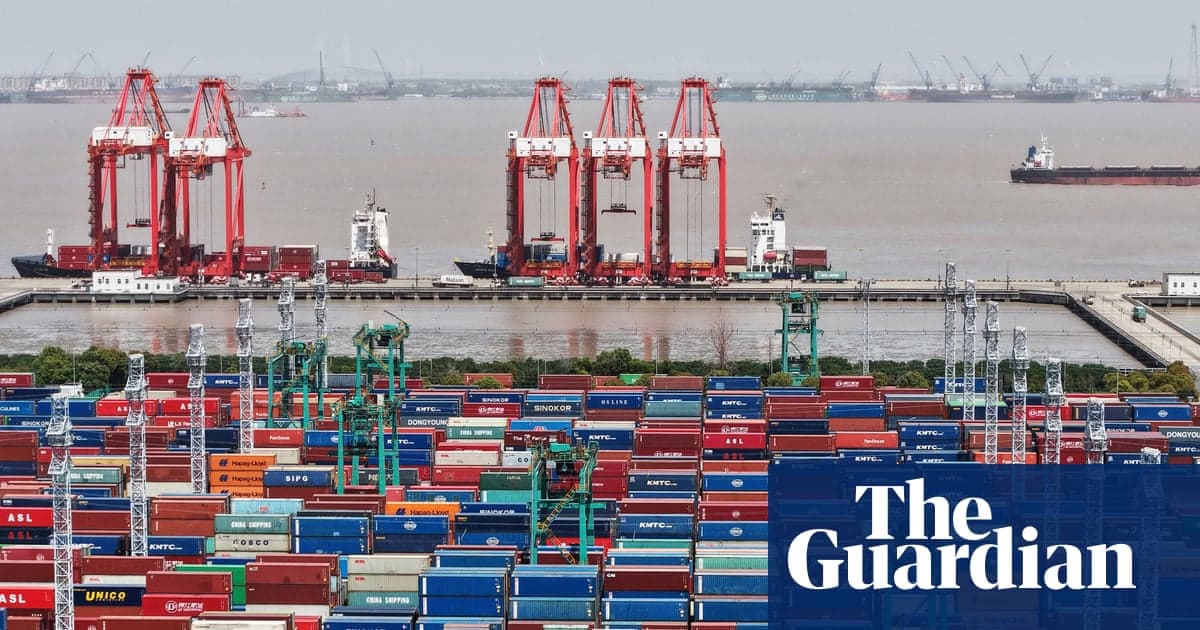
Fears of New China Shock as EU Industry’s Reliance on Imports Grows
Why It Matters
The trend deepens Europe’s strategic dependency on Beijing, risking job losses, market share erosion, and heightened security concerns, thereby forcing policymakers to act swiftly.
Key Takeaways
- •EU imports 88% of amino acids from China, 96% of polyhydric alcohols.
- •German machinery sector lost 22,000 jobs last year due to Chinese competition.
- •China’s trade surplus with Germany rose to $25 bn, up from $12 bn.
- •EU may force firms to source critical components from three suppliers.
- •‘Made in EU’ law and cyber updates delayed until 2027.
Pulse Analysis
The term "China shock" resurfaced this spring as analysts point to a wave of component imports that are embedding Chinese supply chains deep within European manufacturing. Unlike the 1990s wave of finished‑goods imports, today’s pressure comes from raw inputs—amino acids, polyhydric alcohols, and other specialty chemicals—where China supplies up to 96% by volume. This shift erodes the cost advantage of EU producers, making it increasingly difficult for them to compete on price or scale, and it raises questions about the resilience of critical industries ranging from pharmaceuticals to plastics.
Economic fallout is already visible. Germany, Europe’s industrial powerhouse, recorded a $25 bn trade surplus with China in 2025, up from $12 bn the previous year, while its machinery sector lost 22,000 jobs in a single year. Across the bloc, an estimated 250,000 industrial positions have vanished since 2019, with the automotive sector bearing a significant share. The influx of cheaper Chinese inputs not only squeezes margins but also fuels a broader de‑industrialisation narrative that policymakers now frame as both an economic and a security threat, especially as China becomes Germany’s top trading partner.
In response, Brussels is scrambling to restore strategic autonomy. Proposals such as the Industrial Accelerator Act—nicknamed the "made in EU" law—and an updated Cyber Security Act aim to limit reliance on Chinese components, but both are slated for implementation after 2027. Meanwhile, urgent measures under discussion include requiring firms to source critical parts from at least three suppliers and revisiting subsidy rules that currently favor low‑cost Chinese products. The outcome of the 29 May meeting will signal whether the EU can devise short‑term lifelines while laying the groundwork for a longer‑term, diversified supply chain that shields European industry from future shocks.
Fears of new China shock as EU industry’s reliance on imports grows
Comments
Want to join the conversation?
Loading comments...