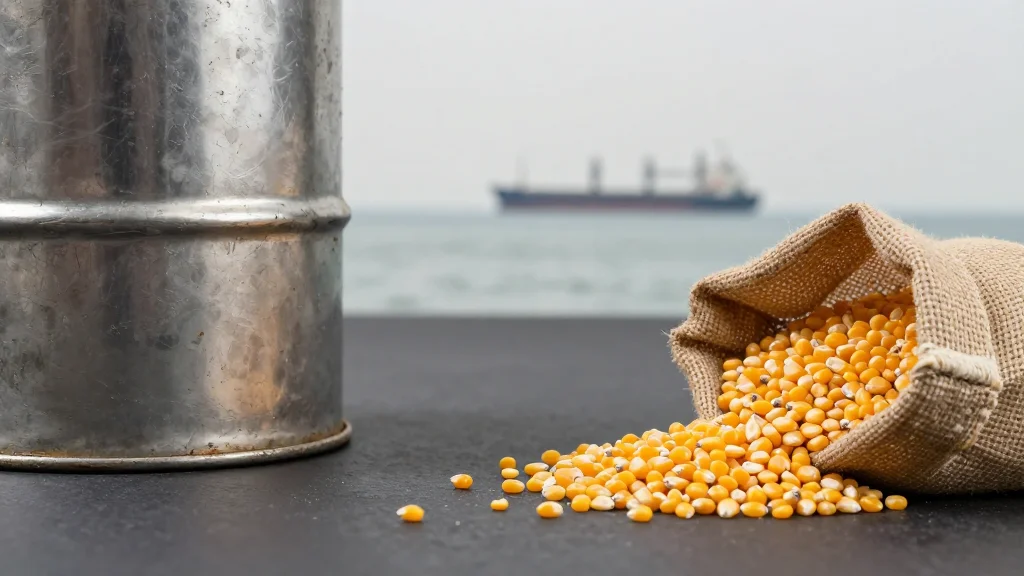
Food Prices Rise to Highest in Three Years on Iran War Costs
Why It Matters
Disruptions to key agricultural inputs threaten to lift farm‑gate costs, foreshadowing higher consumer food inflation worldwide. The trend underscores geopolitical risk as a core driver of global food‑price volatility.
Key Takeaways
- •UN food index up 1.6% in April, highest in three years.
- •Iran war shut Strait of Hormuz, limiting diesel and fertilizer supplies.
- •Vegetable‑oil prices rose 5.9% month‑on‑month, driving index surge.
- •Meat index hit record high, climbing 1.2% from March.
- •France and Romania plan lower corn output as input costs rise.
Pulse Analysis
The United Nations’ Food and Agriculture Organization reported a 1.6% rise in its food‑commodity price index for April, the steepest increase since mid‑2022. The index, which tracks raw inputs such as grains, sugar, meat, dairy and vegetable‑oil costs, reflects a broader tightening of global supply chains. The Iran‑Israel war has effectively blocked the Strait of Hormuz, a chokepoint for diesel and fertilizer shipments, amplifying production costs for farmers worldwide and pushing commodity benchmarks to multi‑year highs.
Supply‑side pressures are now translating into strategic shifts among growers. European corn producers, notably in France and Romania, are curbing acreage as diesel and fertilizer prices surge, a move that could trim global corn output and tighten downstream markets. Meanwhile, vegetable‑oil markets are feeling a double squeeze: higher crude oil prices boost demand for biofuels, while limited fertilizer availability raises production costs, resulting in a 5.9% month‑on‑month jump in oil prices. The meat index also reached a record, climbing 1.2% as livestock feed becomes more expensive.
For policymakers and investors, the data signals a potential acceleration of food inflation once higher farm‑gate costs filter through to retail prices. With the United States and Iran negotiating a possible peace deal, the reopening of the Hormuz corridor could ease input shortages, but short‑term volatility is likely to persist. Monitoring input‑cost trends and planting decisions will be crucial for forecasting price trajectories and assessing the broader economic impact on consumer spending and monetary policy.
Food prices rise to highest in three years on Iran war costs
Comments
Want to join the conversation?
Loading comments...