French Finance Minister Urges Caution as Paris Agency Proposes 30% China Tariff
•February 10, 2026
0
Why It Matters
A move toward broader EU tariffs could reshape trade dynamics with China and affect European manufacturers, inflation, and growth prospects.
Key Takeaways
- •Lescure rejects blanket 30% tariff, prefers targeted duties.
- •Commission proposes 30% duty or euro depreciation to protect industry.
- •EU customs union requires Europe‑wide approval for any tariff increase.
- •Report warns up to 55% EU manufacturing output at risk.
- •France offers protected status for Chinese investors despite trade tensions.
Pulse Analysis
The debate over China‑EU trade policy has intensified as France’s finance ministry pushes back on a sweeping 30% tariff suggested by a strategic planning commission. Lescure framed the Chinese trade surplus as "unsustainable" but cautioned that a one‑size‑fits‑all duty could damage French growth and fuel inflation. By advocating targeted measures against clear cases of unfair competition, he signals a nuanced approach that aligns with broader EU efforts to address sector‑specific distortions while preserving overall market stability.
If adopted, the commission’s proposal would mark the most aggressive tariff stance since the EU’s electric‑vehicle duties in 2024. The report’s stark warning—that up to 55% of European manufacturing output could be jeopardised—underscores the urgency felt by policymakers. Yet Lescure’s emphasis on complementary policies—raising savings rates, bolstering innovation capacity, and encouraging Chinese firms to invest locally—suggests that tariffs alone are insufficient. Targeted duties could mitigate immediate competitive threats without triggering the broader economic fallout a blanket tariff might cause.
Beyond tariffs, Paris is positioning itself as a reliable host for Chinese capital, pledging legal protection for investors despite geopolitical friction. This dual strategy aims to balance trade discipline with investment attraction, preserving supply‑chain resilience while nudging China toward a consumption‑driven model. As the EU deliberates a unified response, the outcome will influence not only bilateral trade volumes but also the competitive landscape for European manufacturers seeking to retain market share in a rapidly evolving global economy.
French finance minister urges caution as Paris agency proposes 30% China tariff
Article
A growing debate in France over raising tariffs on China heated up on Monday, with a senior minister calling for a targeted approach even as a government planning agency proposed a blanket 30 percent duty on all Chinese imports entering the European Union.
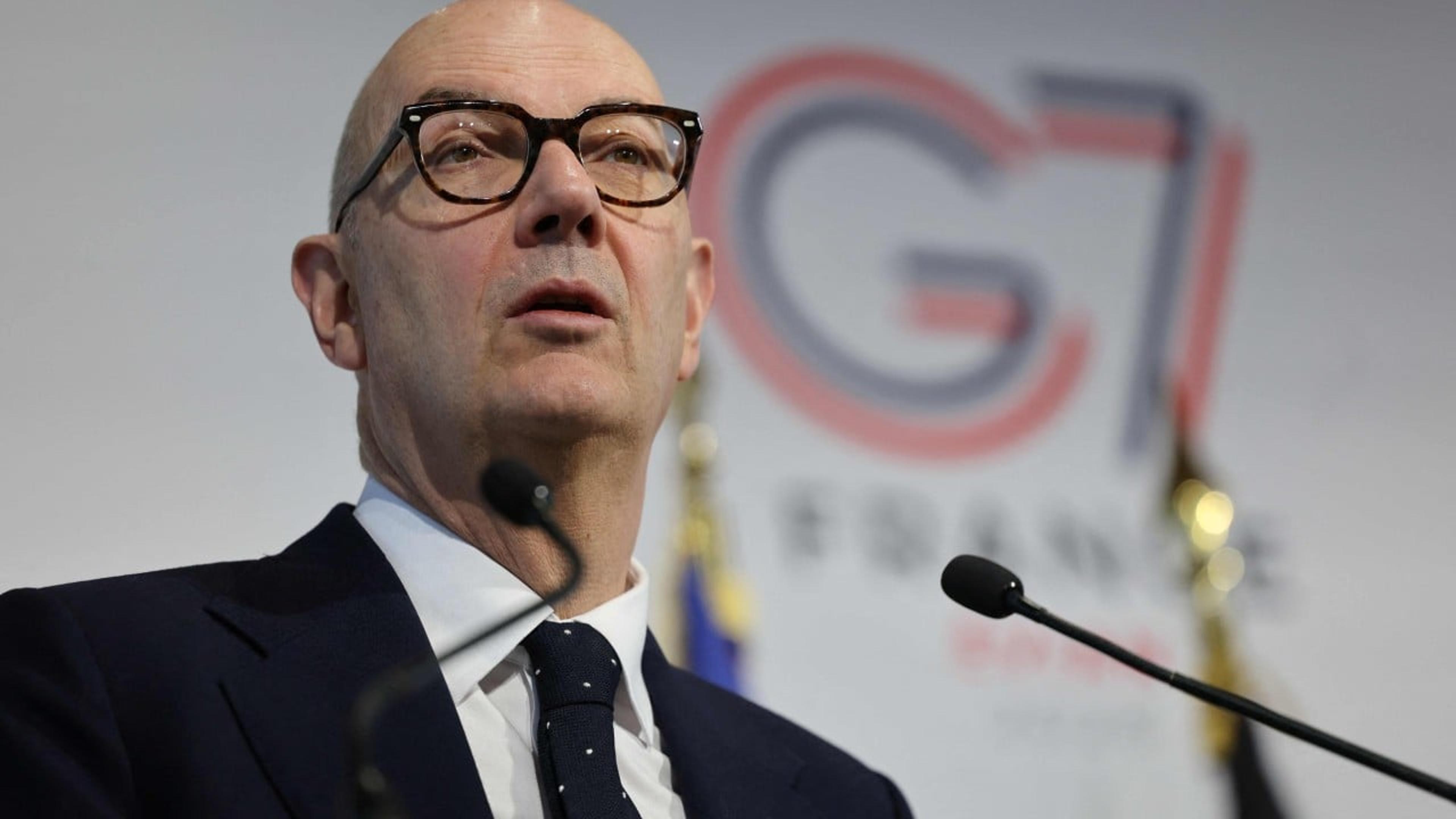
Finance Minister Roland Lescure said China’s large trade surplus with Europe was “unsustainable”, but insisted there was no “one‑size‑fits‑all answer” on tariffs and that Paris would need to continue engaging with Beijing to make changes.
Beijing is aware of the imbalances in the Chinese economy, which is too reliant on exports and investment, and has pledged to pivot towards domestic consumption, according to Lescure.
“They’ve been saying the right things. So far, I don’t think the numbers show that it’s happening,” Lescure said during a press briefing. “There’s been a lot of talk, but not much [in terms of] results yet.”
He said Paris was ready to play its part in rebalancing trade, which would require targeted tariffs to address instances of “obvious unfair competition”, but also policies to boost Europe’s savings rate, innovation capacity and competitiveness.
The comments came on the same day that France’s High Commission for Strategy and Planning published a report on the threat presented by China to European industry, which called for the imposition of a 30 percent tariff on all Chinese goods or a 20 percent to 30 percent depreciation of the euro relative to the yuan to protect local producers.
The commission, set up in 2020 and expanded last year, is an advisory body designed to help the French government define its economic strategy. As France is a member of the EU’s customs union, any move to raise tariffs on China would need to be adopted on a European level and approved by EU authorities.
Clement Beaune, head of the commission, warned that European industry faced potential “destruction” amid intensifying competition from China unless action was taken. Chinese companies had rapidly climbed up the value chain and were now competing directly with Europe’s core industrial products, he said.
About one‑quarter of France’s exports and one‑third of Germany’s exports “appear to be directly threatened” by this competition, according to Beaune. In the medium term, up to 55 percent of European manufacturing output could be at risk if current trends continued, the report said.
The proposal brought back memories of French President Emmanuel Macron’s ultimatum to Beijing following his trip to China in December, when he warned that Europe would take strong measures – including US‑style punitive tariffs – in “the coming months” if the trade imbalance remained unresolved well into 2026.
Macron, however, did not specify at the time whether he supported a general tariff or targeted duties.
For Beaune, the situation is now too urgent to rely on sector‑by‑sector tariffs, such as the ones Brussels imposed on made‑in‑China electric vehicles in 2024. “If we tackle it sector by sector and spend two years on each one, we’re finished, we don’t have the time,” he told French television station TF1 on Monday.
But Lescure distanced himself from proposals for a so‑called mega tariff when pressed by journalists, saying he was “wary of” the impact a blanket duty could have on France’s economic growth and inflation rate. He suggested that he favoured more targeted measures.
“I don’t think we’re going to do that by having one‑size‑fits‑all tariffs for everyone,” he said. “For sure, it should be faster, but the EU has acted … We have acted on electric cars, we have acted on steel, we’ve acted on some chemical products.”
Alongside trade pressure, Paris has also sought to rebalance economic ties by encouraging Chinese firms to invest locally, transfer technology to French companies and help improve the country’s innovation capacity.
On that front, Lescure stressed that Paris welcomed China’s investors and that any approved Chinese investments would be protected in France – even in the face of potential US pressure.
“Once you invest in France, you’re protected by French laws … whether you’re coming from China or anywhere else,” he said.
0
Comments
Want to join the conversation?
Loading comments...