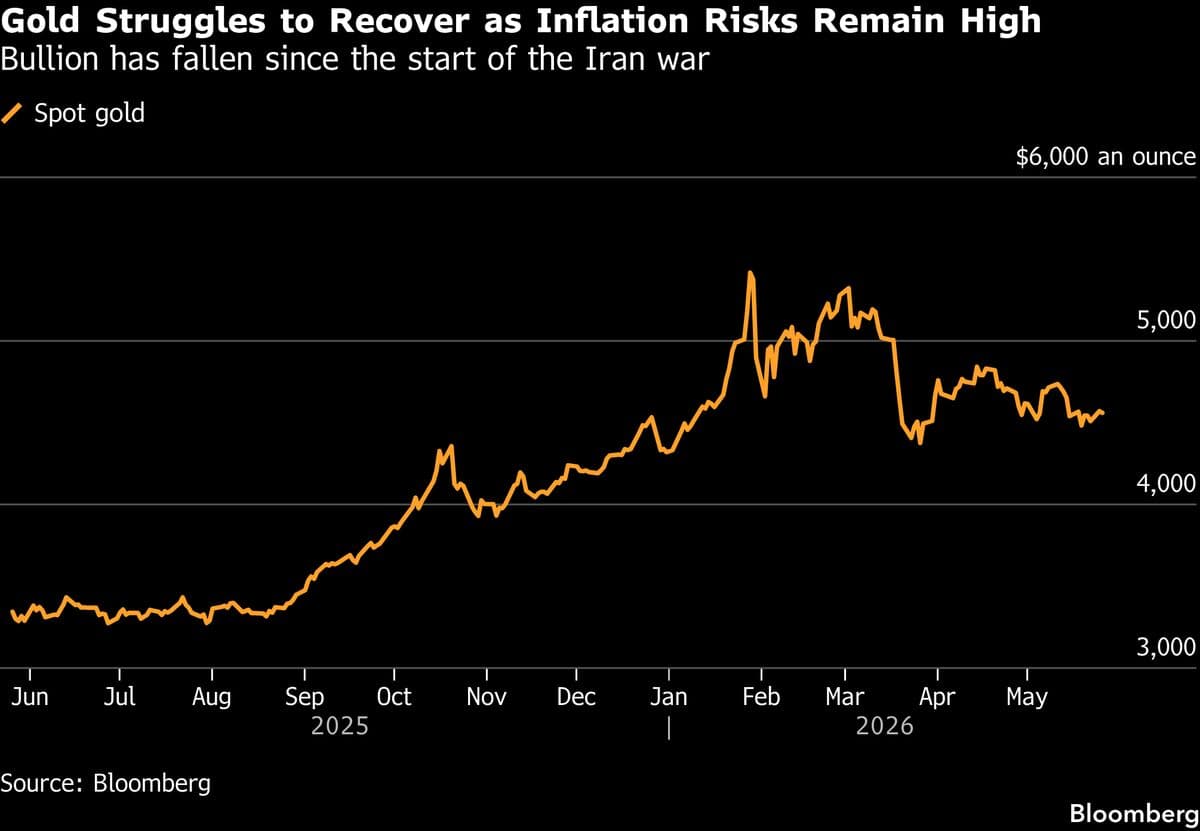
Gold Declines as Gulf Strikes Cloud Interest Rate Outlook
Why It Matters
Renewed tension in a key oil transit route sustains higher commodity prices and could delay a Federal Reserve rate‑cut cycle, affecting borrowing costs for businesses and consumers while highlighting supply‑chain vulnerability to regional conflicts.
Key Takeaways
- •Gold slipped 1.1% to just above $4,500 per ounce.
- •U.S. strikes hit Iranian missile sites and mine‑laying vessels in Hormuz.
- •Conflict raises inflation risk, dampening hopes for lower interest rates.
- •Market watches for impact on Fed policy and global supply chains.
Pulse Analysis
Gold’s recent slide to just above $4,500 an ounce marks its sharpest dip in weeks, underscoring how quickly the metal reacts to geopolitical shocks. Historically, investors turn to bullion when confidence in fiat currencies wanes, but the May 25 plunge was driven less by monetary policy and more by a sudden escalation in the Middle East. The U.S. military’s response to Iranian activity in the Strait of Hormuz sparked a sell‑off, reminding traders that even the world’s premier safe‑haven can be pressured by real‑time conflict.
The Strait of Hormuz handles roughly a third of global oil shipments, making any disruption a direct catalyst for higher energy prices and broader inflation. U.S. forces targeted missile launch sites and vessels attempting to lay mines, signaling a defensive posture but also highlighting the fragility of the chokepoint. Analysts predict that prolonged uncertainty could lift crude benchmarks, feeding cost‑push inflation that the Federal Reserve is already monitoring. As oil prices feed into consumer goods and transportation, the risk premium embedded in gold prices rises, even as the metal itself falls.
From a monetary‑policy perspective, the renewed tension complicates the Federal Reserve’s roadmap for rate cuts. Elevated inflation expectations, bolstered by potential oil price spikes, may force the Fed to keep its benchmark rate higher for longer, dampening demand for risk assets and supporting a weaker dollar. A softer dollar typically benefits gold, yet the immediate market reaction favored liquidity over safe‑haven demand. Investors will watch both diplomatic talks to reopen Hormuz and Fed communications closely, as the interplay will shape commodity trends and borrowing costs through the rest of the year.
Gold Declines as Gulf Strikes Cloud Interest Rate Outlook
Comments
Want to join the conversation?
Loading comments...