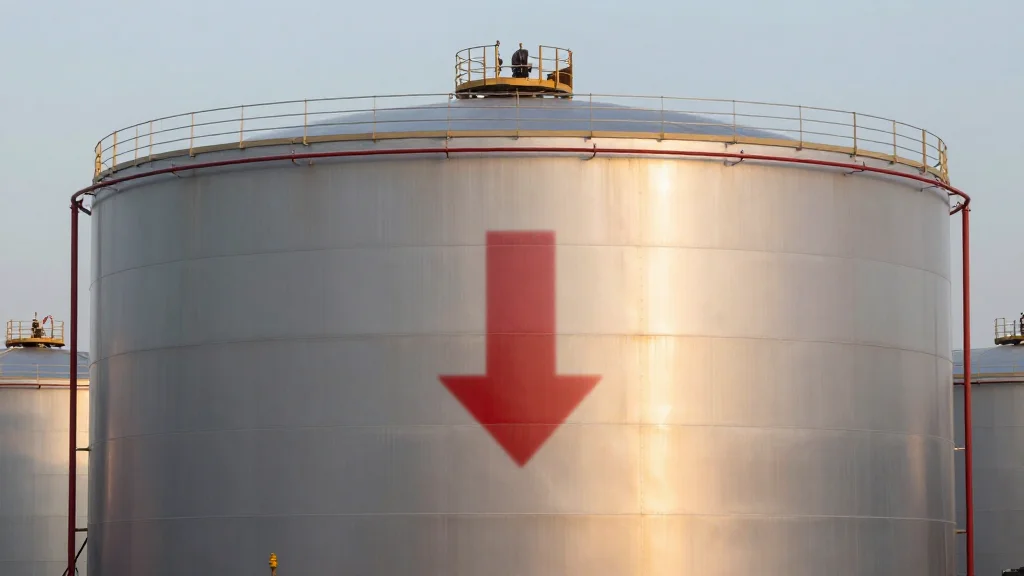
Goldman Sachs Flags Record 8.7 Million‑Barrel Daily Oil Drawdown, Shrinking Global Reserves

Companies Mentioned
Goldman Sachs

Bloomberg
Why It Matters
The rapid depletion of global oil inventories threatens to tighten supply at a time when many economies are still grappling with post‑pandemic recovery and inflationary pressures. Higher oil prices can erode consumer purchasing power, increase production costs, and strain fiscal balances in oil‑importing nations, potentially slowing growth. Moreover, sustained drawdowns may force governments to tap strategic reserves, reducing their ability to respond to future emergencies. For financial markets, the signal from Goldman Sachs adds a quantitative benchmark to ongoing concerns about energy security. Investors may see heightened volatility in energy stocks, commodities, and currencies of oil‑dependent economies, prompting portfolio adjustments and influencing monetary‑policy deliberations worldwide.
Key Takeaways
- •Goldman Sachs reports a record 8.7 million‑barrel per day drawdown in May.
- •Drawdown is almost double the average pace since the Middle East war began.
- •Strategic reserves are shrinking, raising risk of price spikes.
- •Higher oil prices could amplify global inflation and pressure growth.
- •Upcoming IEA/EIA reports and OPEC+ meeting will be closely watched.
Pulse Analysis
Goldman's data point serves as a stark reminder that geopolitical risk remains a potent catalyst for commodity markets. Historically, sharp inventory drawdowns have preceded periods of price acceleration, as seen during the 2022‑2023 supply crunch when Brent crude breached $100 per barrel. The current 8.7 million‑barrel daily decline suggests that the market is already operating with a narrower safety net, meaning even modest supply disruptions—such as a temporary port closure or a minor production hiccup—could trigger outsized price moves.
From a macroeconomic perspective, the erosion of oil buffers intersects with several converging trends: lingering supply chain bottlenecks, central banks still managing inflation, and a resurgence in travel demand. Together, these forces could amplify the pass‑through of higher energy costs to consumer goods, feeding into headline inflation metrics that policymakers monitor closely. Countries with limited fiscal space may find it harder to subsidize fuel or absorb higher import bills, potentially prompting policy shifts such as targeted subsidies or accelerated renewable investments.
Looking forward, the market's reaction will hinge on two variables: the trajectory of the conflict and the response of oil producers. If the war intensifies, further supply curtailments could push drawdowns beyond the current record, cementing a bullish environment for oil. Conversely, a coordinated OPEC+ output increase could stabilize inventories, tempering price spikes. Investors and policymakers should therefore track weekly inventory data and producer statements as leading indicators of where the oil market—and by extension, the global economy—might be headed in the coming months.
Goldman Sachs Flags Record 8.7 Million‑Barrel Daily Oil Drawdown, Shrinking Global Reserves
Comments
Want to join the conversation?
Loading comments...