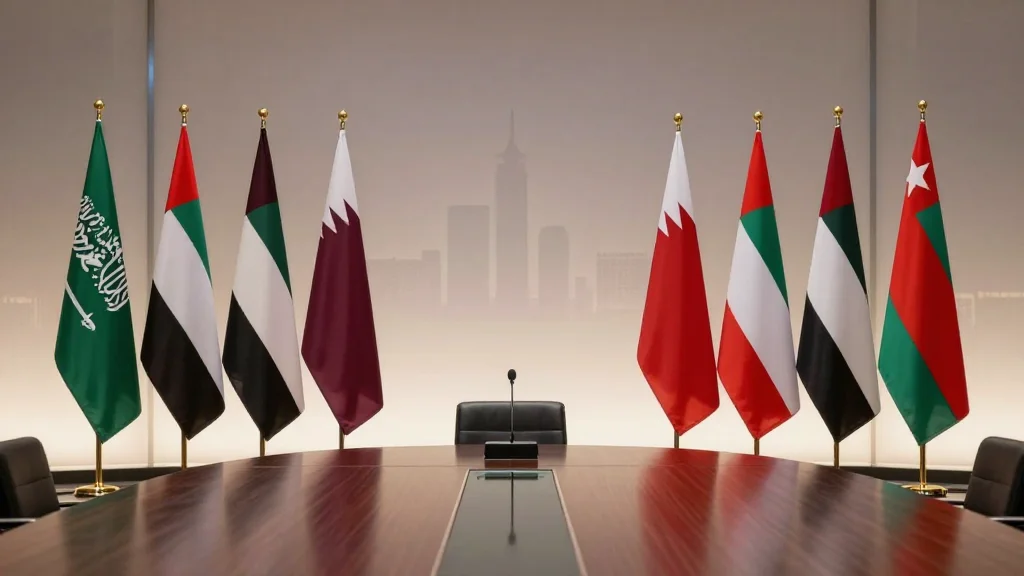
Gulf Leaders to Meet in Saudi Arabia to Discuss Response to Iranian Strikes
Why It Matters
A unified GCC strategy is critical to safeguarding regional oil supplies and deterring further escalation, directly influencing global energy markets and geopolitical stability.
Key Takeaways
- •Saudi Arabia hosts first in‑person GCC summit since February Iran war
- •Leaders from Qatar, Kuwait, Bahrain, UAE attend; Oman’s representation unclear
- •Meeting seeks coordinated response to Iranian missile and drone attacks
- •UAE officials label GCC’s political‑military stance as historically weak
- •Cease‑fire on April 8 reduced attacks, but Gulf remains wary
Pulse Analysis
The Jeddah summit arrives at a pivotal moment for the Gulf Cooperation Council, as member states grapple with the fallout from a broader Middle‑East conflict that began with U.S. and Israeli strikes on Iran in late February. Iran’s retaliatory missile and drone campaigns have targeted critical oil pipelines, refineries, and civilian infrastructure across Saudi Arabia, the United Arab Emirates, Kuwait, Qatar, Bahrain and Oman. By convening in person, the GCC signals a shift from ad‑hoc logistical support to a more deliberate political and military dialogue, aiming to close gaps exposed by the recent onslaught.
Energy markets are acutely sensitive to any disruption in Gulf oil flows, and the recent attacks have already prompted short‑term price volatility. The council’s ability to coordinate defense measures, share intelligence, and possibly standardize response protocols could mitigate future threats to the region’s export capacity, which underpins roughly 30% of global oil supply. Moreover, the UAE’s public rebuke of the GCC’s “weakest” stance underscores internal pressure for a more robust collective security framework, a factor investors and policymakers are watching closely.
Looking ahead, the summit’s outcomes will likely influence both regional diplomacy and the broader U.S. strategy toward Iran. A cohesive GCC response could strengthen the negotiating position of the United States and its allies in seeking a permanent cease‑fire, while also deterring further Iranian escalation. Conversely, lingering doubts about the council’s unity may embolden Tehran to test the limits of its deterrence. Stakeholders across finance, energy, and security sectors will be monitoring the post‑summit declarations for signals of coordinated action and any shifts in the risk calculus for the Gulf’s critical infrastructure.
Gulf leaders to meet in Saudi Arabia to discuss response to Iranian strikes
Comments
Want to join the conversation?
Loading comments...