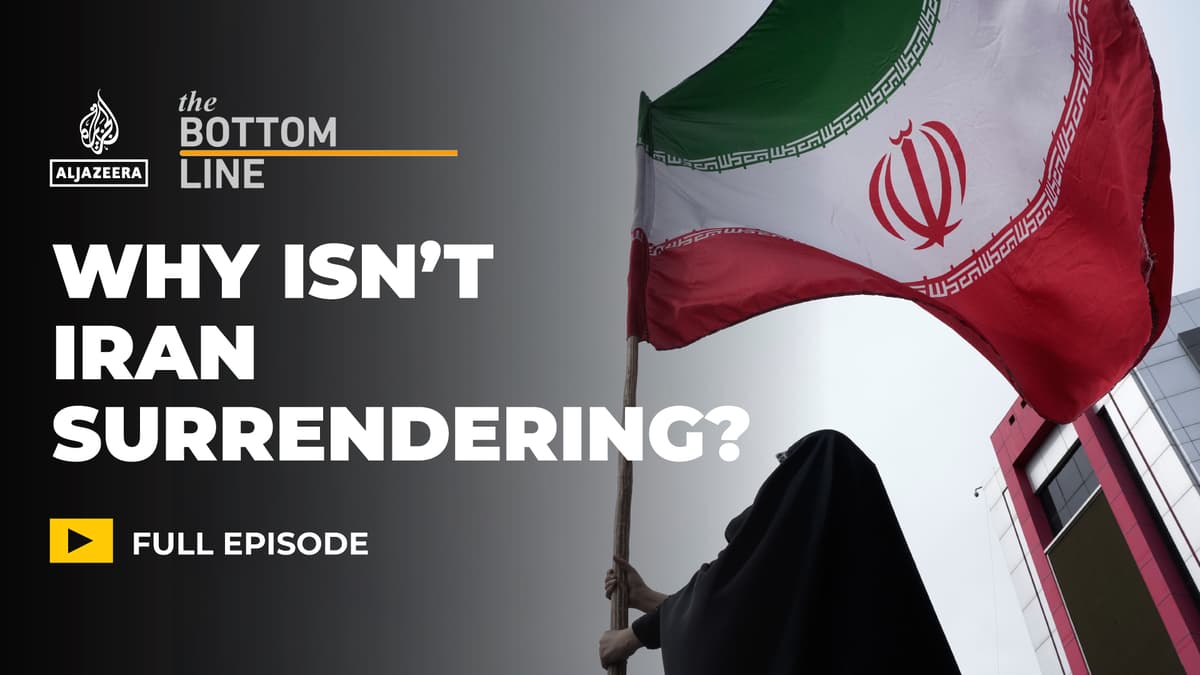
Has Iran Exposed the Limits of What US Can Achieve by Force?
Why It Matters
The assessment signals a potential pivot in U.S. Middle East policy, emphasizing diplomacy over force, which could reshape regional stability and future security commitments.
Key Takeaways
- •US and Israel's military pressure on Iran has stalled
- •Iran's resilience signals limits of forceful regime change
- •Diplomatic engagement emerges as only viable path forward
- •Nasr warns war without clear victory fuels regional instability
- •Policy shift may reshape US Middle East strategy
Pulse Analysis
The United States and Israel have intensified a campaign of sanctions, cyber operations, and limited kinetic strikes aimed at curbing Iran’s nuclear ambitions and regional influence. While these measures have disrupted Tehran’s procurement networks, they have not forced a strategic capitulation. Iran’s leadership has repeatedly demonstrated an ability to absorb pressure, maintaining its core capabilities and rallying domestic support. This dynamic illustrates a classic case where military leverage reaches a ceiling, and the costs of escalation begin to outweigh any incremental gains.
Vali Nasr, a senior scholar at Johns Hopkins, frames the stalemate as evidence that coercive force alone cannot resolve deep‑seated geopolitical disputes. He points out that Iran’s objective is not merely to survive but to signal that any war would be protracted and costly for the United States and its allies. Historical parallels, from the Soviet‑Afghan war to recent U.S. engagements in the Middle East, reinforce the notion that durable outcomes often require negotiated settlements rather than battlefield victories. Nasr’s perspective urges policymakers to recognize the diminishing returns of a purely militaristic approach and to open diplomatic channels before the conflict spirals.
Looking ahead, a shift toward diplomatic engagement could involve multilateral talks that address Iran’s security concerns, regional proxy dynamics, and a phased rollback of sanctions tied to verifiable nuclear limits. Such a framework would not only reduce the risk of accidental escalation but also provide a platform for broader regional confidence‑building measures. For the United States, embracing diplomacy may restore credibility with allies, free resources for other strategic priorities, and set a precedent for handling future state‑level challenges where military force proves insufficient.
Has Iran exposed the limits of what US can achieve by force?
Comments
Want to join the conversation?
Loading comments...