Global Economy News and Headlines
  • All Technology
  • AI
  • Autonomy
  • B2B Growth
  • Big Data
  • BioTech
  • ClimateTech
  • Consumer Tech
  • Crypto
  • Cybersecurity
  • DevOps
  • Digital Marketing
  • Ecommerce
  • EdTech
  • Enterprise
  • FinTech
  • GovTech
  • Hardware
  • HealthTech
  • HRTech
  • LegalTech
  • Nanotech
  • PropTech
  • Quantum
  • Robotics
  • SaaS
  • SpaceTech
AllNewsDealsSocialBlogsVideosPodcastsDigests

Global Economy Pulse

EMAIL DIGESTS

Daily

Every morning

Weekly

Sunday recap

NewsDealsSocialBlogsVideosPodcasts
Global EconomyNewsHMM Stays in the Black in Q4
HMM Stays in the Black in Q4
Global EconomyFinanceCommodities

HMM Stays in the Black in Q4

•February 11, 2026
0
Seatrade Maritime
Seatrade Maritime•Feb 11, 2026

Companies Mentioned

HMM - Hyundai Merchant Marine

HMM - Hyundai Merchant Marine

011200

ONE

ONE

Hapag‑Lloyd

Hapag‑Lloyd

HLAG

Why It Matters

The sharp profit and rate declines highlight mounting pressure on container carriers, while HMM’s strategic pivots signal how the industry may adapt to looming capacity glut.

Key Takeaways

  • •Q4 net profit fell 59.9% to KRW 364bn
  • •2025 revenue down 14.2% to KRW 2.71tr
  • •Freight rates to US West Coast dropped 49%
  • •New vessel deliveries expected to cause oversupply
  • •Expanding hub‑and‑spoke network to cut costs

Pulse Analysis

The container shipping sector entered 2026 on a markedly weaker footing, as HMM’s latest earnings reveal. A 59.9% profit contraction and a 14.2% revenue dip in Q4 underscore the depth of the rate collapse that has swept major trade lanes. Compared with peers, ONE posted an $88 million loss and Maersk’s ocean segment slipped into the red, indicating that the downturn is industry‑wide rather than company‑specific. The underlying drivers include lingering demand softness after the pandemic boom and a sharp pull‑back in global manufacturing output.

Compounding the revenue squeeze is an imminent surge in vessel capacity. Shipyards are delivering a record number of new‑build container ships, a trend HMM warns will tilt the supply‑demand balance further toward oversupply. Excess tonnage typically depresses freight rates, erodes margins, and forces carriers to seek operational efficiencies. In response, HMM is accelerating its hub‑and‑spoke model, mirroring successful initiatives like the Gemini Cooperation and the Premier Alliance, to streamline feeder operations and lower unit costs. Such network optimization aims to preserve profitability despite a crowded market.

For investors and market observers, HMM’s results serve as a bellwether for the broader container ecosystem. The pronounced earnings decline signals that even financially robust carriers are vulnerable to macro‑level freight rate volatility. However, strategic moves toward alliance‑driven hub networks may offer a pathway to resilience, potentially rewarding firms that can swiftly adapt capacity and cost structures. Stakeholders should monitor upcoming vessel deliveries, alliance activity, and demand trends, as these factors will shape the sector’s recovery trajectory over the next two years.

HMM stays in the black in Q4

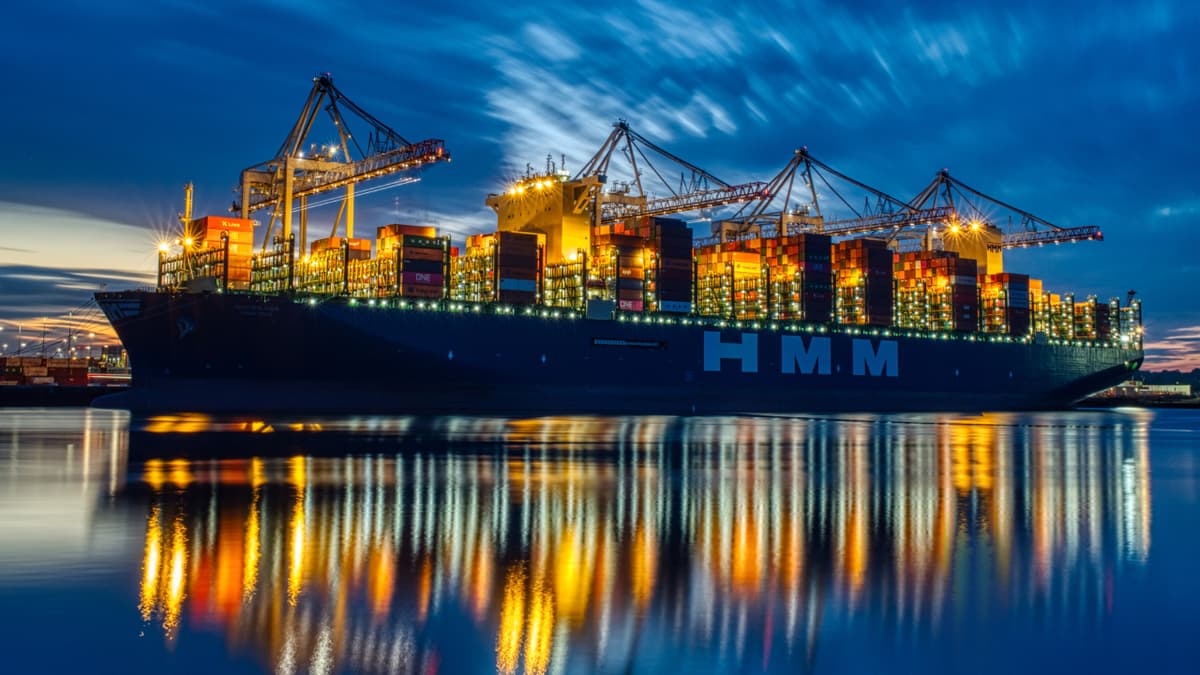
South Korean line highlights sharply declining freight rates in 2025 and oversupply from new‑building deliveries this year · Marcus Hand, Editor · February 11 2026 · Credit: HMM

South Korean shipping line HMM reported a 59.9 % drop in Q4 2025 net profit to KRW 364 billion (≈ $250 million), faring better than some of its listed competitors that have already reported their financial results.

HMM’s alliance partner Ocean Network Express (ONE) reported an $88 million loss for Q3 FY2025 ended 31 December, and AP Møller‑Maersk saw its ocean (container‑line) business dip into the red with a ‑$153 million EBIT in the fourth quarter of 2025. German line Hapag‑Lloyd reported a 75 % increase in EBIT in Q4 2025 to $200 million.

HMM said that revenues in Q4 2025 were down 14.2 % at KRW 2.71 trillion.

For 2025 as a whole HMM reported a 50.3 % drop in net profit to KRW 1.88 trillion, while revenues were down 6.9 % at KRW 10.98 trillion.

The South Korean shipping company noted sharp declines in container freight rates on major trades during 2025, with rates to the U.S. West Coast down 49 %, a 42 % decline to the U.S. East Coast, and a 49 % drop in freight rates to Europe.

Looking ahead, the large number of new‑buildings coming into the market will result in oversupply.

“A large volume of new container vessel deliveries is expected to result in oversupply, while demand growth remains weak, likely to exacerbate supply‑demand imbalances,” HMM said.

The company said it plans to expand its hub‑and‑spoke network in container shipping to improve cost structures through optimised feeder connections. Launching in February last year, the Gemini Cooperation of Maersk and Hapag‑Lloyd has successfully focused on key hubs, and, as reported in December 2025, the Premier Alliance comprising HMM, ONE, and Yang Ming has been quietly following suit.

“Within the bulk segment, the company aims to achieve stable growth by diversifying its portfolio and identifying new business opportunities,” HMM said.

Read more about: HMM, Maersk, Hapag‑Lloyd, Ocean Network Express.

Read Original Article
0

Comments

Want to join the conversation?

Loading comments...