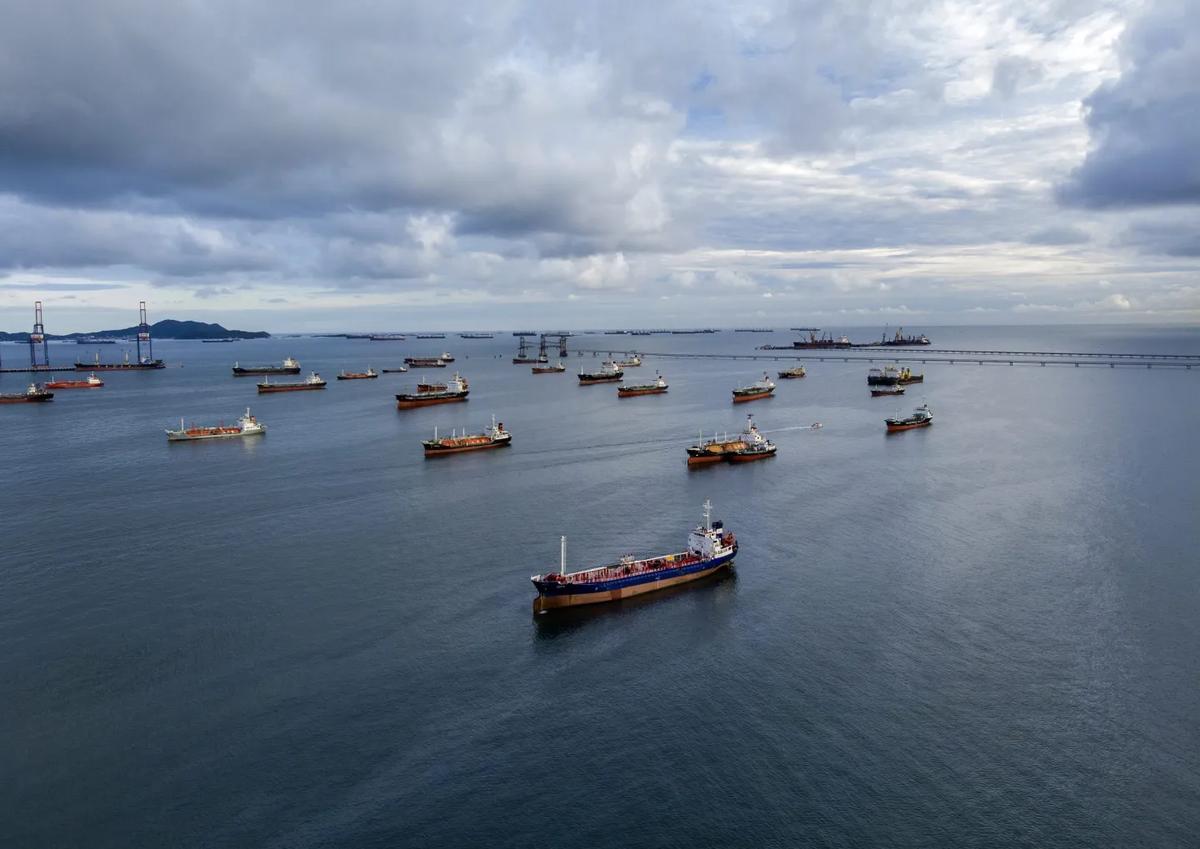
Hormuz Crisis Strains Global Trade as Cost Pressures Spread
Why It Matters
Geopolitical risk is turning into a recurring expense for global trade, potentially embedding higher freight and energy costs into everyday commerce. This threatens supply‑chain stability and could prolong inflationary pressures worldwide.
Key Takeaways
- •Evangelos Marinakis willing to pay $200k per voyage to avoid delays
- •Transit fees could become a new norm for strategic chokepoints
- •Rerouting around Cape of Good Hope adds fuel, time, and cost
- •Shipping disruptions signal rising inflation pressures for global markets
- •Companies may increase inventory buffers amid geopolitical uncertainty
Pulse Analysis
The Strait of Hormuz remains a linchpin of the world’s energy logistics, channeling roughly a third of daily oil exports and a sizable share of liquefied natural gas. Recent diplomatic stand‑offs have tightened access, prompting shipowners like Evangelos Marinakis to propose a $200,000 per‑voyage transit fee as a hedge against unpredictable closures. By monetising passage, operators aim to convert an uncertain risk into a calculable expense, a strategy that reflects a broader industry pivot toward risk‑adjusted pricing models.
From a financial perspective, the willingness to pay a fixed toll reshapes the cost structure of maritime freight. Compared with the alternative of sailing around the Cape of Good Hope—adding thousands of nautical miles, extra fuel burn, and weeks of delay—the fee appears modest. Yet, if such charges become institutionalised, they could lift baseline freight rates, erode profit margins, and cascade into higher consumer prices for goods that rely on sea‑borne inputs. Analysts note that even marginal increases in shipping costs can amplify inflation signals, especially when energy markets are already volatile.
The Hormuz debate also raises a strategic precedent for other chokepoints such as the Suez Canal, the Panama Canal, and the Bab el‑Mandeb. Acceptance of transit fees may embolden geopolitical actors to leverage maritime routes for revenue, compelling firms to bolster inventory buffers and diversify routing options. Investors therefore monitor shipping earnings and freight indices as early indicators of broader macroeconomic stress. In an era where geopolitical shocks are increasingly routine, the industry’s shift toward built‑in cost resilience could redefine global trade dynamics for years to come.
Hormuz Crisis Strains Global Trade as Cost Pressures Spread
Comments
Want to join the conversation?
Loading comments...