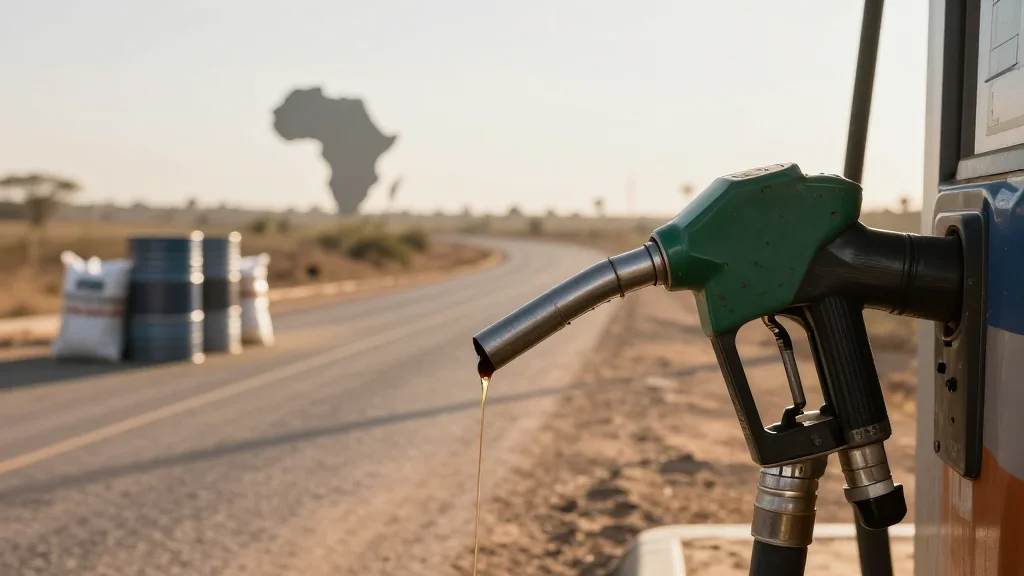
Hormuz Shock Is a Wakeup Call to Reduce Structural Dependence
Companies Mentioned
Why It Matters
Africa’s structural dependence magnifies external shocks, jeopardizing food security, inflation targets, and political stability across a continent of 1.4 billion people. Addressing the gap now could prevent recurring crises and unlock a trillion‑dollar investment opportunity.
Key Takeaways
- •80% of African nations are net oil importers, heightening vulnerability
- •Gasoline prices rose 10.9% in nine countries after the conflict
- •Urea prices jumped 35% within a month, threatening planting season
- •Debt service costs rose 91% since 2020, shrinking fiscal buffers
- •Only 2% of clean‑energy investment flows to Africa despite abundant resources
Pulse Analysis
The Iran‑Houthi war has turned the Strait of Hormuz into a chokepoint that reverberates across Africa’s economies. With 80% of the continent dependent on imported fuel, the sudden 10.9% surge in gasoline prices translates directly into higher transport costs, which already account for up to half of food prices in many markets. Simultaneously, a 35% spike in urea prices threatens the critical March‑May planting window for staple crops, amplifying inflationary pressures that the African Development Bank already projected would hit double digits in nations like Ethiopia, Egypt, and Nigeria. The confluence of rising energy and fertiliser costs is not merely an economic inconvenience; it fuels social unrest, heightens security risks, and can accelerate extremism in fragile states.
Fiscal constraints compound the problem. Successive shocks since 2020 have eroded buffers, and external borrowing costs have ballooned by 91%, leaving governments with limited room to subsidise fuel or food. Targeted debt relief, such as a re‑activated Debt Service Suspension Initiative, could free up billions of dollars—similar to the $12.9 bn unlocked during COVID‑19—allowing nations to channel resources toward immediate price stabilization. Parallel deployment of IMF instruments like the Catastrophe Containment and Relief Trust and the Food Shock Window would address the acute fertiliser shortage, buying time for longer‑term solutions.
Long‑term resilience hinges on breaking the import dependency cycle. Private‑sector projects, such as Aliko Dangote’s 650,000‑bpd refinery and plans for a 1.4 million‑bpd expansion, signal a shift toward domestic refining capacity. Renewable energy gains—Kenya’s 90% renewable electricity mix and Ethiopia’s Grand Renaissance Dam—demonstrate the continent’s untapped potential. Yet Africa receives only 2% of global clean‑energy investment despite holding 20% of the world’s population and world‑class solar resources. Mobilising the estimated $4 trillion in domestic savings through initiatives like the New African Financial Architecture for Development could bridge the $400 bn annual finance gap, turning crisis‑driven urgency into a catalyst for structural transformation.
Hormuz shock is a wakeup call to reduce structural dependence
Comments
Want to join the conversation?
Loading comments...