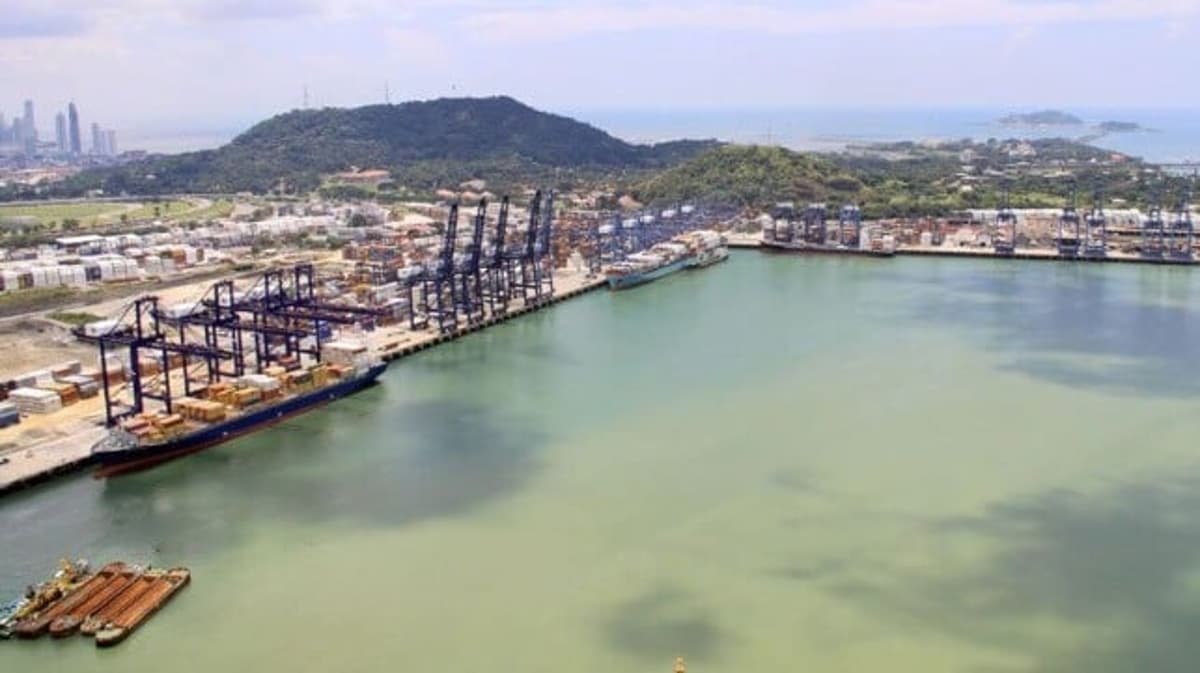
Hutchison Makes Overtures to Panama for Negotiations Over Terminal Ops
•February 20, 2026
0
Companies Mentioned


Why It Matters
The dispute threatens a key node of global container traffic, potentially disrupting supply chains and reshaping terminal ownership in the world’s busiest maritime shortcut.
Key Takeaways
- •Panama court declared Hutchison concession law unconstitutional
- •Hutchison seeks full renegotiation and possible arbitration
- •Terminals handle 38% of Panama’s container traffic
- •Panama plans new tender with separate terminal management
- •Dispute could disrupt canal traffic and global supply chains
Pulse Analysis
The Panama Canal remains the linchpin of inter‑ocean freight, with its Atlantic‑Pacific terminals processing roughly 38% of the country’s projected 10 million containers in 2025. These facilities not only expedite trans‑shipment but also serve as a strategic gateway for Asian‑to‑European trade routes. Any interruption at Balboa or Cristóbal reverberates through shipping schedules, freight rates, and inventory planning for manufacturers worldwide.
CK Hutchison’s concession, originally awarded in 1997 and renewed in 2021 without a competitive bid, has come under legal scrutiny after Panama’s Supreme Court deemed the underlying law unconstitutional. The conglomerate’s public overtures—ranging from calls for dialogue to threats of international arbitration—reflect a broader trend of private operators defending long‑standing assets against sovereign policy shifts. Hutchison emphasizes its capital investments and the 90‑percent ownership stake in Panama Ports Company, arguing that a forced handover would undermine contractual stability and investor confidence.
For the shipping industry, the outcome will dictate whether the canal’s terminal operations stay under a single dominant player or transition to a more fragmented, competitive model. Panama’s announced tender, which includes a provision for separate management of each terminal, could invite new entrants such as APM Terminals or Maersk, potentially lowering fees but also creating short‑term operational uncertainty. Market participants are watching closely, as prolonged negotiations or legal battles could trigger temporary capacity constraints, prompting carriers to reroute cargo or secure alternative ports, thereby influencing freight pricing and global trade flows.
Hutchison Makes Overtures to Panama for Negotiations Over Terminal Ops
0
Comments
Want to join the conversation?
Loading comments...